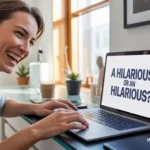
A Hilarious or An Hilarious shows confusion in English grammar, accents, and usage debates among learners and speakers in English grammar rules.
English grammar rules create ongoing confusion between article usage, pronunciation, and speaker choice across casual and advanced learning discussions.
A Hilarious or An Hilarious: The Quick Answer
If you want the correct version right away, here it is:
👉 “A hilarious” is correct in modern English.
👉 “An hilarious” sounds outdated and unnatural today.
Examples:
- ✅ That was a hilarious joke.
- ❌ That was an hilarious joke.
Simple, right? But the real value comes from understanding why.
The Rule Behind “A” vs “An”
Most people assume the rule depends on spelling. That’s where things go wrong.
The real rule is this:
Use “a” or “an” based on sound, not letters.
Here’s how it works:
- Use “a” before words that start with a consonant sound
- Use “an” before words that start with a vowel sound
Notice the word sound. That’s the key.
Why “A Hilarious” Is Correct
Say the word “hilarious” out loud:
👉 hi-lair-ee-us
You can clearly hear the “h” sound at the beginning. That makes it a consonant sound.
So, the correct choice is:
👉 a hilarious story
👉 a hilarious moment
👉 a hilarious video
It flows naturally. It sounds right. That’s your test.
Why “An Hilarious” Feels Wrong Today
At first glance, you might think:
“But ‘h’ is a letter like vowels sometimes. Shouldn’t it be ‘an’?”
That confusion comes from words where the “h” is silent.
For example:
- an hour
- an honest person
- an honor
In these cases, you don’t hear the “h.” The word actually starts with a vowel sound.
👉 hour → “our”
👉 honest → “onest”
That’s why “an” works there.
But with “hilarious,” the “h” is loud and clear. So “an hilarious” doesn’t fit modern pronunciation.
Quick Comparison Table: A vs An
| Word | First Sound | Correct Article | Example Sentence |
| hilarious | “h” (pronounced) | a | a hilarious joke |
| hour | vowel sound | an | an hour ago |
| honest | vowel sound | an | an honest answer |
| university | “yoo” sound | a | a university student |
| honor | vowel sound | an | an honor to meet you |
The Real Reason This Confuses People
Let’s be honest. English spelling doesn’t always match pronunciation.
That’s where the confusion starts.
Common mistakes:
- Choosing based on the first letter instead of sound
- Overthinking silent “h” rules
- Copying outdated examples from old books
- Trying to apply one rule to every situation
Here’s the truth:
Your ear is smarter than memorized rules.
If something sounds awkward when you say it, it’s probably wrong.
Old English vs Modern English Usage
You might come across “an hilarious” in older texts. That’s not a mistake. It reflects how English used to work.
What changed?
In older British English:
- Some speakers dropped or softened the “h”
- Words like “hilarious” could sound like they started with a vowel
So writers used:
👉 an hilarious event
Why it sounds strange today:
Modern English speakers clearly pronounce the “h.” Because of that, using “an” feels unnatural now.
Where you might still see it:
- Old literature
- Formal or classical writing
- Historical documents
In everyday writing, though, stick with “a hilarious.”
Easy Trick to Never Get This Wrong Again
Forget complicated grammar rules. Use this simple method:
Say it out loud.
That’s it.
Try both versions:
- “an hilarious joke” → sounds clunky
- “a hilarious joke” → sounds smooth
Your brain instantly picks the better one.
Read More: Team Which, Team Who, or Team That: Real Difference
Real-Life Examples You Can Use Right Now
Let’s make this practical.
Everyday sentences:
- That was a hilarious video
- She told a hilarious story
- We had a hilarious night out
- He made a hilarious comment
In different contexts:
Social Media:
- “Just watched a hilarious clip 😂”
Emails:
- “Thanks for sharing that—it was a hilarious read.”
Blogging:
- “This is a hilarious example of everyday confusion.”
Marketing:
- “Watch this hilarious ad that everyone is talking about.”
Case Study: Why This Matters in Real Writing
Imagine two blog headlines:
- ❌ An hilarious story that will make you laugh
- ✅ A hilarious story that will make you laugh
Which one sounds natural?
The second one wins instantly. It feels smooth. It builds trust.
Small grammar choices shape how people see your writing. Even one awkward phrase can break the flow.
Common Mistakes to Avoid
Let’s clear up the most frequent errors.
Mistake One: Following spelling instead of sound
Just because a word starts with a vowel letter doesn’t mean it uses “an.”
Mistake Two: Overusing “an” with “h” words
Not all “h” words are silent. In fact, most are pronounced.
Mistake Three: Copying outdated grammar
Language evolves. What worked 200 years ago may sound strange today.
Quick Practice Section
Test yourself.
Fill in the blanks:
- ___ hilarious meme
- ___ honest opinion
- ___ huge opportunity
- ___ hour delay
Answers:
- a hilarious meme
- an honest opinion
- a huge opportunity
- an hour delay
If you got them right, you’ve already mastered the rule.
A vs An: Simple Decision Guide
Think of it like this:
Step One: Say the word out loud
Step Two: Listen to the first sound
Step Three: Choose based on that sound
Quick logic:
- Starts with a vowel sound → an
- Starts with a consonant sound → a
Why This Rule Works Every Time
This isn’t just about “hilarious.” It works for every word in English.
More examples:
- a user (sounds like “yoo”)
- an umbrella (starts with “uh”)
- a European trip (sounds like “yoo”)
- an apple (clear vowel sound)
Once you train your ear, you’ll stop guessing.
A Simple Analogy to Remember
Think of “a” and “an” like connectors.
They exist to make speech flow smoothly. If a phrase feels awkward, the connector is wrong.
It’s like gears in a machine. When they fit, everything runs smoothly. When they don’t, you feel the friction.
FAQs About “A Hilarious or An Hilarious”
Q1: Is it “A hilarious” or “An hilarious”?
It is “a hilarious” because “hilarious” starts with a consonant sound.
Q2: Why do some people say “an hilarious”?
Some older or historical British English accents used a silent “h,” which made “an” sound correct.
Q3: Does pronunciation affect the article choice?
Yes, article choice depends on sound, not spelling, especially in English grammar rules.
Q4: Is “an hilarious” ever correct today?
In modern standard English, it is not considered correct.
Q5: What is the main rule here?
Use “a” before consonant sounds and “an” before vowel sounds.
Conclusion
The confusion around A Hilarious or An Hilarious mainly comes from historical accents and changes in English pronunciation. In present-day usage, grammar rules are clear: we use “a hilarious” because the word begins with a consonant sound.

Emma Brook is a dedicated writer and language enthusiast at WordsJourney. She’s passionate about helping readers understand words better and use them with confidence in everyday conversations. Her work focuses on alternative phrases, clear meanings, and practical examples that make language feel simple and approachable.
With a friendly, reader-first writing style, Emma breaks down common expressions and explores smarter ways to say things without sounding forced or complicated. Her goal is to make learning words enjoyable, useful, and easy for everyone.