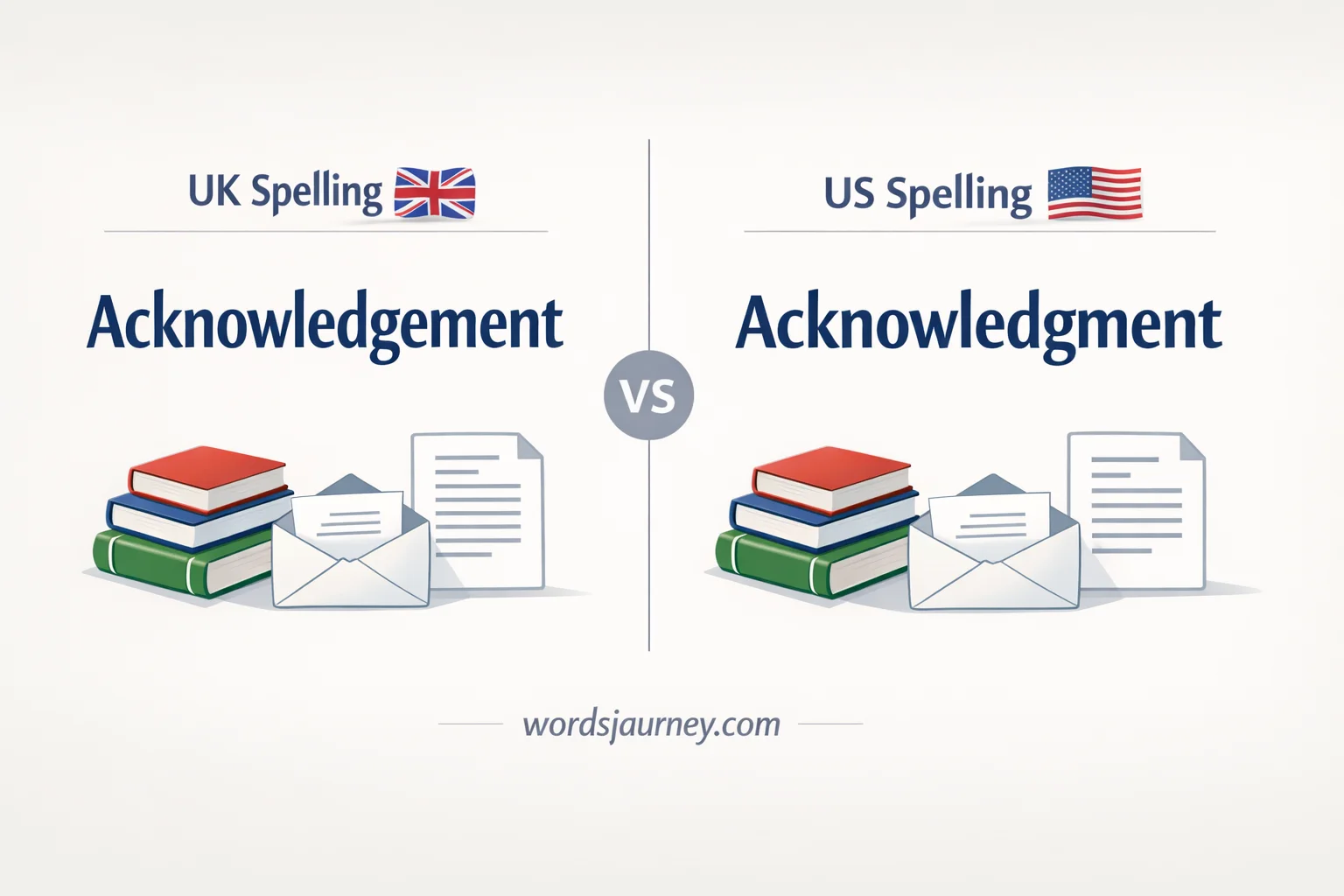
Ever paused mid-email and wondered which spelling looks right “Acknowledgement or Acknowledgment”? You’re not alone. This tiny spelling choice pops up in business communication, formal writing, and everyday English usage, from meeting notes to client follow-ups. Get it wrong and your message still lands, but it can quietly chip away at clarity, credibility, and consistency.
In this guide, you’ll learn the real difference between the two spellings, when each one fits best, and why context matters. We’ll connect correct usage to modern workflows like scheduling, time management, calendar invites, online booking, meetings, broadcasting, and project management. Clear language smooths collaboration, reduces friction, and keeps teams aligned across tools and channels.
We’ll also touch on style guides and regional preferences to settle the US vs. UK question with confidence. Expect practical examples, quick rules, and smart tips you can use right away. By the end, you’ll choose the right form every time and keep your writing sharp, professional, and easy to trust.
Acknowledgement or Acknowledgment: the core difference
Both spellings mean the same thing. Each refers to recognition, confirmation, or acceptance of something. The difference lives in regional English standards.
- Acknowledgment → American English
- Acknowledgement → British English
That’s it. No hidden meaning. No tone shift. No formality gap. The extra “e” reflects British spelling tradition. American English trimmed it.
Quick comparison
| Feature | Acknowledgment (US) | Acknowledgement (UK) |
| Primary region | United States | United Kingdom |
| Accepted by dictionaries | Yes | Yes |
| Favored by style guides | AP, Chicago, MLA | Oxford, Cambridge |
| Common in US publishing | Very common | Rare |
| Common in UK publishing | Rare | Very common |
Plain rule: Match the spelling to your audience’s regional English. If your readers live in the US, use acknowledgment. If they’re in the UK, use acknowledgement.
Which spelling is correct in American English?
In the US, acknowledgment is the standard spelling. Major style guides back it up.
- AP Stylebook prefers acknowledgment.
- Chicago Manual of Style uses acknowledgment.
- MLA Handbook follows acknowledgment.
Editors in American newsrooms cut the extra “e” on sight. Corporate style guides in the US do the same. You’ll see acknowledgment across contracts, HR policies, product documentation, and university guidelines.
Why US English dropped the “e”
American spelling leans toward simplification. The trend dates back to Noah Webster’s reforms in the early 1800s. He pushed for shorter, more phonetic spellings to standardize American English. The goal was clarity and efficiency.
Similar US simplifications
- Judgment (US) vs Judgement (UK)
- Color (US) vs Colour (UK)
- Honor (US) vs Honour (UK)
Real-world US examples
- “Please provide written acknowledgment of receipt.”
- “Employee acknowledgment of company policies is required.”
- “We sent an acknowledgment email within 24 hours.”
These appear in American contracts, onboarding flows, and compliance notices every day.
Which spelling is used in British English and global English?
In the UK, acknowledgement remains the standard. British English keeps the extra “e” in many words that American English simplified. You’ll see acknowledgement across UK universities, government portals, and publishers.
Where British spelling dominates
- United Kingdom
- Ireland
- Australia
- New Zealand
- Many Commonwealth countries
Canada often straddles both systems. Canadian publications lean British in academic settings and American in tech and business contexts. The house style decides.
Global brands and localization
Large brands choose one spelling per region to maintain trust. A UK landing page will use acknowledgement. A US product page will use acknowledgment. Mixing both on the same site looks sloppy and chips away at credibility.
Why two spellings exist
English evolves through culture, printing, and policy. American English diverged from British English during the 19th century. Webster’s dictionaries promoted simplified spellings to create a distinct national standard.
What changed
- Silent letters dropped.
- Redundant vowels trimmed.
- Spellings aligned closer to pronunciation.
That’s how acknowledgement became acknowledgment in US usage. The meaning stayed put. The spelling streamlined.
Language drift in action
- Programme → Program (US)
- Traveller → Traveler (US)
- Catalogue → Catalog (US)
The pattern shows up across publishing, software, and legal writing in the US.
Is “Acknowledgement” wrong in the US?
Not wrong. Just out of place for American audiences.
In US contexts, acknowledgement reads foreign. It can distract editors and raise questions about quality control. In formal settings, it may even get flagged during compliance reviews or legal proofreading.
Where you might still see the UK spelling in the US
- Imported templates from UK vendors
- International journals
- Research collaborations with UK institutions
- Open-source documentation written by global teams
Best practice
Pick the spelling that matches your audience’s English and apply it everywhere. Consistency beats perfection. A single standard across your site and documents builds trust.
When to use each spelling
Use this quick decision guide to stay sharp.
Use Acknowledgment when writing for
- US blogs and content sites
- Business emails in American companies
- Contracts and legal notices in the US
- Product docs and help centers for US users
- SEO content targeting US searches
Use Acknowledgement when writing for
- UK publishers and institutions
- British academic submissions
- Government portals in the UK
- Commonwealth audiences that follow British norms
If your brand serves multiple regions
Create regional variants. Mirror spelling by locale. Many CMS platforms support language versions. This small move boosts trust and conversions.
Also Read: Your vs Yours: Mastering the Difference
Real-world examples in context
Examples make the difference stick. Here’s how each spelling appears in everyday writing.
Business email
- US: “Thanks for your acknowledgment. We’ll proceed today.”
- UK: “Thanks for your acknowledgement. We’ll proceed today.”
Legal document
- US: “Written acknowledgment is required before access.”
- UK: “Written acknowledgement is required before access.”
Website policy
- US: “User acknowledgment of terms is mandatory.”
- UK: “User acknowledgement of terms is mandatory.”
Customer support auto-reply
- US: “This email confirms acknowledgment of your ticket.”
- UK: “This email confirms acknowledgement of your ticket.”
Consistency table
| Context | US Style | UK Style |
| Email subject | Acknowledgment received | Acknowledgement received |
| Policy page | Acknowledgment of Terms | Acknowledgement of Terms |
| HR form | Employee acknowledgment | Employee acknowledgement |
Common mistakes writers make
Small slips add up. These errors show up often in audits and content reviews.
- Mixing both spellings in one article
- Letting spellcheck override house style
- Copying UK spelling into US-facing pages
- Forgetting to align templates after localization
- Inconsistent usage across PDFs and web pages
Fix it with a checklist
- Lock one spelling per region.
- Add it to your style guide.
- Create a find-and-replace rule.
- Train contributors and editors.
- Run a pre-publish consistency scan.
Quick decision guide
Use this table when you need an instant answer.
| You’re writing for | Use this spelling |
| US audience | Acknowledgment |
| UK audience | Acknowledgement |
| Global brand | Choose per region |
| Academic journal | Follow house style |
| Legal documents | Match jurisdiction |
Case study: a simple fix that lifted clarity
A SaaS company ran a US-facing help center with mixed spellings. Some pages used acknowledgement pulled from UK templates. Others used acknowledgment written by US staff. Editors flagged confusion. Users noticed inconsistencies.
What changed
- The team standardized acknowledgment across all US pages.
- They updated form labels, email templates, and PDFs.
- They added a style rule in the CMS.
Result
- Fewer editorial corrections.
- Cleaner brand voice.
- Faster content reviews.
- Fewer user questions about policy wording.
Small fix. Big polish.
Editor’s spelling checklist
- Confirm target region before writing.
- Apply the regional spelling across headings and body copy.
- Update templates and auto-replies.
- Scan PDFs and forms for drift.
- Add the rule to your style guide.
FAQs: Acknowledgement or Acknowledgment
1. What is the difference between Acknowledgement and Acknowledgment?
The difference is mainly spelling, not meaning. Both words mean recognition, confirmation, or acceptance of something. The shorter form, Acknowledgment, drops the extra “e” and is preferred in American English. The longer form, Acknowledgement, is standard in British English and many other regions.
2. Which spelling is correct in American English?
In US English, the correct and recommended spelling is Acknowledgment. Most style guides used in American publishing, media, and business communication favor this form for formal writing, professional emails, and official documents.
3. Which spelling should I use in British English?
In UK English, Acknowledgement is the preferred and widely accepted spelling. It appears in British publications, academic writing, and professional documents. If your audience is based in the UK, this form ensures regional accuracy and linguistic consistency.
4. Does it matter which spelling I use in professional writing?
Yes, it does. While both spellings are understood, consistency matters in formal writing, contracts, reports, and business communication. Using one spelling throughout your content improves clarity, credibility, and overall grammar quality, especially in project management documents and client-facing content.
5. Which spelling should I use in emails, meetings, and calendar invites?
Use the spelling that matches your audience and region. For US-based teams handling scheduling, meetings, calendar updates, and online booking, choose Acknowledgment. For UK or international teams, Acknowledgement may feel more natural. The key is consistent English usage across your workflow.
6. Is one spelling more formal than the other?
No. Both Acknowledgement and Acknowledgment are equally formal. The difference is regional preference, not tone. Each is appropriate for formal writing, academic work, legal documents, and professional correspondence when used in the correct regional context.
7. How can I avoid spelling mistakes in professional content?
Follow one style guide, set a language preference in your writing tools, and stay consistent across documents. This helps maintain accuracy in business communication, broadcasting, project management, and collaborative writing environments where multiple people contribute.
Conclusion: Choosing Between Acknowledgement or Acknowledgment
The choice between Acknowledgement or Acknowledgment is less about right versus wrong and more about context, audience, and regional standards. Both spellings are correct. The difference lies in US vs. UK preferences, supported by major style guides and publishing norms.
In everyday work—whether you’re managing meetings, confirming online booking, coordinating scheduling, or updating a shared calendar—small language choices shape how professional your communication feels. Consistent grammar improves trust, reduces friction, and supports smoother time management across teams.
Pick one spelling based on your audience, apply it consistently, and move forward with confidence. Clear English usage doesn’t just polish your writing. It makes collaboration easier, decisions faster, and communication more effective.

Aliya Ray is a passionate writer and language enthusiast at WordsJourney. She enjoys exploring words, phrases, and everyday expressions to help readers communicate more clearly and confidently. Her content focuses on alternative ways to say common phrases, simple explanations, and real-life examples that make language easy to understand.
Aliya believes the right words can make any message stronger. Through clear, friendly writing, she helps readers improve their vocabulary without feeling overwhelmed or confused.