Have you ever paused mid-email, wondering whether to write “affects” or “effects”? That tiny choice can subtly shift meaning, especially in formal writing or business communication. From project management updates to calendar invitations and online booking confirmations, using the correct term ensures clarity and professionalism. Misusing these words can confuse readers and disrupt the flow of your message, impacting everything from meetings to broadcasting schedules.
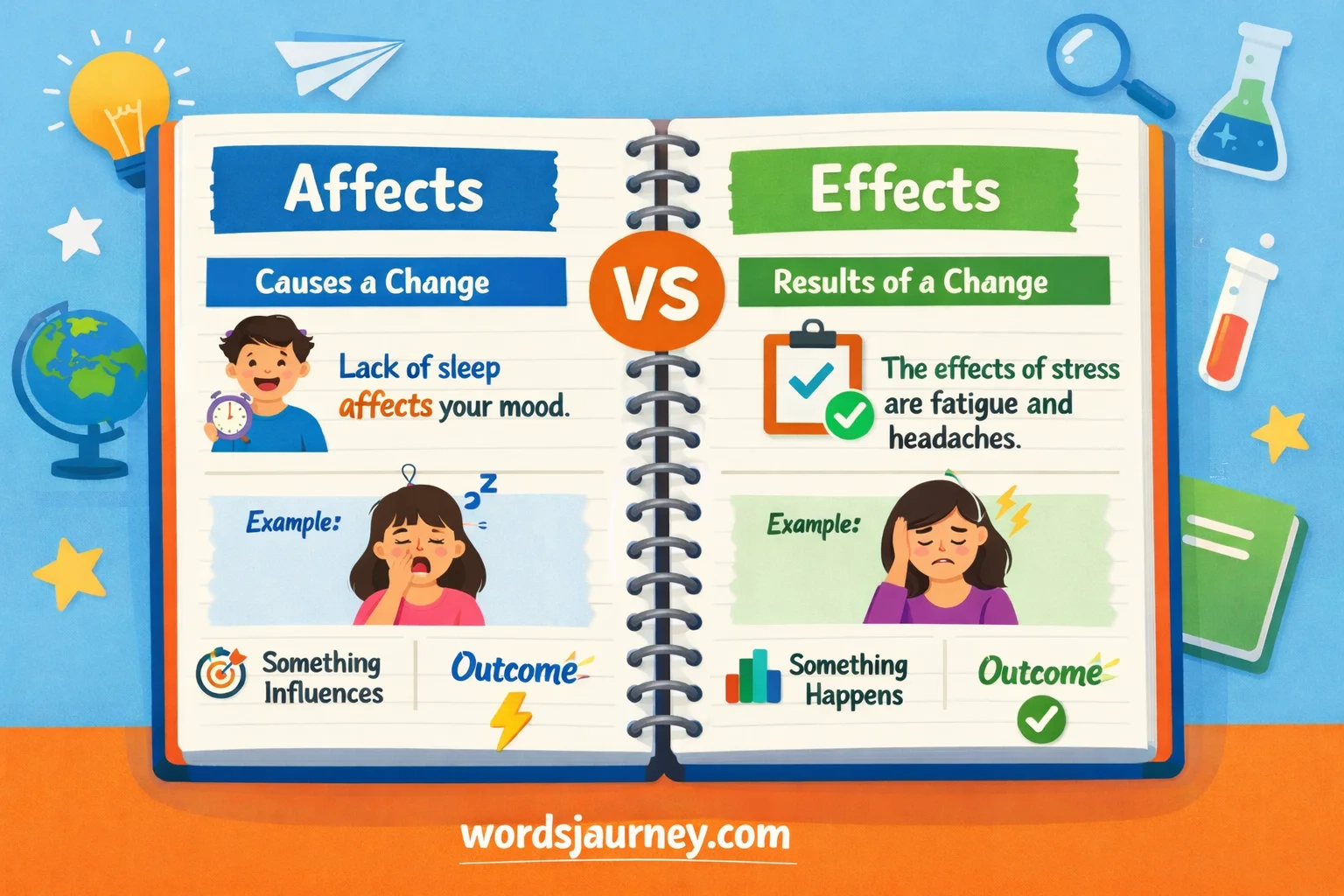
Understanding the difference between affects vs effects isn’t just about grammar—it’s about consistency and precision in English usage. While affects usually describes an action or influence, effects refers to the result of that action. This distinction matters in time management, scheduling, and even content creation, where subtle language differences can affect how your audience interprets your intent. Clear usage builds credibility in both US and UK style guides, making your communication more authoritative.
In this guide, we’ll break down affects vs effects with practical examples, tips for formal writing, and common pitfalls to avoid. You’ll learn when to choose one over the other in emails, reports, meetings, and broadcasting notes, so your English usage remains sharp and professional. By the end, you’ll navigate this tricky pair confidently, improving grammar consistency and enhancing overall clarity in every project management or scheduling context.
Understanding the Basics
Before diving into the tricky parts, let’s cover the fundamentals. Knowing what each word really means makes everything else much easier.
What “Affect” Means
Affect is primarily a verb, and it usually means to influence or change something. Think of it as the action that brings a difference.
- Example: The heavy rain affected the city’s traffic.
- Example: Her words deeply affected his confidence.
Notice how “affect” is doing the action—it changes or influences something else.
Common mistakes happen when people use “effect” here instead:
- Incorrect: The heavy rain effected the city’s traffic.
- Correct: The heavy rain affected the city’s traffic.
By remembering that affect = action, you’re halfway there.
What “Effect” Means
On the other hand, effect is almost always a noun, meaning the result or outcome of an action. It’s the end product of a cause.
- Example: The new policy had a positive effect on employee morale.
- Example: Sleep deprivation can have severe effects on memory and focus.
Here, “effect” is not doing anything; it’s the result of something happening.
Mixing these up is common because the words sound similar, but their roles in a sentence are different. A simple tip: effect = end result.
Key Differences Between Affects and Effects
A side-by-side comparison often makes things crystal clear.
| Feature | Affect | Effect |
| Part of speech | Verb | Noun |
| Meaning | To influence or change | Result or outcome |
| Example sentence | The cold weather affects my mood. | The cold weather has a negative effect on my mood. |
| Common mistake | Using as a noun | Using as a verb |
| Memory tip | Affect = Action | Effect = End result |
Quick tip: Ask yourself, “Am I talking about an action or a result?” That usually solves the problem instantly.
When “Affect” is Used as a Noun
You might see affect used as a noun in psychology or formal contexts. Here it refers to emotions or observable feelings rather than actions.
- Example: The patient displayed a flat affect.
- Example: Her cheerful affect brightened the room.
This usage is less common but important in clinical or academic writing. Remember, in everyday writing, affect is almost always a verb.
When “Effect” is Used as a Verb
While rare, effect can also function as a verb, meaning to bring about or cause something to happen. This is formal and mostly appears in legal, business, or academic writing.
- Example: The new manager effected major changes in the department.
- Example: The government hopes to effect improvements in education.
Even though this usage exists, sticking to the noun form of effect will keep your writing clear for most audiences.
Common Phrases and Collocations
Some phrases use affect or effect in ways that are predictable and memorable. Learning these can boost both your understanding and your writing style.
Common “affect” phrases:
- Affect behavior
- Affect mood
- Negatively/positively affect someone
Common “effect” phrases:
- Cause and effect
- Side effect
- Bring about an effect
- Long-term effect
Pro tip: Notice the verb-noun distinction in these phrases. It helps you remember which word fits naturally.
For More Read: To Many or Too Many: How to Use Them Correctly Every Time
Common Mistakes and How to Avoid Them
Even experienced writers slip up with affects vs effects. Here’s how to avoid the most frequent errors:
- Confusing affect as a noun in everyday writing.
- Using effect as a verb incorrectly.
- Overcomplicating sentences with redundant phrasing: “resulted in an effect” → better: “caused a change.”
Memory mnemonics:
- Affect = Action → verb
- Effect = End result → noun
Keeping these shortcuts in mind saves time and mental energy while writing.
Click here for More:
Practice Examples for Readers
Try filling in the blanks to test your understanding:
- The new software update ___ the phone’s battery life. (affect/effect)
- One side ___ of the medicine is drowsiness. (affect/effect)
- Stress can greatly ___ your decision-making skills. (affect/effect)
Answers:
- affects
- effect
- affect
By practicing, your brain will start to automatically choose the right word in context.
Advanced Usage Tips
Even after mastering the basics, there are ways to elevate your writing with affect and effect:
- Use effect as a noun in professional or academic contexts to sound precise.
- Avoid redundant phrases like “resulted in an effect”; instead, write “caused a change”.
- Consider synonyms for variety: influence, impact, outcome, consequence.
Example:
- Wordy: The policy had a significant effect on student performance.
- Improved: The policy significantly improved student performance.
This keeps writing clear, concise, and professional.
Case Study: Effects of Writing Mistakes in Business Emails
A 2023 survey by Grammarly found that 45% of professionals admitted to confusing affect and effect in emails. Misusing these words can:
- Cause miscommunication with colleagues.
- Make emails appear unprofessional.
- Lead to errors in legal or technical writing.
Lesson: Small mistakes can have big effects—proofreading is key.
Frequently Asked Questions (FAQs)
1. What is the main difference between affects and effects?
Affects is usually a verb that describes an action or influence (e.g., “Stress affects productivity”). Effects is typically a noun referring to the result of that action (e.g., “The effects of stress are noticeable”).
2. Can affects ever be a noun?
Yes, in psychology, affect can be a noun describing emotional expression (e.g., “The patient displayed a flat affect”), but this usage is rare in business communication or general grammar contexts.
3. Are there US vs UK differences in usage?
The distinction between affects and effects is consistent in both US and UK English, though formal style guides may have subtle recommendations for phrasing in reports, emails, and broadcasting content.
4. How can I remember which to use?
Think “A = Action” for affects and “E = End result” for effects. This simple trick works across time management, scheduling, and project management communications.
5. Does this matter in everyday writing?
Absolutely. Correct usage ensures clarity, professionalism, and consistency, especially in formal writing, business communication, and online content. Misusing them can confuse readers and reduce credibility.
Conclusion
Mastering affects vs effects goes beyond grammar—it’s about precise, professional communication. By distinguishing action (affects) from result (effects), you can write clear emails, reports, and meeting notes without ambiguity. Whether scheduling meetings, managing projects, or preparing broadcasting content, consistent usage reflects strong English skills and attention to detail.With practice, remembering the difference becomes second nature. Apply these tips in formal writing, business communication, and everyday English usage, and your messages will carry clarity, authority, and professionalism. Ultimately, understanding affects vs effects elevates your communication, making it more effective and impactful.

Johnson Alex is a language-focused writer and the voice behind WordsJourney. He creates practical, easy-to-understand content that helps readers improve their vocabulary and express ideas with clarity and confidence.