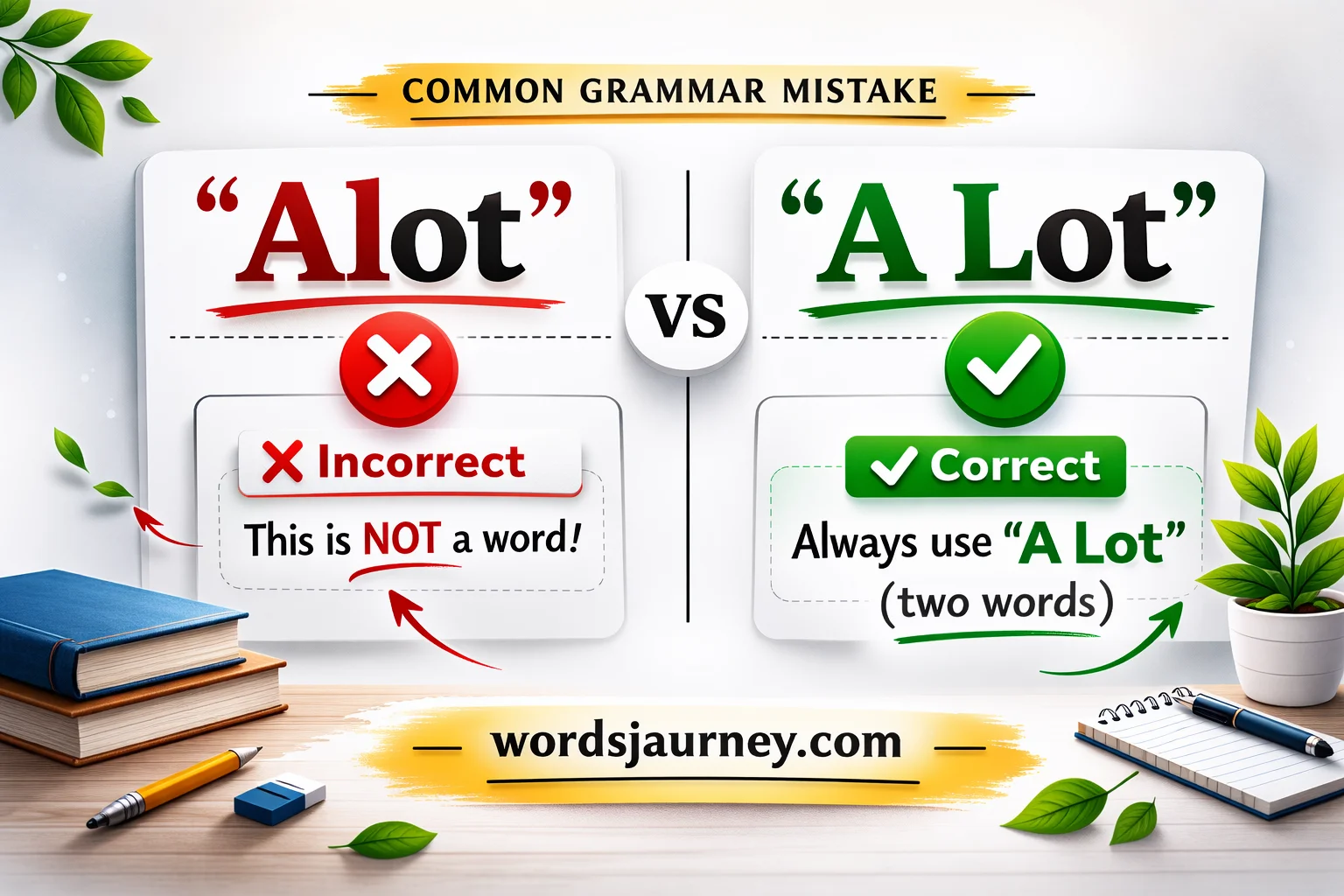
Have you ever paused mid-email wondering whether to write “Alot or A Lot”? You’re not alone. The confusion between Alot or A Lot shows up everywhere—from quick texts to polished reports. In professional settings like business communication, online booking confirmations, or even internal project management updates, small grammar slips can quietly affect credibility. That’s why understanding the correct form matters more than you might think.
In today’s fast-paced world of scheduling, meetings, shared calendars, and digital broadcasting, clarity is everything. Whether you’re drafting a proposal, organizing time management workflows, or writing client emails, consistent English usage strengthens your message. This article breaks down the grammar rule behind this common mistake, explains why “alot” is incorrect in standard grammar, and shows how “a lot” functions properly in formal writing. We’ll also touch on how major style guides—including common US and UK preferences—treat the term to ensure accuracy across regions.
By the end, you’ll understand the difference clearly and apply it with confidence. We’ll explore real examples, common pitfalls, and practical usage tips to improve consistency in your writing. Whether you’re a student, a professional managing daily correspondence, or someone refining your grammar skills, this guide will help you choose the correct form every time—without second-guessing yourself.
Alot or A Lot: The Direct Answer
Is “Alot” Ever Correct?
No.
“Alot” is not a correct word in standard English. It does not appear as a valid entry in major dictionaries. It is considered a spelling error in formal, academic, and professional writing.
Only “a lot” is correct.
Spellcheck tools sometimes fail to flag “alot” depending on settings. That doesn’t make it valid. It just means your software isn’t perfect.
The Correct Form: “A Lot”
The correct expression is “a lot” — two separate words.
It means:
A large amount or quantity.
Examples:
- I learned a lot from that course.
- She travels a lot for work.
- We need a lot of patience.
Simple rule. Two words. Always.
Why “Alot” Feels Right (But Isn’t)
Your brain loves patterns. English contains many words that begin with “a” and form a single unit:
- Already
- Almost
- Alone
- Along
So when you hear “a lot,” your brain tries to compress it into one word. It looks consistent. It feels efficient.
But English isn’t always logical.
Language Evolution vs. Standardization
Some words merged over time:
- All ready → Already
- All together → Altogether
However, “a lot” never completed that evolution.
Language change requires:
- Widespread usage
- Acceptance by major dictionaries
- Editorial standardization
- Institutional approval
“Alot” hasn’t crossed that threshold.
Search trends may show millions of incorrect uses. Frequency does not equal correctness.
What Does “A Lot” Actually Mean?
Understanding meaning helps eliminate mistakes.
Definition
A lot = a large quantity or amount
It functions as a noun phrase.
Usage Types
You’ll typically see it in these structures:
- A lot of + plural noun
- A lot of + uncountable noun
- Verb + a lot
Examples Across Contexts
Everyday Conversation
- I sleep a lot on weekends.
- There’s a lot of traffic today.
Academic Writing
- The study revealed a lot of variation in data patterns.
- Students demonstrated a lot of improvement.
Business Communication
- We’ve received a lot of positive feedback.
- Our team invested a lot in research.
Notice the flexibility. It works in formal and informal settings.
Grammar Breakdown: How “A Lot” Functions
As a Noun Phrase
In grammatical terms, “a lot” acts as a noun phrase meaning “a large amount.”
Example:
A lot of employees prefer remote work.
Breakdown:
- A lot = noun phrase
- Of employees = prepositional phrase
With Verbs
Placement matters.
Correct:
- I like you a lot.
Incorrect:
- I alot like you.
The phrase must remain separate.
Quick Reference Table: Alot or A Lot
| Incorrect | Correct | Explanation |
| Alot of people | A lot of people | “Alot” is not a word |
| I study alot | I study a lot | Two-word noun phrase |
| There’s alot to do | There’s a lot to do | Requires spacing |
| She cares alot | She cares a lot | Always separate |
Print that. Memorize it. You’ll never hesitate again.
A Lot vs Allot vs Alot
This is where confusion multiplies.
A Lot
Meaning: A large quantity.
Example:
- We saved a lot of money.
Allot
Meaning: To distribute or assign.
Example:
- The manager will allot tasks tomorrow.
- The budget allots $5,000 for marketing.
“Allot” is a verb. Completely different meaning.
Alot
Still incorrect.
No exceptions in standard English writing.
Common Mistakes People Make
Even strong writers slip.
Resume Errors
Hiring managers scan resumes in seconds. Grammar mistakes signal carelessness.
Incorrect:
- Managed alot of projects.
That one mistake can reduce credibility.
Academic Essays
Professors expect precision.
Incorrect:
- This theory explains alot about human behavior.
In academic writing, small grammar errors weaken authority.
Social Media Spillover
Casual habits transfer into professional writing. Many people type “alot” on social platforms. Then they accidentally carry it into formal communication.
For More Please Visit: To or Too: The Complete and Practical Guide
Memory Tricks That Actually Work
You don’t need complicated grammar theory.
The Space Trick
If you mean “many” or “much,” use two words.
- Many people → A lot of people
- Much time → A lot of time
The “Little Space” Rule
Think:
A little space makes a lot of difference.
That visual cue sticks.
The Replacement Test
Replace “a lot” with “plenty.”
- I have plenty of ideas.
- I have a lot of ideas.
If it works, you’re correct.
Can You Ever Break the Rule?
In professional writing? No.
In creative writing? Maybe.
Fiction authors sometimes intentionally misspell words to reflect dialect or personality.
Example:
“I got alot on my mind,” he muttered.
Here it reflects the character voice. Outside that context, avoid it.
What Grammar Authorities Say
Let’s look at real references.
- Merriam-Webster lists “a lot” as a noun phrase meaning a large amount.
- Cambridge Dictionary confirms “a lot” is correct and labels “alot” incorrect.
- Oxford Learner’s Dictionaries includes “a lot” as informal but standard.
- Grammarly explicitly states “alot” is a common misspelling.
No major English authority recognizes “alot” as valid.
That settles it.
Is “Alot” Becoming Accepted?
Language evolves. That’s true.
But dictionary acceptance requires more than widespread misuse.
Consider:
- “Email” evolved from “e-mail.”
- “Website” evolved from “web site.”
However, “alot” has remained flagged for decades.
Search engine data shows high misspelling frequency. Yet no editorial institutions have adopted it.
Popularity doesn’t override grammar standards.
Related Grammar Confusions
If you struggle with Alot or A Lot, you might also mix up:
Everyday vs Every Day
- Everyday = adjective
- Every day = phrase meaning daily
Alright vs All Right
“All right” remains technically correct in formal writing.
Apart vs A Part
- Apart = separated
- A part = a piece of
Grammar patterns repeat. Learning one rule strengthens others.
Real-World Case Studies
Case Study: Resume Screening
A hiring manager at a mid-sized tech firm reported eliminating candidates for repeated spelling errors including “alot.”
Why?
“Attention to detail matters. Small mistakes suggest bigger ones.”
Harsh? Maybe.
Real? Absolutely.
Case Study: Academic Review
A university writing center analysis found that frequent small grammar errors lowered perceived argument strength.
Even when ideas were solid.
Perception shapes judgment.
A Lot in Different Writing Contexts
Academic Writing
Acceptable but slightly informal. You may prefer:
- Numerous
- Significant
- Substantial
Instead of:
- A lot of data
Use:
- A substantial amount of data
Business Writing
Perfectly acceptable.
- We’ve seen a lot of growth this quarter.
Casual Writing
Common and natural.
- I laughed a lot last night.
Advanced Usage Notes
Is “A Lot” Informal?
Yes, slightly.
In highly formal academic research, writers often replace it with:
- Numerous
- Considerable
- Significant
- A large quantity
However, “a lot” remains grammatically correct.
Can “A Lot” Start a Sentence?
Yes.
- A lot of people misunderstand this rule.
Completely valid.
Quick Checklist Before You Publish
- Did you write “alot”? Fix it.
- Can you replace it with “many” or “much”?
- Are you writing formally?
- Did spellcheck catch everything?
Simple system. Big payoff.
Why This Tiny Space Matters
You might wonder if this even matters.
It does.
Writing signals intelligence. Clean grammar builds trust. Readers may not consciously analyze spacing. Yet errors create friction.
Think of grammar like design.
A slightly crooked picture frame doesn’t ruin the room. It just feels off.
“A lot” vs “alot” works the same way.
Frequently Asked Questions (FAQs)
1. Is “alot” ever correct in English usage?
No. “Alot” is not a correct spelling in standard English. Major style guides used in both US and UK grammar reject it in formal writing, academic work, and business communication. The correct form is always “a lot.”
2. Why do so many people write “alot”?
It’s a common spelling mistake caused by how we pronounce the phrase. When spoken quickly, “a lot” sounds like one word. In fast digital contexts—like meetings notes, chat messages, or project management updates—people often type it the way it sounds.
3. What does “a lot” actually mean?
“A lot” means a large amount or great extent.
Examples:
- I have a lot of tasks on my calendar today.
- She spends a lot of time on time management.
It can modify verbs, adjectives, or nouns depending on context.
4. Is “a lot” formal enough for professional writing?
Yes. “A lot” is grammatically correct, but in highly formal contexts, alternatives may sound stronger. For example:
- Instead of “a lot of clients,” write “many clients.”
- Instead of “a lot of delays,” write “numerous delays.”
In structured communication—like online booking confirmations, reports, or broadcasting scripts—precision improves tone.
5. Are there regional differences between US and UK English?
No difference here. Both American and British style standards agree: “a lot” is correct; “alot” is not.” This consistency makes it easy to apply across global communication.
6. Can “a lot” be replaced with “allot”?
No. “Allot” is a completely different word.
- Allot means to assign or distribute.
- A lot means many or much.
Example:
- The manager will allot time for team meetings.
- We have a lot of work scheduled.
Conclusion
Small grammar choices shape big impressions. The difference between “Alot or A Lot” may seem minor, but it reflects your attention to detail and commitment to clear, consistent English usage. In environments driven by scheduling, structured calendar planning, and fast-paced business communication, precision builds trust.
Remember this simple rule: “Alot” is incorrect. “A lot” is always correct. No regional exceptions. No hidden grammar loopholes. Whether you’re writing emails, preparing project management updates, or drafting formal documents, consistency strengthens your professional voice.
Master this rule once and you’ll never hesitate again. And that confidence? It shows in every sentence you write.

Emma Brook is a dedicated writer and language enthusiast at WordsJourney. She’s passionate about helping readers understand words better and use them with confidence in everyday conversations. Her work focuses on alternative phrases, clear meanings, and practical examples that make language feel simple and approachable.
With a friendly, reader-first writing style, Emma breaks down common expressions and explores smarter ways to say things without sounding forced or complicated. Her goal is to make learning words enjoyable, useful, and easy for everyone.