Ever paused mid-email and wondered which word looks right—“Anyway or Anyways”?
That tiny choice can feel surprisingly heavy when you’re juggling scheduling, time management, and quick replies across meetings and a packed calendar. In moments like these, consistency matters.
So does clarity. This guide to Anyway or Anyways clears the fog, helping you choose the form that fits English usage without second-guessing your instincts.
In daily business communication, word choice shapes how professional you sound. Whether you’re handling online booking, coordinating project management, or preparing notes for broadcasting, small grammar slips can distract from your message. This article breaks down the grammar behind both forms, shows where each appears in real-world formal writing, and explains why one option often feels more natural in polished contexts.
You’ll also get quick, practical rules you can apply immediately. We’ll touch on what major style guides recommend and how US vs. UK preferences influence usage.
By the end, you’ll know when to use anyway with confidence, when anyways shows up in casual speech, and how to keep your writing clean, credible, and reader-friendly across emails, reports, and everyday communication.
Anyway vs Anyways: The Quick Answer
If you want the short version, here it is:
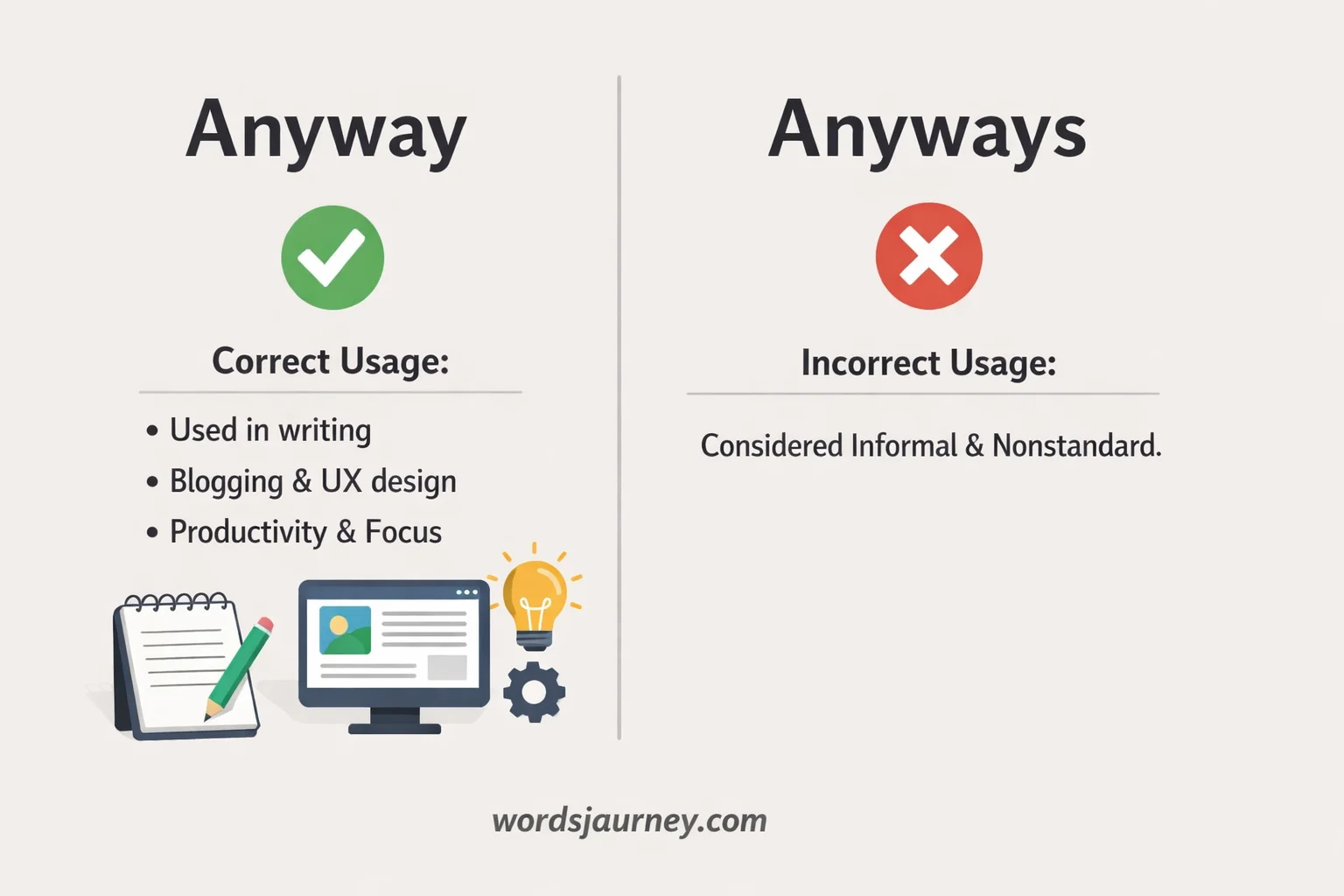
- Anyway is the standard, widely accepted form in modern English.
- Anyways is informal and often labeled nonstandard in formal writing.
Both show up in speech. Only one fits cleanly into professional writing.
Bottom line: Use anyway in essays, blogs, emails, and business writing. Save anyways for casual chat or realistic dialogue in fiction.
What “Anyway” and “Anyways” Actually Mean
Anyway works as an adverb with a few common jobs:
- It shifts the topic.
- It signals contrast.
- It wraps up a point.
Examples:
- “I didn’t love the plan. Anyway, we moved forward.”
- “We were late. Anyway, the meeting had just started.”
Anyways carries the same meaning in conversation. People use it as a speech habit. It adds a casual tone, almost like a verbal shrug. The meaning stays the same. The impression changes.
Key idea: Meaning stays steady. Tone changes.
Grammar Without the Headache
Here’s the simple rule. English adverbs don’t take an -s ending. Anyway already works as a complete adverb. The extra -s in anyways doesn’t add meaning. It adds informality.
Why does anyways exist at all?
- Spoken English evolves faster than written rules.
- People mirror patterns from other words like sometimes or always.
- Regional habits spread through pop culture and social media.
Style guides still draw a clear line. In edited writing, anyway wins.
Formal vs Informal Usage in Real Writing
Where “Anyway” Fits Cleanly
Use anyway when clarity and polish matter:
- Articles and blog posts
- Academic papers
- Business emails
- Reports and proposals
- Web copy and landing pages
Example:
“Anyway, the data shows a steady rise in engagement.”
Where “Anyways” Shows Up Naturally
Anyways fits casual settings:
- Text messages
- Friendly chats
- Informal comments
- Fiction dialogue
- Screenwriting
Example:
“Anyways, let’s grab coffee and talk it through.”
Tip: If an editor touches your work, default to anyway.
Tone and First Impressions
Word choice shapes how readers judge your voice.
- Anyway sounds neutral and polished.
- Anyways feels relaxed and conversational.
In professional writing, readers often equate polish with credibility. One casual word can tilt that impression.
Mini check:
Would you say this in a meeting with a client? If not, swap anyways for anyway.
Side-by-Side Examples That Show the Difference
Everyday Conversation
- “I forgot my keys. Anyways, I found a spare.”
- “I forgot my keys. Anyway, I found a spare.”
Both sound natural in speech. Only one looks clean on the page.
Professional Writing
- ❌ “Anyways, the results support the hypothesis.”
- ✅ “Anyway, the results support the hypothesis.”
Creative Writing and Dialogue
Writers often use anyways to reflect real speech:
“I tried calling him. Anyways, it doesn’t matter now.”
That choice adds texture to a character’s voice.
Common Mistakes Writers Make
Writers stumble over Anyway vs Anyways in predictable ways:
- Using anyways in formal writing
- Switching between both forms in the same piece
- Leaning on anyway as filler
- Letting chat habits bleed into articles
Fix: Pick anyway as your default. Edit out fillers.
Regional and Cultural Patterns
You’ll hear anyways more often in North American speech. Regional habits shape how people talk. Writing norms stay tighter because readers come from many regions. Standard forms keep content clear across borders.
Spoken English bends rules. Written English sets them.
What Dictionaries and Style Guides Say
Major dictionaries list anyway as the primary form. Many note anyways as informal or dialectal. Style guides for journalism and academic writing favor anyway for consistency and tone.
For quick reference:
- Dictionaries: Accept anyway as standard.
- Style guides: Recommended anyway in edited prose.
Language evolves. Standards help readers trust your work.
Quick Decision Guide
Use this fast filter before you publish:
Use “Anyway” When
- You write articles, blogs, or guides
- You email clients or coworkers
- You publish web content
- You explain or teach
Use “Anyways” When
- You write casual dialogue
- You capture natural speech
- You text friends
- You want a laid-back voice
Also Read: Seamless vs Seemless: Meaning and Real-World Usage
A Simple Memory Trick
Think “one way”.
There’s one standard way to write it: anyway.
That tiny rule saves time during edits.
Anyway vs Anyways at a Glance
| Feature | Anyway | Anyways |
| Grammar status | Standard adverb | Informal variant |
| Formal writing | Best choice | Not recommended |
| Casual speech | Common | Very common |
| Professional tone | Polished | Relaxed |
| Editing risk | Low | High |
Case Study: One Word, Two Tones
Before:
“Anyways, we reviewed the campaign and changed direction.”
After:
“Anyway, we reviewed the campaign and changed direction.”
What changed?
- The second version reads tighter.
- The tone feels more professional.
- The message gains authority with zero extra effort.
Small edits carry real weight.
Helpful Facts About Language Change
- Spoken English evolves faster than written norms.
- Informal variants often enter speech first.
- Editors resist forms that blur clarity.
- Readers reward writing that feels steady and intentional.
Language lives. Standards guide.
FAQs: Anyway or Anyways
1. Is “anyways” grammatically correct?
Yes, anyways is considered grammatically acceptable in informal English usage, especially in casual speech and conversational writing. However, most style guides recommend anyway for formal writing, business communication, and academic contexts because it follows standard grammar conventions.
2. Which form should I use in professional emails and meetings?
In professional settings like meetings, project management updates, or formal emails related to scheduling and time management, always choose anyway. It maintains consistency and aligns with accepted norms in formal writing and workplace communication.
3. Is there a difference between US and UK usage?
Yes. Both US and UK English strongly prefer anyway in formal contexts. Anyways appears more often in casual American speech, while it’s less common in British English. Most regional style guides agree that anyway is the safer, more polished choice.
4. Can “anyways” appear in online content or broadcasting?
You may hear anyways in casual broadcasting, podcasts, or informal online content. Still, for professional online booking pages, instructional content, or brand communication, anyway helps preserve credibility and a consistent tone.
Conclusion: Which One Should You Use?
The choice between Anyway or Anyways may seem small, but it plays a real role in how clear and credible your writing feels. In most cases, anyway is the correct and preferred option, especially in formal writing, business communication, and professional contexts tied to meetings, calendar planning, and project management. It’s the form endorsed by major style guides and widely accepted across US and UK English.While anyways shows up in casual conversation and informal broadcasting, it’s best treated as a spoken variant rather than a standard written form. If your goal is consistency, polished tone, and strong English usage, stick with anyway. Mastering small choices like this strengthens your writing, builds trust with readers, and keeps your communication clear whether you’re managing schedules, coordinating teams, or publishing content online.

Aliya Ray is a passionate writer and language enthusiast at WordsJourney. She enjoys exploring words, phrases, and everyday expressions to help readers communicate more clearly and confidently. Her content focuses on alternative ways to say common phrases, simple explanations, and real-life examples that make language easy to understand.
Aliya believes the right words can make any message stronger. Through clear, friendly writing, she helps readers improve their vocabulary without feeling overwhelmed or confused.