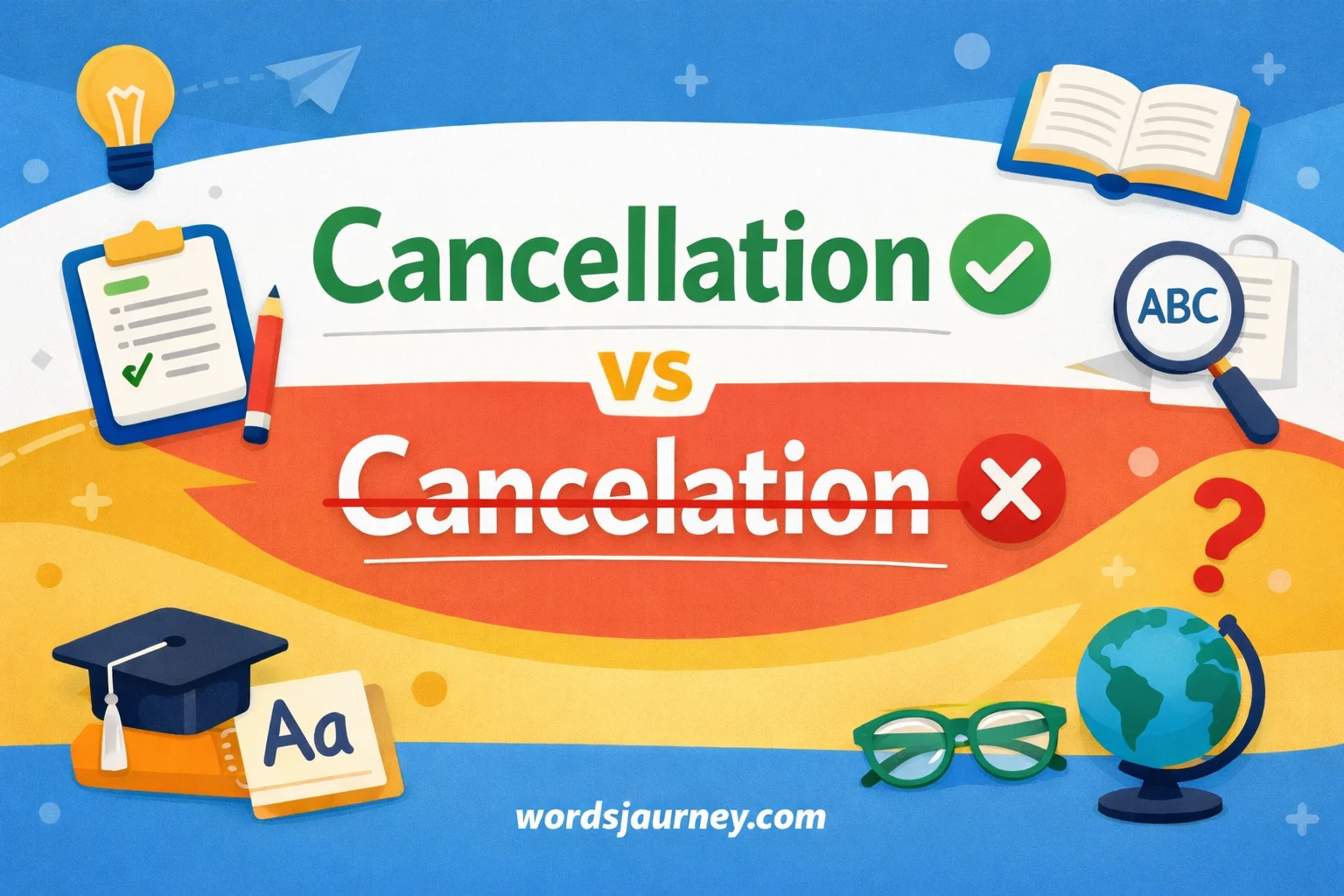
Have you ever paused while typing an email or scheduling a meeting, unsure whether to write “cancellation” or cancelation”? This common dilemma highlights subtle differences in English usage that can impact formal writing, business communication, and even online booking platforms. Understanding Cancellation vs Cancelation is crucial for anyone navigating time management, project planning, or maintaining a professional calendar.
While both spellings refer to the act of calling something off, their regional preferences differ. Cancellation is widely accepted in UK and US English, making it the safer choice in most professional and academic contexts. Cancelation, on the other hand, appears occasionally in American English, especially in older texts or informal usage. Knowing which form to use ensures clarity and consistency across emails, broadcasting schedules, and organizational documents.
In this article, we’ll break down the nuances of Cancellation vs Cancelation, explore practical examples for meetings, appointments, and online bookings, and offer expert guidance on proper usage. You’ll gain actionable tips for formal writing, understand grammar rules behind each spelling, and learn how to align your writing with style guides. By the end, choosing the correct term will feel effortless, keeping your professional communication polished and error-free.
What Does “Cancellation” Mean?
The word cancellation refers to the act of stopping, voiding, or terminating something before completion. It usually appears as a noun that describes the result of canceling an action or event.
For example:
- A flight cancellation due to bad weather
- A subscription cancellation after ending a service
- A meeting cancellation when plans change
- An order cancellation before shipment
In simple terms, cancellation describes the outcome after something gets canceled.
Root Word: Cancel
The noun comes from the verb cancel, which means to stop or invalidate something.
Examples:
- The airline canceled the flight.
- She canceled her gym membership.
- The teacher canceled the exam.
When the action becomes a noun, the word transforms into cancellation.
Cancellation vs Cancelation: The Quick Answer
If you want the short and reliable answer, here it is:
| Spelling | Correctness | Usage |
| Cancellation | Correct | Standard spelling worldwide |
| Cancelation | Rare variant | Sometimes seen in US English |
The overwhelming majority of dictionaries and style guides recommend cancellation with two L’s.
Professional writing almost always uses cancellation.
Why “Cancellation” Has Two L’s
Many writers assume the noun should keep the same spelling pattern as the verb cancel. However English morphology follows specific patterns when suffixes attach to base words.
When adding -ation to certain verbs, English often doubles the final consonant. This pattern explains why cancellation contains two L’s.
The Rule Behind It
If a word ends in L, English frequently doubles the letter before adding certain suffixes.
Examples include:
| Base Word | Correct Form |
| Cancel | Cancellation |
| Compel | Compelling |
| Propel | Propelling |
| Expel | Expulsion |
The doubling helps maintain pronunciation and readability.
Without the second L, the word might appear incomplete or awkward.
Is “Cancelation” Ever Correct?
Here’s where things get interesting.
Some dictionaries acknowledge cancelation as a variant spelling. However they typically label it less common or nonstandard.
American vs British English Usage
English often creates spelling differences between American and British usage. Think about examples like:
- color vs colour
- organize vs organise
- traveling vs travelling
However Cancellation vs Cancelation does not follow that pattern.
Regional Usage Table
| Region | Preferred Spelling |
| United States | Cancellation |
| United Kingdom | Cancellation |
| Canada | Cancellation |
| Australia | Cancellation |
In other words the double-L version wins almost everywhere.
Even American style guides usually recommend cancellation.
Common Mistakes Writers Make
Even experienced writers occasionally stumble when spelling this word. Most mistakes come from simple assumptions.
Dropping One “L”
The most frequent mistake involves removing the second L.
Incorrect example:
- The airline announced a flight cancelation.
Correct version:
- The airline announced a flight cancellation.
Confusing Verb and Noun Forms
Another common mistake involves mixing grammatical forms.
Example:
Incorrect
- The company sent a cancel notice.
Correct
- The company sent a cancellation notice.
Spelling Errors in Forms
Online forms often reveal this mistake. A website may display cancelation policy instead of cancellation policy.
While readers still understand the meaning the spelling appears less professional.
Cancellation in Everyday Communication
The word cancellation appears frequently in modern life. Businesses and digital platforms use it daily.
Travel Industry
Airlines regularly announce flight cancellations due to weather or mechanical issues.
Example:
“Severe storms caused widespread flight cancellations across several major airports.”
Subscription Services
Streaming platforms often send subscription cancellation confirmations.
Example:
- Netflix membership cancellation
- Gym membership cancellation
Online Shopping
E-commerce companies handle order cancellations before shipping.
Example:
- Amazon order cancellation request
Events and Entertainment
Concert organizers sometimes announce event cancellations when unexpected problems arise.
Case Study: Airline Flight Cancellations
The airline industry provides a perfect real-world example.
During severe storms airlines sometimes cancel hundreds of flights in a single day. These flight cancellations affect thousands of passengers.
According to the aviation analytics company Cirium, airlines canceled over 70,000 flights in the United States during severe winter disruptions in 2023.
Every official report used the spelling cancellation, not cancelation.
That consistent usage reinforces the standard spelling.
A Quick Memory Trick
Remembering the correct spelling becomes easier with a simple trick.
Think about the action itself.
When you cancel something the problem doubles. The extra L reminds you of that doubling.
Another trick works like this:
Cancel + L + ation = Cancellation
The added L bridges the verb and the suffix.
Once you see it this way the spelling feels natural.
Related Words That Follow Similar Patterns
English includes several words where the final consonant changes when adding suffixes.
Understanding these patterns strengthens spelling skills.
| Verb | Noun or Form |
| Cancel | Cancellation |
| Compel | Compelling |
| Propel | Propelling |
| Expel | Expulsion |
| Travel | Travelling |
Notice how the final letter often doubles.
These patterns appear throughout English vocabulary.
Why Correct Spelling Matters in Professional Writing
Some writers wonder whether the difference between cancellation vs cancelation truly matters. After all readers usually understand both.
However spelling accuracy influences credibility.
Professional communication depends on clarity and trust. Small details signal attention to quality.
Consider these situations:
- Legal documents
- Business emails
- Academic papers
- Customer policies
Using the accepted spelling prevents unnecessary distractions.
Imagine Two Businesses
Company A writes:
Subscription Cancelation Policy
Company B writes:
Subscription Cancellation Policy
Most readers instinctively trust the second company more.
The difference seems tiny. Still professionalism lives in small details.
For More Please Visit: Vice Versa or Visa Versa Meaning, and Usage
How Style Guides Handle the Word
Professional editors rely on style manuals when choosing spelling.
Several major guides recommend cancellation.
Examples
Chicago Manual of Style
Prefers the double-L form.
Associated Press Stylebook
Uses cancellation.
Oxford Style Guide
Uses cancellation.
These guides influence journalism, publishing, and corporate writing worldwide.
The Linguistic History of the Word
The word cancel traces back to Latin roots.
Origin Path
| Language | Word | Meaning |
| Latin | cancellare | to cross out |
| Old French | canceler | erase or annul |
| English | cancel | stop or invalidate |
The noun cancellation emerged later as English expanded its vocabulary.
The doubling of L developed through standard spelling patterns in English writing.
Why English Spelling Sometimes Doubles Letters
English spelling follows a blend of historical influences.
Several factors explain why letters sometimes double:
- Pronunciation clarity
- Morphological consistency
- Historical evolution
- Influence from Latin and French
Doubling letters helps readers interpret pronunciation correctly.
For example:
- hop → hopping
- run → running
- cancel → cancellation
Each case preserves pronunciation.
How Often Each Spelling Appears Online
Search data reveals a clear winner.
According to search trend analysis:
| Spelling | Relative Frequency |
| Cancellation | Extremely common |
| Cancelation | Rare |
A simple Google search shows millions more results for cancellation.
This difference demonstrates how strongly the standard spelling dominates.
Tips to Avoid Spelling Mistakes
Avoiding spelling mistakes becomes easier with a few practical habits.
Helpful Tips
• Use spell-check tools
• Read important documents aloud
• Memorize common suffix patterns
• Check dictionaries when uncertain
Most importantly remember the double-L rule.
That single detail solves the problem.
Quick Comparison Diagram
Cancellation vs Cancelation
Cancel
⬇
Add suffix -ation
Cancel + L + ation
⬇
Cancellation
The extra L creates the correct noun form.
Frequently Asked Questions (FAQs)
1. What is the difference between “cancellation” and “cancelation”?
Cancellation is the standard spelling used in both UK and US English, while cancelation is a less common variant, mainly found in American English. Both mean the act of calling something off, but cancellation is preferred in formal writing and professional contexts.
2. Which spelling should I use for business communication?
Always use cancellation in emails, project management documents, scheduling systems, and broadcasting schedules. It ensures clarity, professionalism, and alignment with most style guides.
3. Is “cancelation” incorrect?
Not exactly. Cancelation is recognized but rare. Its usage is mostly informal or historical, so it’s safer to stick with cancellation for consistent and formal writing.
4. Does regional preference matter?
Yes. UK English exclusively uses cancellation, while US English recognizes both forms. For online booking systems, meetings, and calendars, sticking with cancellation avoids confusion.
5. How can I remember which spelling to use?
Think of the double “l” in cancellation as a visual cue for length and formality. When in doubt, always choose cancellation for professional or academic contexts.
Conclusion
Understanding the difference between Cancellation vs Cancelation is more than a minor spelling choice—it reflects attention to grammar, consistency, and professionalism. In business communication, project management, broadcasting schedules, and online booking systems, using the correct spelling ensures clarity and credibility.
While cancelation exists, cancellation dominates in both UK and US English and is favored by formal style guides. By mastering this subtle distinction, you can write with confidence, maintain professionalism in your emails, documents, and calendars, and avoid unnecessary errors.In short, whether you’re managing a meeting, a broadcast, or a client appointment, choosing cancellation keeps your communication polished, precise, and universally understood.

Aliya Ray is a passionate writer and language enthusiast at WordsJourney. She enjoys exploring words, phrases, and everyday expressions to help readers communicate more clearly and confidently. Her content focuses on alternative ways to say common phrases, simple explanations, and real-life examples that make language easy to understand.
Aliya believes the right words can make any message stronger. Through clear, friendly writing, she helps readers improve their vocabulary without feeling overwhelmed or confused.