Ever paused while writing an email or scheduling a meeting and wondered whether to use Discrete or Discreet? These two words sound almost identical but carry completely different meanings, making them a common pitfall in English usage and formal writing. Confusing them can subtly change the tone of business communication, project updates, or even calendar invitations. Understanding their distinction is essential for anyone striving for clarity and professionalism.
In practical terms, discrete refers to something separate, distinct, or individual, often appearing in project management, time management, or data-related contexts. On the other hand, discreet conveys tact, confidentiality, or careful judgment, making it crucial in broadcasting, online booking, or sensitive meetings. Mastering this difference helps maintain consistency in writing, ensures effective communication, and aligns with both US and UK style guides.
This article will break down the nuances of Discrete or Discreet, providing examples, rules, and tips to use each word correctly. Whether you’re drafting formal emails, preparing meeting notes, or managing a shared calendar, you’ll learn how to choose the right term confidently. By the end, you’ll not only avoid embarrassing errors but also elevate your grammar, writing style, and professional presence.
If you want, I can also create a visual infographic comparing “Discrete vs Discreet” that’s perfect for quick reference and SEO-friendly engagement. Do you want me to do that next?
Understanding the Meanings
Discrete
Discrete means separate, distinct, or individually separate. Think of things you can count, categorize, or distinguish as individual units.
Examples:
- “The survey recorded discrete responses from each participant.”
- “Mathematics often deals with discrete variables, like integers.”
- “The property has three discrete sections, each fenced off.”
Origin: Latin discretus, meaning “separated.” This word is often used in academic, technical, or mathematical contexts. When you’re talking about something you can identify as individual and separate, discrete is your word.
Discreet
Discreet refers to being careful, tactful, or showing good judgment, especially regarding private matters. It’s about subtlety and caution.
Examples:
- “He was very discreet about sharing personal details.”
- “Please remain discreet during the surprise party planning.”
- “Lawyers need to be discreet when handling confidential cases.”
Origin: Latin discretus, meaning “distinguished in thought,” emphasizing caution rather than separation. Discreet is often used in social, professional, or personal contexts where sensitivity and tact are required.
Key Differences Between Discrete and Discreet
Confusion usually arises because both words sound the same. The distinction becomes obvious when you compare them side by side.
| Feature | Discrete | Discreet |
| Meaning | Separate, distinct | Careful, tactful |
| Usage | Mathematics, items, categories | Behavior, speech, actions |
| Example | “The study included discrete variables.” | “She was discreet when handling the rumor.” |
| Part of speech | Adjective | Adjective |
| Common mistakes | Using “discreet” when meaning separate | Using “discrete” when meaning cautious |
Quick tip: If you’re talking about separation or individual units, use discrete. If you’re talking about caution, privacy, or subtlety, use discreet.
Common Mistakes and How to Avoid Them
Even experienced writers mix these words up. Here’s how people typically go wrong:
- Business email mishap:
- “Please keep this information discrete.” → Incorrect. It should be discreet.
- Math error:
- “We have three discreet categories.” → Incorrect. It should be discrete.
Memory trick:
- Discrete = separate → think “distance” or “divided.”
- Discreet = careful → think “discreetly handling something.”
Real-World Examples
Academic and Technical Contexts
Discrete is common in subjects like mathematics, statistics, computer science, and logic.
- “Discrete data” refers to values that can be counted and are not continuous.
- “Discrete signals” in electronics are distinct signals separated from each other.
Professional Contexts
Discreet applies in workplaces, legal settings, and social situations where privacy matters.
- Lawyers, HR professionals, and managers must handle information discreetly.
- Confidential emails, sensitive negotiations, and workplace gossip all require discretion.
Everyday Life
You might encounter discrete or discreet in subtle ways in daily conversations.
- “She wore discrete jewelry that didn’t attract attention.” → careful, discreet.
- “The garden is divided into discrete plots for different vegetables.” → separate, discrete.
Idioms, Phrases, and Collocations
Discrete phrases:
- Discrete choice
- Discrete variable
- Discrete unit
Discreet phrases:
- Be discreet
- Keep discreet
- Discreet about something
These collocations help you identify which word fits the context. Pay attention to academic vs social usage.
For More Please Visit: Has or Have: The Complete Grammar Guide by Correctly
Tips for Remembering
Here are some practical techniques to ensure you never mix these words up:
- Mnemonic device:
- Discrete = Distance apart (separate).
- Discreet = Discretion (careful).
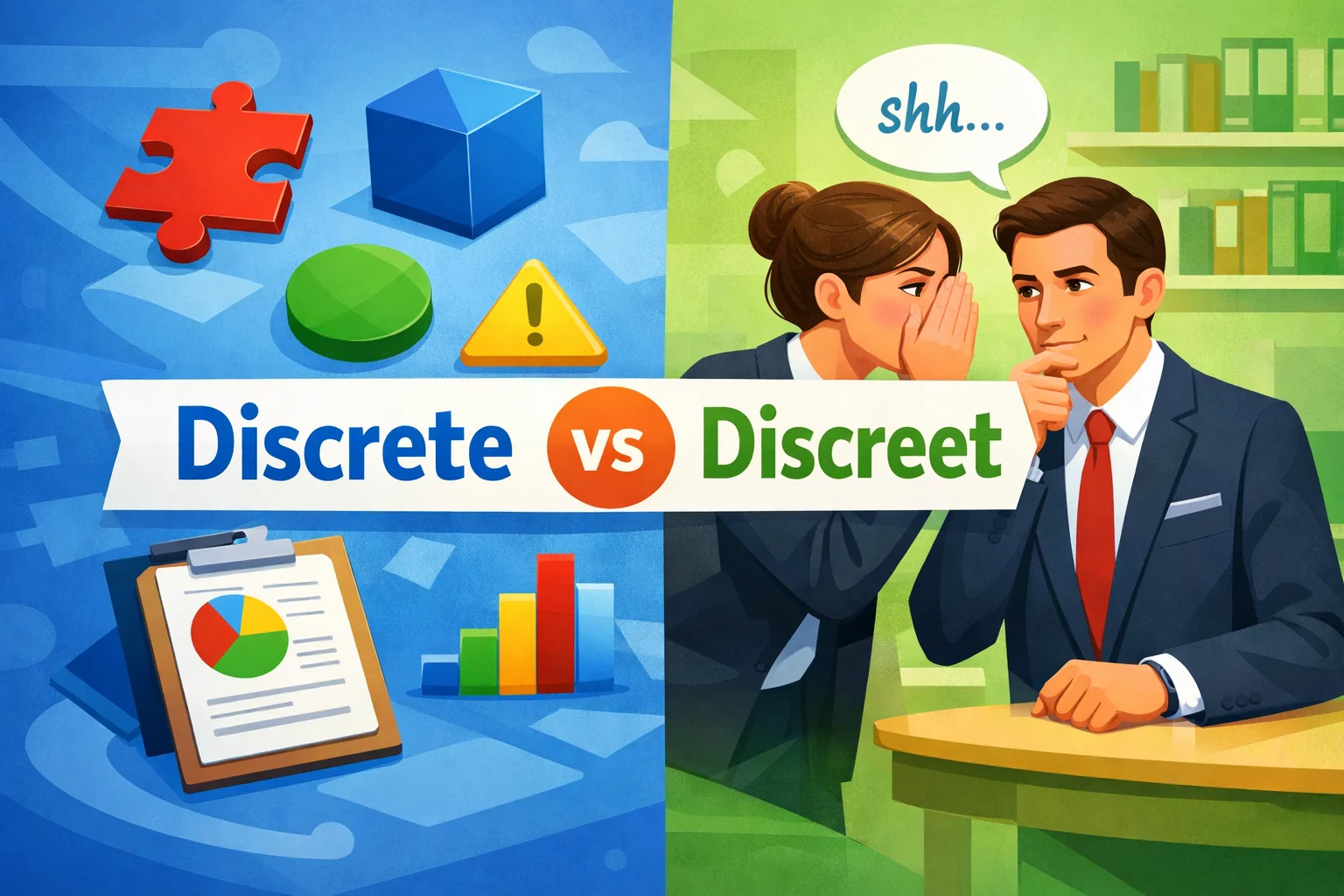
- Visual diagram idea:
- Imagine discrete objects on a table, all separate.
- Imagine discreet actions, like whispering behind closed doors.
- Checklist for writing:
- Does the word relate to separation or categories? → discrete.
- Does the word relate to caution, secrecy, or subtlety? → discreet.
Frequently Asked Questions (FAQs) About “Discrete or Discreet”
1. What is the main difference between discrete and discreet?
Discrete means separate or distinct, while discreet refers to being careful, tactful, or confidential. Remember: discrete = distinct, discreet = careful.
2. Can I use discrete in formal writing?
Yes, discrete is perfectly acceptable in formal writing, especially in project management, scheduling, and data contexts. Just ensure it matches the meaning of separation or individuality.
3. Is discreet more common in business communication?
Absolutely. Discreet often appears in emails, meetings, or sensitive discussions where tact and confidentiality matter. It signals professionalism and careful judgment.
4. Are there regional preferences for these words?
The distinction is the same in US and UK English, though style guides may slightly influence formal usage or punctuation. Focus on the meaning rather than regional spelling.
5. How can I remember which one to use?
A simple trick:
- Discrete → Think “separate pieces” (distinct, individual).
- Discreet → Think “be discreet, keep quiet” (tact, confidentiality).
Conclusion
Understanding Discrete or Discreet is more than just a spelling matter—it’s about precision, clarity, and professionalism in business communication, formal writing, and scheduling. Using the wrong word can confuse readers or even subtly undermine your credibility. By keeping the key differences in mind, you can confidently craft emails, project updates, meeting notes, and calendar entries with accuracy and style.Mastering this distinction also improves overall grammar, consistency, and English usage, helping you navigate both US and UK writing standards. With practice and awareness, choosing between discrete and discreet will soon feel intuitive, making your writing sharper, clearer, and more effective in every professional context.

Emma Brook is a dedicated writer and language enthusiast at WordsJourney. She’s passionate about helping readers understand words better and use them with confidence in everyday conversations. Her work focuses on alternative phrases, clear meanings, and practical examples that make language feel simple and approachable.
With a friendly, reader-first writing style, Emma breaks down common expressions and explores smarter ways to say things without sounding forced or complicated. Her goal is to make learning words enjoyable, useful, and easy for everyone.