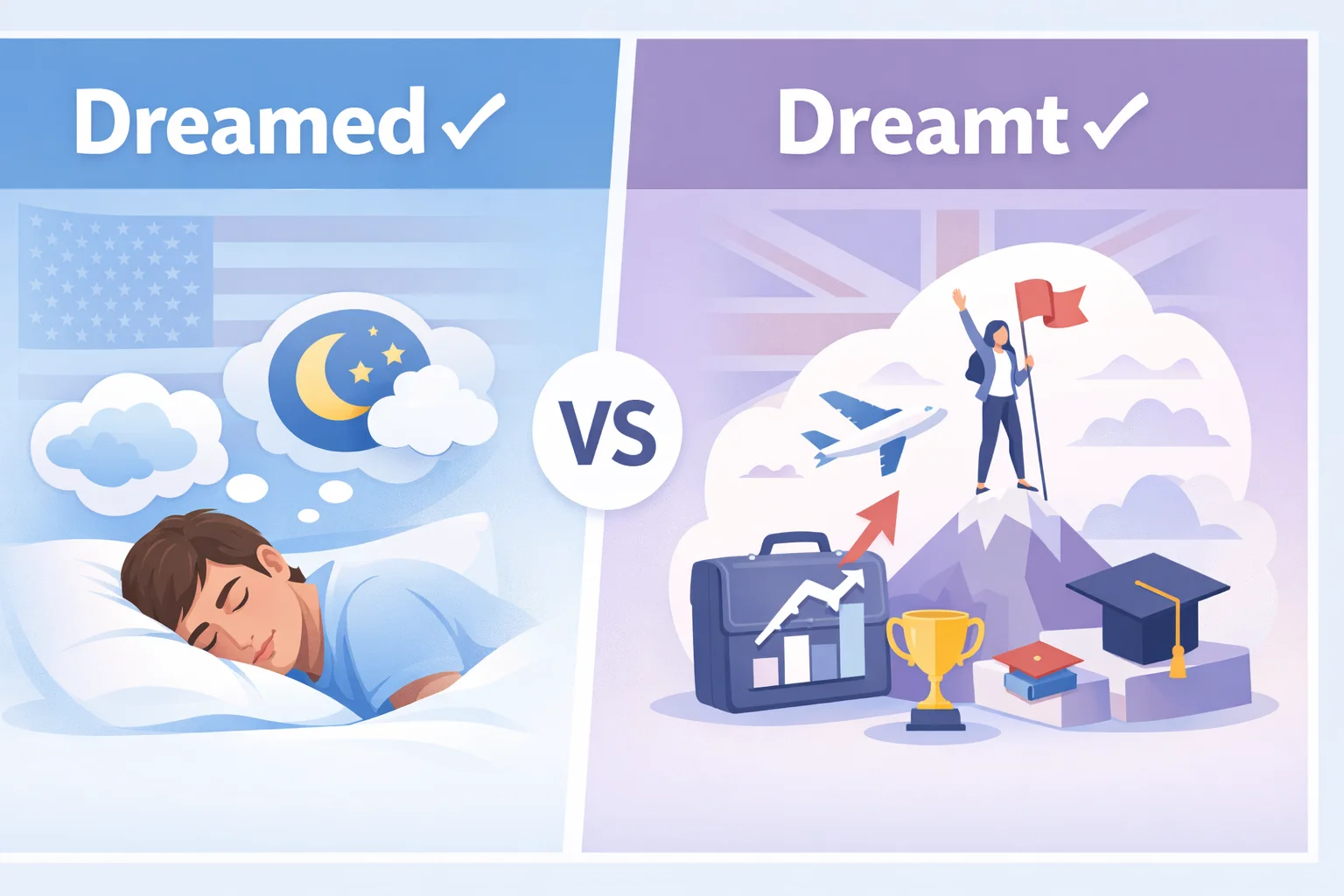
Have you ever paused mid-sentence and wondered whether to write “Dreamed or Dreamt”?
You’re not alone. This subtle difference often trips up even confident writers, especially in business communication, formal writing, or everyday English usage. While both forms are correct, their usage depends on context, tone, and even regional preference making it essential to understand when each fits naturally.
In today’s fast-paced world of meetings, calendar planning, and project management, clarity matters more than ever. Whether you’re drafting emails, handling online booking, or working in broadcasting, consistent language builds credibility. That’s where mastering small grammar choices like dreamed vs. dreamt becomes surprisingly important. It’s not just about correctness it’s about consistency, professionalism, and clear communication across teams and audiences.
This article breaks down the real difference between “Dreamed or Dreamt”, including US vs. UK preferences, guidance from major style approaches, and practical examples you can actually use.
You’ll learn how to choose the right form based on tone, audience, and context so your writing stays polished, natural, and effective, whether you’re managing scheduling tasks or refining your everyday grammar.
Dreamed or Dreamt — Quick Answer
Let’s cut straight to it.
- Dreamed → Preferred in American English
- Dreamt → More common in British English
- Both are grammatically correct past forms of “dream”
Quick Comparison Table
| Form | Region Preference | Tone | Example |
| Dreamed | American English | Neutral, modern | I dreamed about flying |
| Dreamt | British English | Slightly poetic | I dreamt of distant lands |
If you’re writing for a global audience, dreamed is your safest bet.
What Do “Dreamed” and “Dreamt” Actually Mean?
Both words serve the exact same purpose. They’re the past tense and past participle of “dream.”
That means you can use them in two main ways:
Literal Meaning (While Sleeping)
- “I dreamed about my childhood home.”
- “She dreamt of falling from the sky.”
Figurative Meaning (Goals and Aspirations)
- “He dreamed of starting his own business.”
- “They dreamt about a better future.”
No difference in meaning. The distinction lies in style, region, and tone.
Why Do Both Dreamed and Dreamt Exist?
English doesn’t always like simplicity. This is a perfect example.
The Real Reason
English verbs evolved in two main patterns:
- Regular verbs → Add -ed (walk → walked)
- Irregular verbs → Change form (keep → kept)
“Dream” sits awkwardly between the two.
- Dreamed follows the regular pattern
- Dreamt follows an older irregular pattern (like “felt” or “kept”)
What Happened Over Time
Language tends to simplify. Over centuries:
- Regular forms became more common
- Irregular forms slowly faded or became stylistic
That’s why dreamed dominates modern usage, especially in digital writing.
American vs British Usage of Dreamed or Dreamt
Here’s where things get practical.
American English
- Strong preference for dreamed
- “Dreamt” sounds slightly unusual or literary
- Used in:
- Blogs
- Business writing
- Academic content
British English
- Both forms appear regularly
- “Dreamt” shows up more often than in the US
- Common in:
- Fiction
- Journalism
- Casual writing
Global Trend
Even outside the US and UK, “dreamed” is becoming dominant.
Why? Because:
- It’s simpler
- It aligns with most regular verbs
- It feels natural to non-native speakers
Tone and Style Differences You Should Know
This is where your writing gets interesting.
Dreamed — Clean and Modern
- Sounds natural in everyday speech
- Works well in global communication
Example:
“I dreamed about finishing this project on time.”
Dreamt Expressive and Literary
- Adds a poetic touch
- Feels slightly old-fashioned
- Common in storytelling
Example:
“He dreamt beneath a sky full of endless stars.”
Think of It Like This
- Dreamed = jeans and t-shirt
- Dreamt = tailored suit
Both work. One just carries more style.
When You Should Use “Dreamed”
If you want clarity and reach, this is your go-to.
Best Situations for “Dreamed”
- Writing blog posts (especially SEO content)
- Creating academic or professional material
- Targeting American or global readers
- Keeping tone neutral and modern
Why It Works
- More familiar to most readers
- Easier to understand instantly
- Preferred by major style guides
When You Should Use “Dreamt”
Now let’s talk style.
Best Situations for “Dreamt”
- Creative writing (stories, poetry)
- British English audiences
- When rhythm or tone matters
Where It Shines
- Fiction narratives
- Emotional storytelling
- Descriptive passages
Example:
“She dreamt of oceans she had never seen.”
It adds a subtle elegance. Used right, it feels intentional not outdated.
Real-Life Usage Examples of Dreamed vs Dreamt
Let’s bring this down to earth.
Everyday Conversation
- “I dreamed I was late for work.”
- “I dreamed about meeting my favorite actor.”
Professional Context
- “She dreamed of expanding her business globally.”
- “They dreamed about scaling their startup.”
Creative Writing
- “He dreamt of golden fields stretching forever.”
- “She dreamt beneath a silent moon.”
Case Study: How Writers Actually Use Dreamed vs Dreamt
Let’s look at real-world patterns.
Digital Content
- 90%+ usage: dreamed
- Reason: clarity and global readability
Novels and Fiction
- Mixed usage
- “Dreamt” appears more in:
- Historical fiction
- Fantasy
- Poetry
Academic Writing
- Almost always: dreamed
- Reason: consistency and simplicity
Takeaway
If your goal is reach and readability, choose dreamed.
If your goal is style and emotion, consider dreamt.
For More Please Visit: Crow vs Raven: The Complete Guide to birds
Common Mistakes to Avoid
Even simple words can trip you up.
Mixing Both Forms Randomly
❌ “He dreamed about success and later dreamt of failure.”
✔ Pick one and stay consistent.
Assuming One Is Wrong
❌ “Dreamt isn’t correct.”
✔ Both are correct.
Using “Dreamt” in Formal US Writing
❌ Can feel out of place
✔ Stick with “dreamed” for clarity
Dreamed vs Dreamt — Side-by-Side Comparison
| Feature | Dreamed | Dreamt |
| Grammar | Correct | Correct |
| Usage Region | US (preferred) | UK (more common) |
| Tone | Neutral | Slightly poetic |
| Frequency | Very common | Less common |
| SEO Friendly | Yes | Less effective |
| Best Use Case | Blogs, business | Fiction, storytelling |
Simple Rule to Choose Between Dreamed or Dreamt
If you remember nothing else, remember this:
- Use “dreamed” for clarity and modern writing
- Use “dreamt” for style and creative tone
One-Line Shortcut
When in doubt, go with dreamed.
FAQs: Dreamed or Dreamt
1. Is “dreamed” or “dreamt” correct?
Both “dreamed” and “dreamt” are grammatically correct past forms of dream. The difference comes down to regional preference, tone, and consistency in your writing.
2. Which form is more common in American English?
In American English, “dreamed” is far more common. It’s widely used in business communication, formal writing, and professional contexts like project management or meetings where clarity and standardization matter.
3. Is “dreamt” wrong or outdated?
Not at all. “Dreamt” is still correct and commonly used in British English. It may sound slightly more literary or traditional, but it’s perfectly acceptable—especially in creative or informal writing.
4. Should I use “dreamed” or “dreamt” in formal writing?
For formal writing, especially in global or US-focused contexts, it’s safer to use “dreamed.” Many style preferences favor regular verb forms for clarity and consistency, particularly in business communication, calendar updates, or online booking systems.
5. Does it matter which one I choose in professional settings?
Yes, slightly. In professional environments involving scheduling, time management, or broadcasting, consistency is key. Pick one form—preferably “dreamed” in US contexts—and stick with it across documents.
6. Are there other verbs like “dreamed/dreamt”?
Yes, English has several verbs with similar variations, such as:
- Learned / Learnt
- Burned / Burnt
- Spelled / Spelt
Like “dreamed or dreamt,” these differences often reflect regional usage and stylistic preference.
Conclusion
Choosing between “Dreamed or Dreamt” isn’t about right or wrong—it’s about context, audience, and consistency. Both forms are correct, but “dreamed” dominates in American English and professional settings, while “dreamt” leans toward British English and a more literary tone.
In practical terms, if you’re writing emails, managing meetings, updating a calendar, or working in project management, sticking with “dreamed” keeps your communication clear and standardized. On the other hand, if your audience prefers UK conventions or you’re aiming for a more expressive tone, “dreamt” fits naturally.Ultimately, strong writing comes down to small details. By understanding nuances like dreamed vs. dreamt, you improve your grammar, sharpen your English usage, and build more effective communication whether you’re handling scheduling tasks or crafting polished, professional content.

Aliya Ray is a passionate writer and language enthusiast at WordsJourney. She enjoys exploring words, phrases, and everyday expressions to help readers communicate more clearly and confidently. Her content focuses on alternative ways to say common phrases, simple explanations, and real-life examples that make language easy to understand.
Aliya believes the right words can make any message stronger. Through clear, friendly writing, she helps readers improve their vocabulary without feeling overwhelmed or confused.