Have you ever paused mid-sentence, wondering which word fits—hanged or hung? That tiny choice can change tone, meaning, and credibility. In this guide, we’ll unpack Hanged vs Hung with clear examples and real-world context, so your English usage stays precise in business communication, emails, and reports. When your words carry weight in meetings, broadcasting, or client updates, accuracy isn’t optional—it’s professional currency.
This article breaks down the grammar rules behind each term, explains the historical usage, and shows where people slip up in formal writing. You’ll see how small language choices support consistency across calendars, online booking pages, and project management tools. We’ll connect the dots to everyday workflows like scheduling, time management, and clear documentation—places where precise wording prevents confusion and saves time.
We’ll also note what major style guides recommend and where regional preferences (US vs. UK) may differ, so you can write with confidence in global contexts. Expect simple explanations, practical examples, and quick checks you can apply right away. By the end, you’ll know exactly when to use each form and how to keep your writing sharp, professional, and reader-friendly.
Why People Confuse Hanged vs Hung
The confusion comes from history and word evolution. “Hang” is the base verb, but English splits it depending on context:
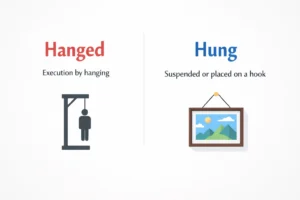
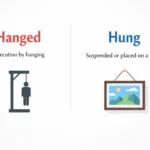
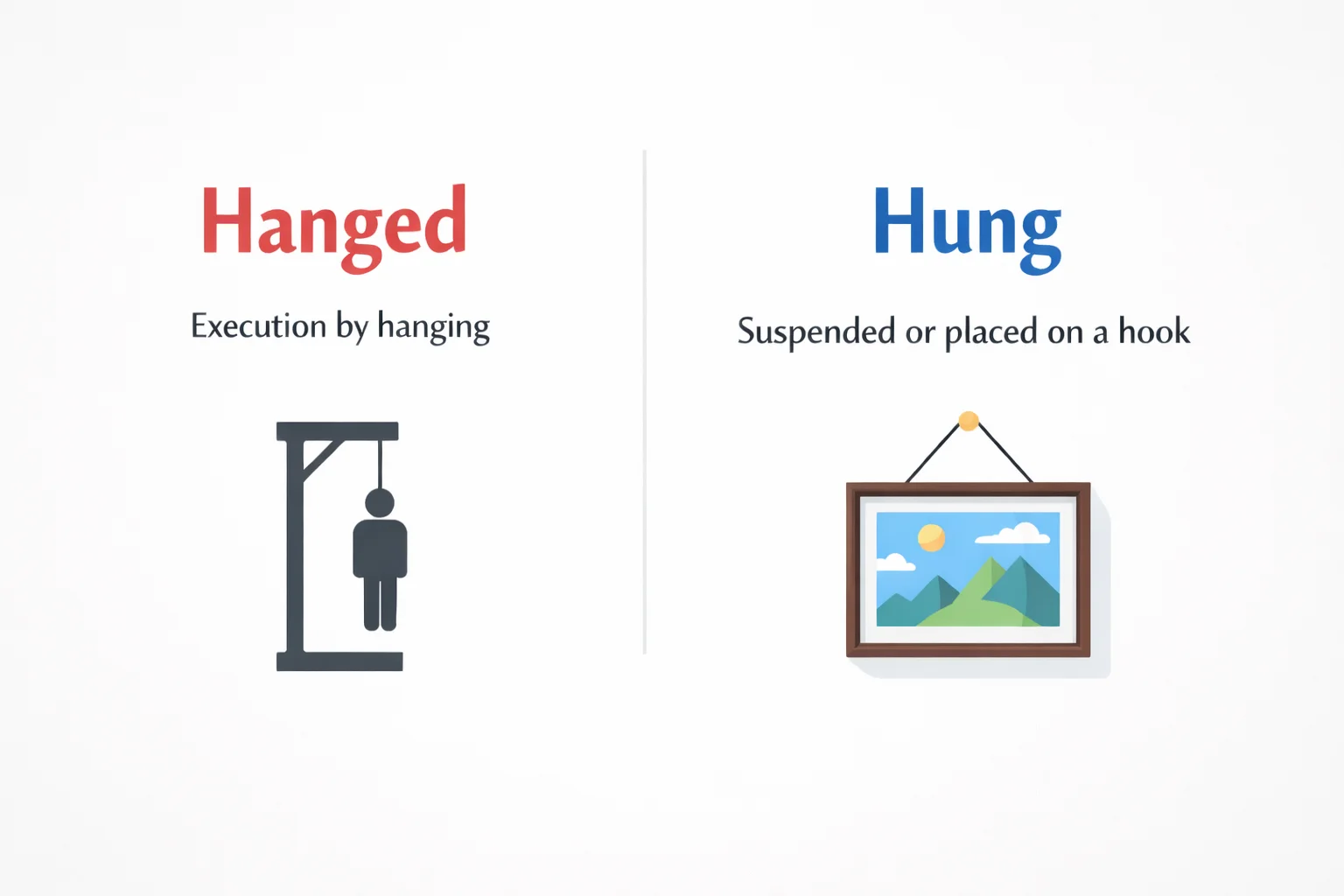
- Hanged is used exclusively for people, usually when describing execution by hanging.
- Hung applies to objects, items, or anything else, like clothes, pictures, or decorations.
Many writers overgeneralize. They see “hung” in casual speech and assume it works for everyone, which is why “He was hung for his crimes” pops up online—but it’s incorrect. Using the right form not only signals grammar awareness, but also shows respect for meaning.
Core Rule: The Only Difference That Actually Matters
Here’s the simplest way to remember it:
- Hanged = people (execution or death by hanging)
- Hung = everything else (objects, items, or general past tense of hanging something)
This rule might feel rigid, but it has a purpose. When you write “hanged,” readers instantly understand you’re referring to a person who was executed or suspended by the neck. Using “hung” in that context sounds awkward or even humorous inappropriately.
Quick Rule Snapshot Table
| Word | Correct Use Case | Example Sentence |
| Hanged | People executed by hanging | The outlaw was hanged at dawn. |
| Hung | Objects, items, decorations | She hung the painting in the hallway. |
Grammar Breakdown: How Tense Works with Hang
Understanding past tense and past participle is key:
- Base verb: hang
- Past tense for people: hanged
- Past tense for objects: hung
- Present participle: hanging (used for both people and objects in ongoing actions)
Mini Conjugation Table
| Form | People (Execution) | Objects / Things |
| Base | hang | hang |
| Past simple | hanged | hung |
| Past participle | hanged | hung |
| Present participle | hanging | hanging |
Notice how consistent this is across usage. The moment you think about who or what is involved, the correct form becomes obvious.
Real-World Examples You’ll Actually See
Here’s how correct usage looks in different contexts:
- News reporting: “The criminal was hanged yesterday morning.”
- Historical writing: “During the 18th century, pirates were hanged publicly.”
- Everyday conversation: “I hung my coat on the rack.”
- Fiction/storytelling: “He hung the lantern by the doorway as night fell.”
Side-by-Side Comparison
| Incorrect | Correct | Why It Matters |
| He was hung for theft. | He was hanged for theft. | Refers to a person executed. |
| The picture was hanged on the wall. | The picture was hung on the wall. | Refers to an object. |
| She hanged the dress on the hook. | She hung the dress on the hook. | Refers to clothing. |
Common Mistakes (and How to Avoid Sounding Awkward)
Writers often misuse hung vs hanged because of:
- Influence from casual speech or movies
- Misreading historical texts
- Overgeneralizing “hung” for all situations
Tips to avoid errors:
- Always ask: “Is this about a person?”
- If yes → use hanged.
- If no → use hung.
- When unsure, check a dictionary (Merriam-Webster or Cambridge are reliable).
Style and Tone: When Precision Really Matters
The stakes rise when writing formally:
- Journalism: Misusing “hung” in an execution story can look unprofessional.
- Legal documents: Accuracy matters; “hanged” signals the act of execution.
- Creative writing: “Hung” conveys objects, emotions, or suspended items; “hanged” adds a heavy, formal tone.
Quick Memory Tricks to Never Get It Wrong Again
Here’s a simple mental shortcut:
- If it’s a person → hanged
- If it’s a thing → hung
Visual hack: Picture a noose for “hanged” and a coat hook for “hung.” The image sticks.
Regional and Modern Usage: Do People Still Follow the Rule?
- American English: Maintains the distinction strongly, especially in journalism and legal writing.
- British English: Uses “hanged” for executions; “hung” for objects. No major deviation.
- Modern casual speech: Some may say “hung” for people in informal settings, but style guides like AP Stylebook and Merriam-Webster still recommend hanged.
Also Read: Rhythm or Rythm: Meaning and Usage
Edge Cases and Tricky Scenarios
English loves metaphors and idioms:
- “Hung in the balance” – metaphorical; use “hung” even though it doesn’t refer to a person.
- Phrasal verbs: “hung up” in phone calls or mental blocks always uses “hung.”
- Historical quotes: Older texts may confuse usage, but modern grammar rules remain consistent.
Practical Cheat Sheet (Printable-Style Section)
Quick Reference
- Hanged = people executed → “He was hanged at noon.”
- Hung = objects/items → “I hung my coat on the rack.”
- Memory trick: Noose = hanged; hook = hung
This one-page guide will save countless editing headaches.
FAQs: Hanged vs Hung
1. What is the difference between “hanged” and “hung”?
- Hanged is used specifically for executions by hanging. Example: The criminal was hanged at dawn.
- Hung is used for all other contexts, like objects being suspended. Example: She hung the painting on the wall.
2. Can I use “hung” instead of “hanged”?
- In legal or historical contexts, always use hanged for executions. Using hung here is considered incorrect in formal writing.
3. Are there regional differences between US and UK usage?
- US English favors strict usage: hanged for executions, hung for objects.
- UK English follows the same rules but sometimes allows minor flexibility in casual speech.
4. How does this affect formal writing and business communication?
- Choosing the correct word maintains professionalism and clarity, especially in emails, reports, and project documentation.
- Incorrect usage can confuse readers or reduce credibility in calendar notes, meetings, and scheduling communications.
5. Are there easy tips to remember the difference?
- Think “hanged for people, hung for things”.
- When unsure, check the context: execution? → hanged; decoration or object? → hung.
Conclusion
Mastering the difference between hanged vs hung may seem small, but it has a big impact on English usage, grammar, and professional communication. From formal writing and project management documents to online booking pages and broadcasting scripts, using the right term ensures clarity, consistency, and credibility. Remember the simple rule: people are hanged, objects are hung. Keep this guideline in mind, follow style guides and regional preferences, and your writing will remain polished and accurate. With these tips, you can confidently handle both everyday sentences and more formal contexts, making your communication precise, professional, and easy to understand.

Emma Brook is a dedicated writer and language enthusiast at WordsJourney. She’s passionate about helping readers understand words better and use them with confidence in everyday conversations. Her work focuses on alternative phrases, clear meanings, and practical examples that make language feel simple and approachable.
With a friendly, reader-first writing style, Emma breaks down common expressions and explores smarter ways to say things without sounding forced or complicated. Her goal is to make learning words enjoyable, useful, and easy for everyone.