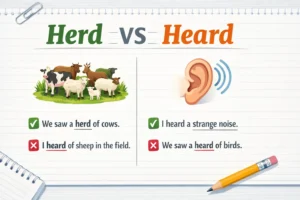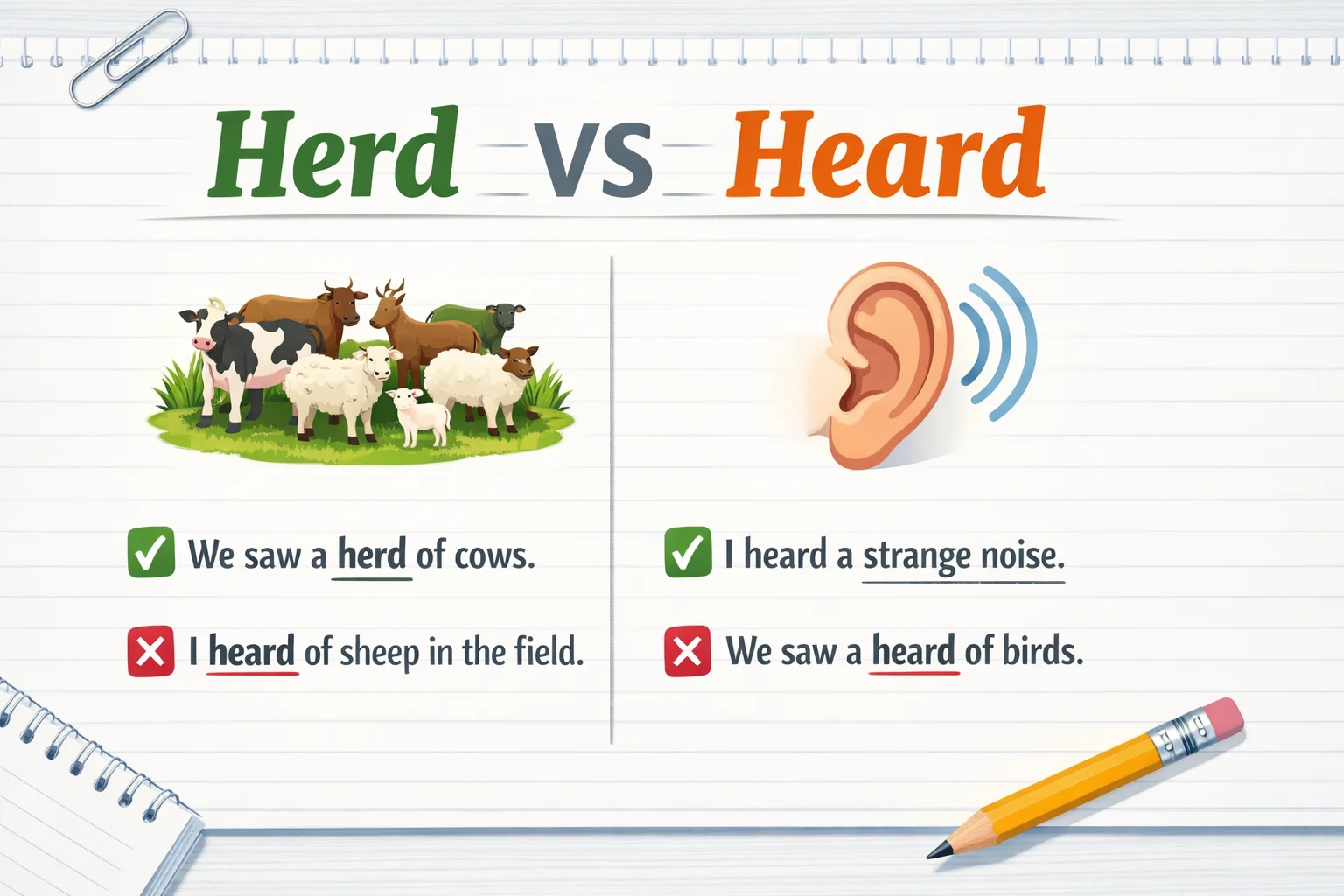
Ever paused mid-sentence and wondered if you “herd” something or “heard” it? You’re not alone. The confusion around “Herd or Heard” is surprisingly common in everyday English usage, especially in emails, reports, and quick messages. Because the words sound identical, many writers mix them up in business communication, formal writing, and even casual online posts. Yet their meanings are completely different, and using the wrong one can weaken clarity, consistency, and professional credibility.
In modern workplaces, clear language matters more than ever. Whether you’re sending updates during meetings, confirming details on a calendar, or coordinating tasks in project management tools, precise wording prevents misunderstandings. For instance, someone might write that they “herd the announcement on the company’s broadcasting channel” when they actually mean “heard.” Small grammar mistakes like this can slip into online booking confirmations, scheduling messages, or discussions about time management, especially when typing quickly.
This guide breaks down the real difference between “Herd or Heard,” explains their meanings with practical examples, and shows how to avoid common mistakes in formal writing and daily communication. You’ll also learn how grammar rules, style guides, and slight US vs. UK English preferences influence usage. By the end, you’ll understand when to use each word confidently—so your writing stays clear, professional, and grammatically correct.
Herd or Heard: Quick Answer
Before diving deeper, here’s the simple difference between herd and heard.
| Word | Meaning | Part of Speech | Example Sentence |
| Herd | A group of animals or guiding animals together | Noun / Verb | The shepherd watched over a herd of sheep. |
| Heard | Past tense of the verb hear | Verb | I heard thunder last night. |
Key takeaway
- Herd relates to animals or groups.
- Heard relates to listening or sound.
If the sentence involves hearing something, the correct word will almost always be heard.
What Does “Herd” Mean?
The word herd usually refers to a large group of animals living or moving together. Farmers, wildlife experts, and researchers use the term frequently.
However, herd can also function as a verb. In that case it means guiding or gathering animals into a group.
Herd as a Noun
As a noun, herd describes animals that live or travel together. These animals often depend on the group for protection.
Examples include:
- A herd of elephants
- A herd of cattle
- A herd of deer
Example Sentences
- The rancher owns a herd of 200 cattle.
- A herd of elephants crossed the river at sunset.
- Tourists watched a herd of zebras running across the savannah.
In wildlife documentaries, you’ll hear the word constantly. Herding animals rely on the group to detect predators and survive harsh environments.
Also Read: Separate or Seperate: Which Spelling Is Correct?
Herd as a Verb
When used as a verb, herd means to gather or drive animals together.
Example sentences:
- The farmer herded the sheep into the barn.
- Border collies helped herd the cattle across the field.
- Cowboys spent hours herding livestock through the valley.
Animals like dogs and horses often assist with herding.
Common Herding Animals
| Animal | Purpose |
| Border Collie | Sheep herding |
| Australian Shepherd | Livestock control |
| Kelpie | Cattle management |
| Shepherd Dogs | General farm work |
These breeds possess strong instincts for guiding animals efficiently.
What Does “Heard” Mean?
The word heard comes from the verb hear. It represents the past tense and past participle of that verb.
When you write heard, you’re describing something someone listened to or detected with their ears.
Basic Definition
Heard = the past form of hear
Example sentences:
- I heard someone calling my name.
- She heard the announcement this morning.
- We heard the thunder before the rain arrived.
In each sentence, sound perception already happened in the past.
Heard in Different Verb Tenses
English verbs change form depending on tense. Here’s how hear transforms.
| Verb Form | Word | Example |
| Base form | Hear | I hear music. |
| Past tense | Heard | I heard music yesterday. |
| Past participle | Heard | I have heard that song before. |
| Present participle | Hearing | She is hearing strange noises. |
Notice that heard remains the same in both past tense and past participle.
Herd vs Heard: Key Differences Explained
Because herd and heard sound identical, writers sometimes choose the wrong one.
Let’s break down the key differences clearly.
| Feature | Herd | Heard |
| Pronunciation | Same as heard | Same as herd |
| Meaning | Group of animals | Past tense of hear |
| Part of speech | Noun or verb | Verb |
| Example | A herd of goats | I heard a goat |
Quick Comparison
- Herd → animals or groups
- Heard → listening or sound
Whenever the sentence describes something you listened to, the correct choice becomes obvious.
Why People Confuse Herd and Heard
Many English learners and native speakers struggle with herd vs heard.
Several factors contribute to the confusion.
They Are Perfect Homophones
Homophones share identical pronunciation.
Other examples include:
- Their / There / They’re
- To / Too / Two
- Break / Brake
Because herd and heard sound identical, the brain often chooses spelling automatically.
Writing by Sound
Many people write words based on how they sound in their head. When doing so, spelling errors slip in easily.
For example:
❌ I herd the alarm this morning.
✅ I heard the alarm this morning.
Spell-Check Limitations
Spell-check tools detect spelling errors. Yet they often miss homophone mistakes.
Why?
Both herd and heard are valid English words.
Easy Memory Tricks for Herd or Heard
A few simple memory tricks can help you remember the difference instantly.
Trick: Heard Contains “Ear”
Look closely at the word heard.
It contains ear.
That connection helps you remember:
If the sentence involves listening, choose “heard.”
Example:
- I heard a loud noise.
Trick: Herd Relates to Animals
Think of herd animals such as cattle or sheep.
Example:
- A herd of buffalo crossed the plains.
Visual Memory Tip
Picture two images:
- Ear → Heard
- Animals → Herd
These visual cues make the difference easy to remember.
Common Mistakes With Herd and Heard
Writers frequently mix these words in everyday sentences.
Here are typical mistakes and corrections.
| Incorrect Sentence | Correct Sentence |
| I herd a loud crash outside. | I heard a loud crash outside. |
| The farmer heard the cows into the barn. | The farmer herded the cows into the barn. |
| We herd the announcement yesterday. | We heard the announcement yesterday. |
Why These Mistakes Happen
Most errors occur because writers focus on pronunciation rather than meaning.
Taking a moment to check context prevents the mistake.
Real-World Examples of Herd and Heard
Seeing words in realistic situations improves understanding.
Everyday Conversation
People use heard constantly in daily speech.
Examples:
- “I heard your message.”
- “Have you heard the news?”
- “I heard footsteps upstairs.”
Wildlife and Nature
Nature documentaries frequently mention herds.
Examples:
- A herd of wildebeest migrates across Africa each year.
- A herd of deer appeared near the forest edge.
Wildlife Fact
The Serengeti migration involves over 1.5 million wildebeest moving together in massive herds.
Herd Mentality: A Powerful Social Concept
The word herd also appears in psychology and economics.
The phrase herd mentality describes a situation where people follow the actions of a larger group.
Instead of making independent decisions, individuals mimic the crowd.
Examples of Herd Mentality
- Stock market investors copying popular trades
- Social media users following viral trends
- Consumers buying products because others do
Case Study: Stock Market Behavior
During financial bubbles, investors sometimes buy assets simply because everyone else is buying.
Famous investor Warren Buffett once warned against herd behavior:
“Be fearful when others are greedy and greedy when others are fearful.”
This quote highlights the danger of blindly following the crowd.
Grammar Notes for the Verb “Hear”
Understanding the verb hear makes using heard easier.
Present Tense
Examples:
- I hear music.
- She hears the birds singing.
Past Tense
Examples:
- I heard thunder yesterday.
- We heard laughter from the hallway.
Present Perfect
Examples:
- I have heard that story before.
- They have heard the warning.
Understanding verb forms reduces confusion when writing.
Mini Quiz: Test Your Understanding
Try these quick questions.
Fill in the blank with herd or heard.
- I ______ a strange sound outside.
- A ______ of cattle crossed the road.
- She has ______ that rumor already.
Answers
- heard
- herd
- heard
If you answered correctly, you already understand the difference.
How Context Makes the Meaning Clear
Even though herd and heard sound identical, sentence context usually removes confusion.
Consider these examples.
Example One
A herd of goats climbed the mountain.
The presence of animals makes herd the correct word.
Example Two
I heard the goats climbing the mountain.
Here the focus involves listening, so heard becomes correct.
Understanding context clues helps readers interpret meaning instantly.
Quick Recap: Herd vs Heard
Let’s summarize everything clearly.
- Herd refers to a group of animals.
- Heard represents the past tense of hear.
- Both words sound identical.
- Context determines the correct spelling.
Quick Reminder
| Word | Meaning |
| Herd | Group of animals |
| Heard | Past tense of hear |
Keep this table in mind when writing.
Frequently Asked Questions (FAQs)
1. What is the main difference between herd and heard?
The difference between herd and heard lies in their meaning and usage.
- Heard is the past tense of the verb “hear,” which relates to listening or receiving sound.
- Herd is a noun or verb that refers to a group of animals or guiding animals together.
Example:
WordMeaningExample SentenceHeardPast tense of hearI heard the announcement during the meeting.HerdGroup of animalsThe farmer moved the herd across the field.
2. Why do people confuse herd and heard?
People often confuse them because they are homophones—words that sound the same but have different meanings and spellings.
When typing quickly during business communication, project management discussions, or meeting notes, writers may accidentally choose the wrong spelling.
3. Can herd ever replace heard in professional writing?
No. In formal writing, emails, reports, and calendar updates, herd cannot replace heard because their meanings are unrelated.
For example: ❌ I herd the update during the broadcasting session. ✔ I heard the update during the broadcasting session.
Maintaining correct word choice improves clarity, grammar accuracy, and professional credibility.
4. Does the usage of herd and heard differ in US and UK English?
No significant difference exists between US and UK English regarding these words. Both follow the same grammar rules and spelling conventions.
Major style guides, such as the Chicago Manual of Style and Oxford Style Guide, treat herd and heard the same way. The key is simply choosing the word that fits the meaning.
5. How can I remember the correct usage quickly?
A simple trick helps many writers remember:
- Heard → contains “ear.” You hear with your ears.
- Herd → related to animals like cows, sheep, or deer.
This quick memory aid works well when writing emails, meeting summaries, scheduling notes, or project updates.
Conclusion
Understanding the difference between Herd or Heard might seem small, but it plays an important role in clear and professional English communication. While heard relates to listening or receiving sound, herd refers to groups of animals or guiding them together. Because the words sound identical, confusion happens frequently in emails, online messages, and workplace communication.
In environments where time management, scheduling, calendar coordination, and project management matter, precise language prevents misunderstandings. Whether you’re writing a broadcasting update, confirming a meeting, or sending an online booking confirmation, using the correct word strengthens your grammar accuracy and consistency.By remembering the simple rule—you hear with your ears, so you “heard” something—you can confidently choose the right word every time. Small improvements like this elevate your English usage, enhance formal writing, and make your communication clearer and more professional.

Aliya Ray is a passionate writer and language enthusiast at WordsJourney. She enjoys exploring words, phrases, and everyday expressions to help readers communicate more clearly and confidently. Her content focuses on alternative ways to say common phrases, simple explanations, and real-life examples that make language easy to understand.
Aliya believes the right words can make any message stronger. Through clear, friendly writing, she helps readers improve their vocabulary without feeling overwhelmed or confused.