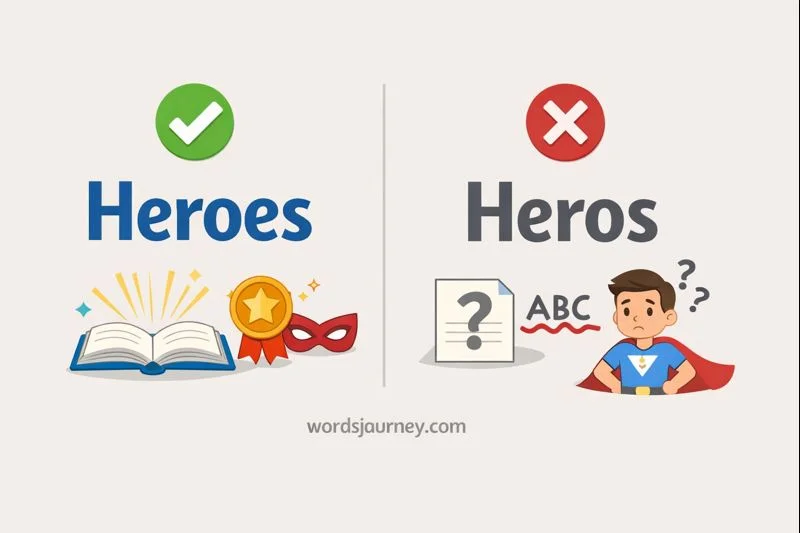
Have you ever typed a sentence, paused, and wondered which spelling actually looks right? That moment of hesitation is exactly where Heroes Not Heros comes in. This article tackles a surprisingly common spelling dilemma that shows up everywhere from emails and captions to reports and presentations especially when clarity and professionalism matter.
Getting it right isn’t about nitpicking. It’s about credibility, accuracy, and confidence in written English.
In modern business communication, small spelling mistakes can quietly undermine big ideas. Whether you’re writing about project management, planning meetings, organizing a calendar, or coordinating scheduling and time management, correct word forms help maintain consistency.
The confusion between heroes and heros often appears in formal writing, broadcasting, and even online booking systems, where polished language supports trust and usability. Understanding the correct usage improves not only grammar, but also overall communication flow.
In this guide, you’ll learn why “heroes” is correct, why “heros” is not, and how style guides shape accepted usage. We’ll briefly touch on US vs. UK preferences, authoritative grammar rules, and practical examples drawn from everyday professional contexts. By the end, you’ll have a clear, memorable explanation you can apply instantly helping your writing stay accurate, professional, and consistent across every platform.
Heroes vs Heros: The Real Difference
Let’s get straight to the point.
- Heroes is the correct plural form of hero
- Heros is grammatically incorrect in standard English
That’s not my opinion. It’s rule-based grammar supported by every major dictionary and style guide.
Still, many writers hesitate because “heros” looks logical. Add an -s, move on, right?
English, unfortunately, loves exceptions.
What Does “Hero” Mean?
Before diving into grammar, it helps to understand the word itself.
A hero is someone admired for courage, achievements, or noble qualities. The term appears in:
- Ancient mythology
- Literature and film
- Military and civic contexts
- Everyday praise for ordinary people doing extraordinary things
When you refer to more than one hero, you must use the plural form. That’s where the trouble begins.
Why “Heroes” Is the Correct Plural Form
English has a specific rule for forming plurals of nouns ending in -o.
The Rule That Matters
Most nouns ending in a consonant + o form their plural by adding -es, not just -s.
Hero → Heroes
This rule exists to preserve pronunciation and clarity. Saying “heros” sounds abrupt and incomplete. Adding -es smooths the transition and reflects how the word is spoken.
Common Words That Follow the Same Rule
Here are several everyday words that behave exactly like hero:
- potato → potatoes
- tomato → tomatoes
- echo → echoes
- veto → vetoes
- torpedo → torpedoes
The pattern stays consistent.
Exceptions That Cause the Confusion
Some -o words do take a simple -s, which throws people off.
Examples include:
- photo → photos
- piano → pianos
- radio → radios
- video → videos
Why the difference?
Most of these entered English through shortened forms or modern usage. Over time, common practice simplified their pluralization.
Hero, however, does not fall into this category.
Why “Heros” Is Incorrect
“Heros” violates established pluralization rules. It doesn’t appear in reputable dictionaries as a valid plural form. When it shows up, it’s labeled as a misspelling.
Why Spellcheck Sometimes Misses It
- Some software tools prioritize phonetic guesses
- Informal writing environments ignore grammar flags
- Fast typing habits override review
In professional writing, that excuse doesn’t hold.
Why This Mistake Is Everywhere
The popularity of “heros” isn’t random. Several factors fuel it.
Spoken English Influence
When spoken aloud, “heroes” sounds like “heer-ohz.”
Writers then guess the spelling based on sound.
Social Media Speed
People type fast. Accuracy takes a back seat.
ESL Challenges
English plural rules don’t always align with other languages.
Visual Familiarity
Seeing “heros” repeatedly makes it feel acceptable, even when it’s wrong.
Heroes Used Correctly in Real Sentences
Seeing correct usage helps lock it in.
- Firefighters are everyday heroes who save lives under extreme pressure.
- The book honors war heroes from multiple generations.
- Teachers became heroes during remote learning transitions.
In every case, the -es ending preserves clarity and correctness.
Incorrect Usage Examples and Fixes
Let’s look at common mistakes and how to fix them fast.
| Incorrect Sentence | Why It’s Wrong | Correct Version |
| Our local heros deserve recognition | Breaks plural rule | Our local heroes deserve recognition |
| Movie heros inspire kids | Misspelling plural noun | Movie heroes inspire kids |
| Health care heros worked nonstop | Nonstandard spelling | Health care heroes worked nonstop |
Once you spot the pattern, it becomes obvious.
Heroes vs Heroines: Modern Usage Explained
Historically, English separated gendered nouns.
- hero → male
- heroine → female
Today, usage has shifted.
Current Writing Standards
Most modern style guides recommend using hero as a gender-neutral term, especially in plural form.
- “The heroes of the story include men and women.”
- “Community heroes stepped up during the crisis.”
Heroine still exists, but it appears less often outside literary analysis.
For More Please Visit: Former vs Latter: How to Use Them Correctly Every Time
Heroes in Literature and Storytelling
Heroes drive stories. Always have.
From Homer’s Odyssey to modern superhero films, heroes follow recognizable patterns.
Common Hero Archetypes
- The reluctant hero
- The tragic hero
- The everyday hero
- The antihero
Writers consistently use heroes when discussing groups or archetypes. Misspelling it disrupts authority and immersion.
Everyday Heroes: Why Accuracy Matters
When writing about real people, spelling matters even more.
Think about articles honoring:
- First responders
- Military veterans
- Nurses and doctors
- Volunteers and caregivers
Calling them “heros” may seem minor, but it signals carelessness. Precision shows respect.
Heroes in Branding, Marketing, and Media
Brands often rely on emotional language. Hero is a powerful word.
You’ll see it in:
- “Hero products”
- “Brand heroes”
- “Customer success heroes”
Why Correct Spelling Builds Trust
Consumers notice details.
Spelling errors reduce perceived professionalism and trustworthiness.
In SEO-driven content, misspellings also hurt rankings and click-through rates.
A Quick Memory Trick You’ll Never Forget
Here’s a simple way to lock it in.
If the word ends in -o and sounds stronger with an “ez” ending, add -es.
Hero → Heroes
Echo → Echoes
Say it out loud. If it sounds right, it usually is.
Heroes Not Heros: Side-by-Side Comparison
| Feature | Heroes | Heros |
| Grammatically correct | ✅ | ❌ |
| Dictionary approved | ✅ | ❌ |
| Used in formal writing | ✅ | ❌ |
| SEO-friendly | ✅ | ❌ |
| Professional credibility | High | Low |
There’s no gray area here.
Frequently Asked Questions (FAQs)
1. What is the correct spelling: heroes or heros?
The correct spelling is heroes. The variant heros is considered incorrect in standard English usage, both in the US and UK. Always use heroes when referring to brave or admired people.
2. Why do people sometimes spell it as “heros”?
Many people mistakenly drop the “e” due to pronunciation habits or informal writing. This often happens in fast typing, social media posts, or casual communication. However, in formal writing, project management documentation, or business communication, the correct spelling is essential for professionalism.
3. Does British English use a different spelling?
No, British and American English both use “heroes”. The plural follows standard English rules for words ending in -o preceded by a consonant. Differences in spelling only occur with other words, like “favour” (UK) vs. “favor” (US).
4. How can I remember the correct form?
Think of the word “hero” as the root. When pluralizing, simply add -es, not -s alone. Using consistent grammar checks, style guides, and proofreading your emails, calendar entries, and project plans helps reinforce correct usage.
5. Does it matter in digital tools like online booking or broadcasting?
Absolutely. Consistent spelling in online booking systems, broadcasting scripts, and shared calendars maintains professionalism, reduces confusion, and reflects attention to detail. Correct English usage signals reliability in any professional or public context.
Conclusion
Mastering the distinction between heroes not heros is a small but meaningful step toward effective, professional communication. From business emails to project management notes, using the correct spelling ensures your writing remains polished, consistent, and credible. Paying attention to grammar, style guides, and regional preferences helps you avoid common pitfalls while strengthening your formal writing skills.Next time you draft a schedule, broadcast message, or online content, remember: one letter can make a difference. Stick with heroes, trust your grammar instincts, and communicate with confidence your audience and your professional image will thank you.

Emma Brook is a dedicated writer and language enthusiast at WordsJourney. She’s passionate about helping readers understand words better and use them with confidence in everyday conversations. Her work focuses on alternative phrases, clear meanings, and practical examples that make language feel simple and approachable.
With a friendly, reader-first writing style, Emma breaks down common expressions and explores smarter ways to say things without sounding forced or complicated. Her goal is to make learning words enjoyable, useful, and easy for everyone.