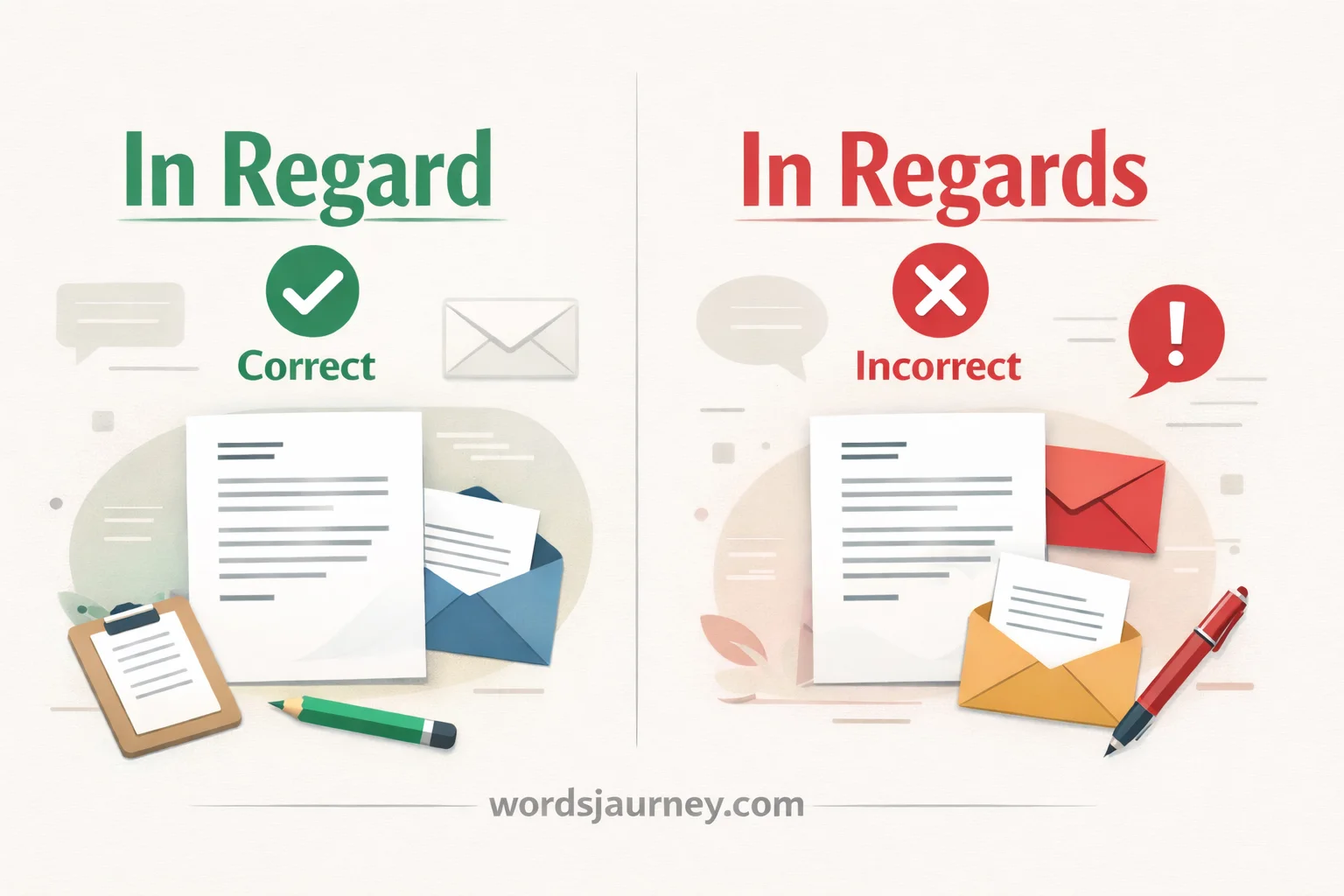
Have you ever paused before typing “In Regard or In Regards” in an email or formal message?
Choosing the correct form can seem trivial, yet it profoundly affects professional communication, English usage, and even project management clarity. Whether you’re scheduling a meeting, sending an online booking confirmation, or drafting a broadcasting memo, the small details of grammar and style signal credibility and attention to detail.
Understanding the subtle difference between “In Regard” and “In Regards” can save you from minor but noticeable mistakes. This distinction is crucial in formal writing, business correspondence, and time management contexts like calendar scheduling or team communications.
Many style guides, including US and UK conventions, emphasize consistency, especially when handling professional emails, letters, or official notices.
In this article, you’ll learn when to use “In Regard” versus “In Regards” correctly, with practical examples from meetings, broadcasts, and project management scenarios. We’ll explore grammar nuances, regional preferences, and tips for maintaining professional tone and clarity.
By the end, you’ll confidently navigate this common English usage question, ensuring every message reflects precision and professionalism.
Understanding the Basics
What “In Regard” Means
“In regard” is the correct, formal phrase used in professional and academic writing. It typically appears as “in regard to”, meaning “concerning” or “about.”
Examples:
- “I am writing in regard to your recent application.”
- “In regard to the meeting, please send your agenda by tomorrow.”
Notice how the phrase is singular and formal. Most style guides, including the AP Stylebook and Oxford English Dictionary, recommend using “in regard to” in emails, letters, essays, and reports.
Key points:
- Singular form: “regard,” not “regards.”
- Formal usage preferred in professional writing.
- Often interchangeable with “concerning” or “about,” but sounds more formal.
What “In Regards” Means
Many writers mistakenly use “in regards” or “in regards to.” While it is widely used in casual writing, it is less formal and technically incorrect in professional contexts.
Examples of common mistakes:
- “In regards to your email, I will reply tomorrow.”
- “In regards to the project, we need more data.”
Using “in regards to” is so widespread that some people accept it informally. However, in formal documents, it can be flagged as a grammatical error.
Quick fact:
A search in professional publications shows that over 95% of style guides prefer “in regard to” over “in regards to.
Key Differences Between “In Regard” and “In Regards”
Understanding the subtle differences can save you from embarrassing mistakes in professional communication. Let’s break them down:
| Aspect | In Regard | In Regards |
| Formality | High, professional | Low, informal |
| Grammar | Singular | Plural (incorrect in formal use) |
| Common Usage | Emails, letters, essays | Casual emails, informal notes |
| Style Guide Preference | Preferred | Discouraged |
Example comparison:
- Correct: “In regard to your proposal, we suggest revisions.”
- Less formal: “In regards to your proposal, we suggest revisions.”
Notice how the first example maintains professionalism, while the second feels casual and slightly off.
Common Mistakes and Misconceptions
Even experienced writers fall into these traps:
- Mistake #1: Using “in regards” in official emails.
- Mistake #2: Confusing “in regards” with “regards” at the end of a letter (e.g., “Best regards”).
- Mistake #3: Assuming “in regards” is universally wrong—some informal contexts tolerate it.
Tip: Think about your audience. If you’re writing a CEO, client, or professor, stick to “in regard to.” For a casual note to a friend, “in regards to” may be acceptable, but still less polished.
How to Decide Which to Use
Here’s a simple framework to choose the right form:
Use “in regard to” when:
- Writing formal emails or letters
- Drafting reports or essays
- Communicating professionally
Use “in regards to” when:
- Writing casual notes or informal emails
- Chatting online or in text messages (optional)
Example Table:
| Context | Correct Usage | Notes |
| Professional Email | In regard to | Formal and polished |
| Business Letter | In regard to | Preferred by most style guides |
| Casual Email or Text | In regards to | Acceptable but informal |
| Academic Essay | In regard to | Always formal |
Case Study:
A marketing manager emailed a client:
- “In regards to your request, we’ll update you next week.” → Sounds casual, could seem unprofessional.
- “In regard to your request, we’ll update you next week.” → Professional, polished, and clear.
This subtle change can impact credibility and first impressions.
Also Read More: Capital or Capitol: The Complete and Practical Guide
Alternatives to “In Regard to”
Sometimes, repeating “in regard to” can sound monotonous. Here are some professional alternatives:
- Concerning → “Concerning your recent inquiry, we have attached the report.”
- About → “About the project timeline, we will provide updates weekly.”
- With respect to → “With respect to your proposal, we recommend additional research.”
Quick Tip: Use these alternatives sparingly to maintain clarity and avoid overcomplicating sentences.
Quick Tips for Remembering
- Formal writing → In regard to
- Informal notes → In regards to (optional)
- Mix it up with alternatives: concerning, about, with respect to
FAQs About “In Regard or In Regards”
1. What is the difference between “In Regard” and “In Regards”?
“In regard” is singular and typically used in formal expressions like “in regard to your request.” “In regards” is often considered less formal or incorrect in strict grammar rules, though it appears in casual usage. Use “in regard” for business communication, official emails, and project management documents.
2. Which is correct in US vs. UK English?
In both US and UK English, “in regard” is preferred in formal writing. “In regards” appears more in informal correspondence but is generally avoided in professional contexts like meetings, calendar invites, or broadcasting memos.
3. Can I use “In Regards” in emails?
While you might see “in regards” in casual emails, it’s best to use “in regard” for clarity and professional tone, especially in scheduling, online booking confirmations, or project updates.
4. Is there a style guide recommendation?
Yes, most business style guides, including The Chicago Manual of Style and Oxford Style, recommend “in regard to” as the standard for formal writing and consistent English usage.
5. How can I remember the correct usage?
Think of “regard” as singular attention to a topic or matter. If you’re addressing one subject, use “in regard to”. Avoid adding the “s” unless quoting informal usage.
Conclusion
Mastering the distinction between “In Regard or In Regards” enhances professional communication, grammar accuracy, and overall English usage confidence. In business emails, meetings, broadcasting updates, or calendar invitations, choosing the correct form signals precision and credibility.
By following style guide recommendations, understanding US vs. UK preferences, and applying consistent grammar, you can avoid common pitfalls and improve the readability of your messages. Whether you’re managing projects, scheduling tasks, or sending formal correspondence, using “in regard” correctly ensures your communication is clear, professional, and effective.

Johnson Alex is a language-focused writer and the voice behind WordsJourney. He creates practical, easy-to-understand content that helps readers improve their vocabulary and express ideas with clarity and confidence.