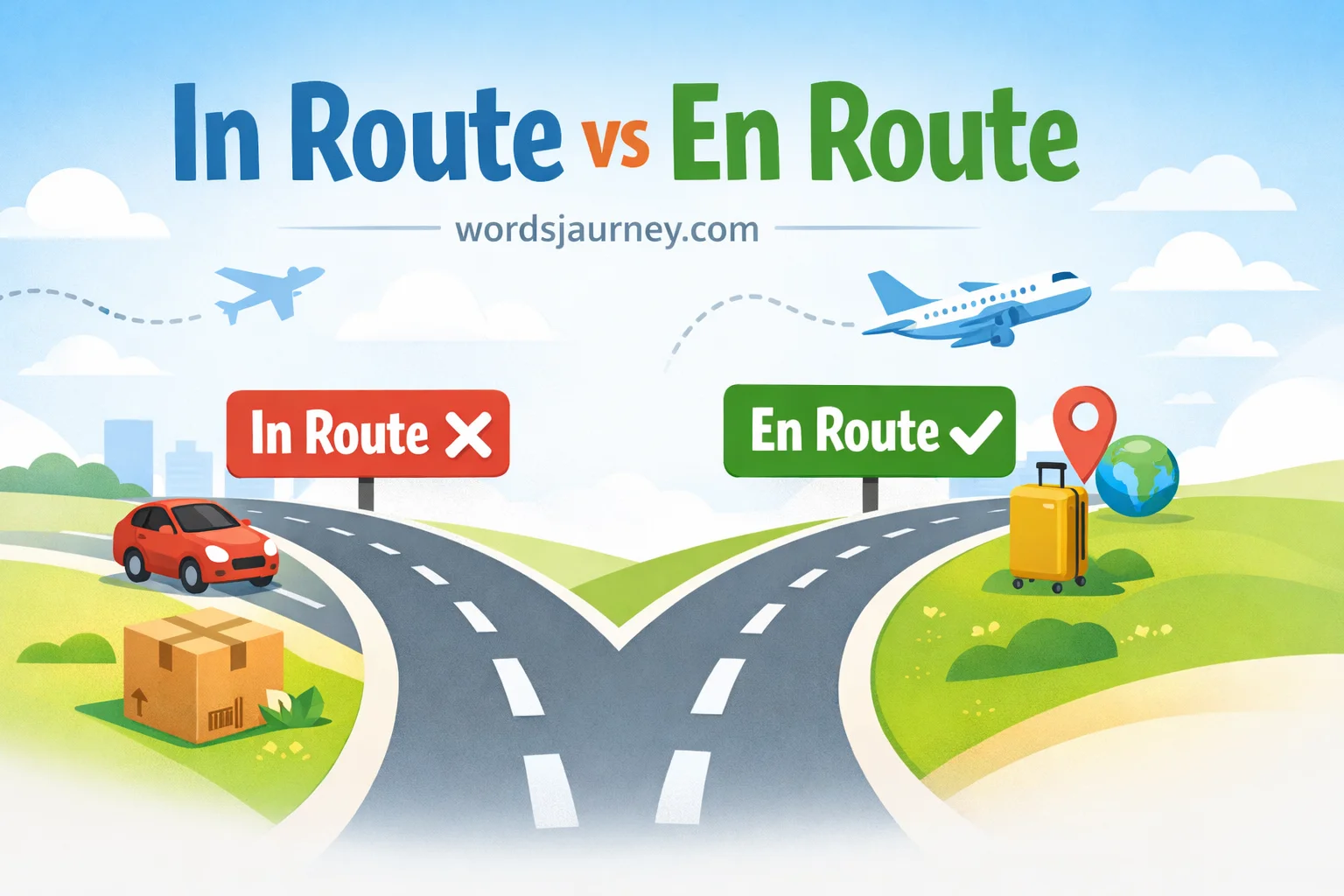
Have you ever paused before typing “In Route or En Route” in an email or message? It’s a small phrase, yet using it correctly can influence professional clarity in emails, business communication, and even project management updates. Whether you’re confirming a meeting, sending a status update, or scheduling a delivery, understanding the right form matters for grammar, consistency, and formal writing.
Both expressions appear frequently in English usage, but they carry subtle differences that can affect tone, especially across regional preferences. In the US, you might see “in route” more often, while UK English favors “en route,” borrowed directly from French. For professionals managing online booking, broadcasting schedules, or calendar appointments, using the correct phrase ensures time management is precise and your communication remains polished.
This article will break down the distinction between In Route or En Route, explore common mistakes, and offer tips for proper usage in meetings, emails, and documentation. You’ll learn when each phrase is appropriate, backed by style guides and formal writing standards, so your written English stays accurate, professional, and consistent. By the end, you’ll confidently choose the right term every time.
What Does “En Route” Mean?
The phrase en route comes from French, literally meaning “on the way.” In English, it’s used as an adverb or prepositional phrase to indicate that someone or something is traveling toward a destination.
Key points about en route:
- Part of speech: Adverbial phrase
- Common contexts: Travel, deliveries, business communications, flight updates
- Pronunciation: /ˌɒn ruːt/ (sounds like “on root”)
Examples:
- “The package is en route and should arrive by 3 PM.”
- “We’re en route to the airport and should land by noon.”
- “The technician is en route to your location to fix the issue.”
Notice how en route conveys motion and direction. It is widely accepted in both formal and informal writing, especially in professional or travel-related contexts.
What Does “In Route” Mean?
Many people write “in route” thinking it’s correct. While it seems logical in English, most dictionaries and style guides mark it as incorrect.
Key facts about in route:
- Often seen in North American informal writing
- Considered a misinterpretation of en route
- Rarely accepted in formal communication, business writing, or journalism
Examples of incorrect usage:
- ❌ “I’m in route to your house.”
- ❌ “The documents are in route for delivery.”
Correct usage:
- ✅ “I’m en route to your house.”
- ✅ “The documents are en route for delivery.”
Think of in route as a common typo or misheard version of the original French phrase. It may appear in casual text messages but should never appear in professional or academic writing.
Origins and Historical Usage
Understanding the history of en route can clarify why in route is considered wrong.
- En route originates from French, with “en” meaning in/on and “route” meaning road or way.
- It entered English in the early 19th century, mainly in military, travel, and postal contexts.
- Over time, English speakers misheard or simplified it, creating in route in informal texts.
Timeline Table: En Route vs In Route Usage
| Year | Phrase Used | Context/Notes |
| 1800s | En route | Military and travel writing; formal correspondence |
| 1900s | En route | Widespread adoption in newspapers and books |
| 1950s | In route | Informal North American usage emerges |
| 2000s | En route | Standardized in digital communication, GPS, flight tracking |
| 2020s | In route | Seen in texting, but still marked incorrect in style guides |
Fun Fact: Even in aviation and logistics today, “en route” is used in official flight plans and tracking reports, emphasizing its long-standing correctness.
Grammar and Style Rules
Knowing how to use en route correctly ensures your writing looks professional.
Grammar tips:
- En route is typically adverbial, describing movement toward a destination.
- No hyphenation is needed. Avoid writing “en-route.”
- Always pair it with a verb indicating motion: “We are en route,” “The parcel is en route.”
- Never substitute “in” for “en” unless writing informal text messages (still not recommended).
Style guide recommendations:
| Style Guide | Recommendation |
| AP Style | Use en route; avoid “in route” |
| Chicago Manual of Style | En route preferred in formal writing |
| Grammarly | “In route” is flagged as incorrect; always use en route |
Quick Tip: When in doubt, default to en route. It’s universally recognized and avoids errors.
Common Mistakes and How to Avoid Them
Even experienced writers slip up. Here are the top mistakes with In Route vs En Route:
- Using “in route” in formal writing – Not recognized in dictionaries or professional contexts.
- Misspelling “en route” – Avoid “enroute” (single word).
- Confusing with “in transit” – While similar, “in transit” refers to being in the middle of shipping or movement, not necessarily toward a specific destination.
- Mispronunciation – Some say “en root” instead of the proper /ˌɒn ruːt/.
- Overuse in casual writing – Using the phrase when simpler alternatives work: “on the way,” “heading to.”
Quick Tip Box:
Always proofread emails and messages for “in route” errors. Replacing it with en route instantly elevates your writing quality.
Alternatives and Synonyms
Sometimes, en route might feel formal or repetitive. In those cases, you can use alternatives without changing the meaning:
- On the way – Most casual alternative
- Heading to – Informal, friendly
- In transit – Ideal for shipping/logistics
- Making my way – Conversational style
Examples:
- “I’m on the way to your office.”
- “The courier is in transit with the package.”
- “We are making our way to the venue now.”
Table: En Route Alternatives
| Phrase | Formality | Best Use |
| On the way | Informal | Texts, casual emails |
| Heading to | Informal | Conversation, texts |
| In transit | Formal | Shipping, logistics |
| Making my way | Neutral | Personal updates |
Regional Differences
While en route is widely accepted globally, in route tends to appear in North America informally.
- North America: “In route” occasionally shows in text messages or emails among colleagues but is not formally correct.
- UK & other English-speaking countries: “En route” is standard; “in route” is rarely seen.
Pro Tip: Stick to en route for professional writing worldwide. It avoids ambiguity and demonstrates attention to detail.
For More Please Visit: Whose vs Who’s: The Complete Grammar Guide
Pronunciation Guide
Many English speakers mispronounce en route because of its French origin. Correct pronunciation:
- Phonetic: /ˌɒn ruːt/
- Sounds like: “on root”
Tips for speaking naturally:
- Stress the first syllable lightly: EN route
- Avoid overemphasizing the French “r”
- Use it in context: “I’m en route to the meeting.”
Mastering pronunciation adds confidence, especially in business or travel communication.
Frequently Asked Questions (FAQs)
1. What is the difference between “In Route” and “En Route”?
“En route” is the French-derived, widely accepted form in formal English, meaning “on the way”. “In route” is more informal and common in American English, but some style guides consider it less correct.
2. Can I use “In Route” in professional emails?
Yes, but it’s safer to use “en route” in business communication, formal writing, or project updates to maintain consistency and professionalism.
3. Is “En Route” only for travel-related contexts?
Not necessarily. It can apply to meetings, deliveries, broadcasting schedules, and calendar updates—any situation where someone or something is on the way.
4. How should I write it in US vs UK English?
US English sometimes accepts “in route” informally, while UK English almost always prefers “en route”. For formal writing, stick with “en route” regardless of region.
5. Are there common mistakes to avoid?
Yes. Avoid spelling variations like “enrout” or splitting “inroute” into one word. Always double-check style guides if you’re writing for official documents or publications.
Conclusion
Choosing between In Route or En Route may seem minor, but it significantly impacts clarity, professionalism, and consistency in your writing. While “in route” appears in casual American usage, “en route” is preferred in formal English, business communication, and international contexts. By understanding these nuances, you ensure your messages, schedules, and updates are accurate and polished, whether for meetings, project management, broadcasting, or calendar planning.Mastering this small detail elevates your overall English usage, helping you communicate confidently and effectively across every professional scenario.

Johnson Alex is a language-focused writer and the voice behind WordsJourney. He creates practical, easy-to-understand content that helps readers improve their vocabulary and express ideas with clarity and confidence.