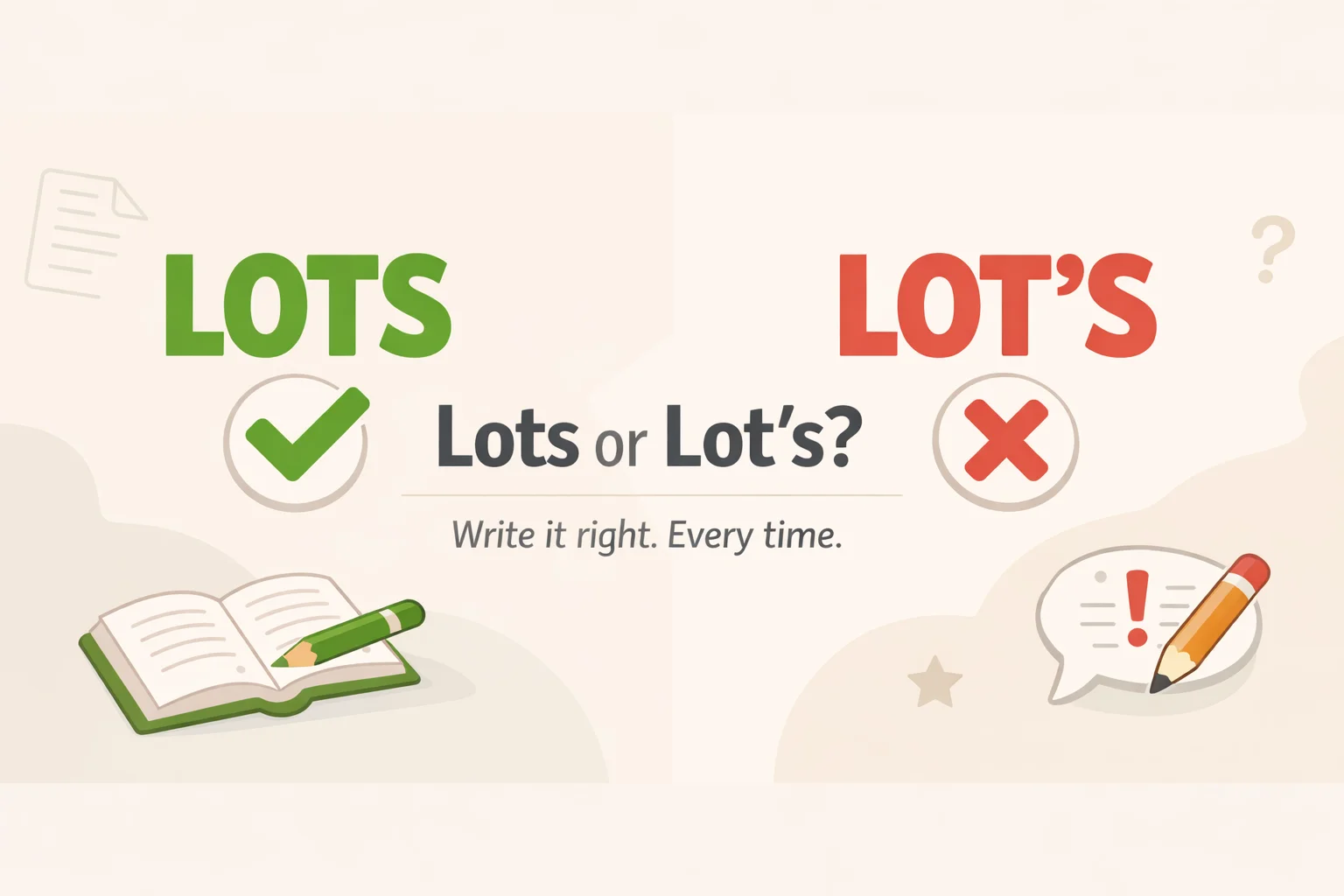
Have you ever paused mid-sentence and wondered which one looks right — “Lots or Lot’s”? You’re not alone. This tiny apostrophe trips up even confident writers because it looks harmless but changes meaning fast.
In everyday English usage, that single mark can quietly turn a plural into a possessive or, worse, into a grammatical glitch that distracts your reader. If you care about clarity and consistency, this is one of those details you don’t want to guess.
The confusion shows up everywhere, from emails about meetings and scheduling to polished reports in business communication. Whether you’re managing a calendar, handling online booking, or coordinating project management tasks, small grammar slips can create big misunderstandings.
The difference between “lots” and “lot’s” isn’t just academic — it affects tone, credibility, and how professional your writing feels in fast-paced environments like broadcasting or client-facing communication.
In this article, we’ll break down the difference between Lots or Lot’s in plain, practical terms, with real examples you can use right away. You’ll also see how major style guides and regional preferences (US vs. UK) treat these forms, so your formal writing stays clean and confident across audiences.
By the end, you won’t just know the rule — you’ll feel it, and that’s what makes good grammar stick.
What Does “Lots” Actually Mean?
At its core, lots is simply the plural of lot.
But in modern English, it does far more heavy lifting than that.
The Literal Meaning of “Lots”
Traditionally, a lot refers to a group, parcel, or portion.
Examples:
- A lot of land
- A lot in an auction
- Several lots of fabric
Here, lots behaves like any other regular plural noun.
Nothing fancy. No apostrophe needed.
“Lots” as a Quantity Word
Over time, lots evolved into a quantity expression, especially in informal and conversational English.
Examples:
- I have lots of ideas.
- There are lots of reasons to try again.
- She brought lots of energy to the meeting.
In these cases, lots of works like:
- many
- a large number of
- a great amount of
And here’s the key rule:
If you can replace it with many or a large number, then lots is correct — and lot’s is wrong.
When “Lots” Sounds Natural vs Sloppy
“Lots” sounds friendly, casual, and human.
But tone matters.
| Context | Is “lots” appropriate? |
| Text messages | ✅ Yes |
| Blog writing | ✅ Yes |
| Business emails | ⚠️ Sometimes |
| Legal writing | ❌ Usually no |
| Academic papers | ❌ Rarely |
In formal writing, words like many, numerous, or substantial often fit better.
Why “Lot’s” Is Almost Always Wrong
Now let’s deal with the troublemaker: lot’s.
Short version?
You almost never need it.
What an Apostrophe Actually Does
In English, apostrophes have only two main jobs:
- Show possession
- Show contractions
That’s it. No third purpose hiding in the shadows.
So when people write:
❌ I have lot’s of work.
They’re accidentally claiming that lot owns something.
But what exactly does “lot” own there? Nothing.
The Only Time “Lot’s” Is Correct
“Lot’s” is grammatically valid only when lot owns something.
Example:
- The parking lot’s entrance is blocked.
- That empty lot’s value increased this year.
Here, lot’s means:
something belonging to the lot
These cases are rare in everyday writing.
And they never mean “many” or “a large amount.”
Why Writers Keep Making This Mistake
This error happens for a few predictable reasons:
- Apostrophes look “proper,” so people add them instinctively
- Autocorrect sometimes suggests it
- Writers confuse plural forms with possessives
- Casual texting habits spill into formal writing
But clarity beats habit. Always.
Lots vs Lot’s: A Quick Comparison
Here’s a clean snapshot to lock it in your mind:
| Form | Correct? | Usage | Example |
| Lots | ✅ Yes | Plural or quantity | I have lots of books. |
| Lot’s | ❌ Usually no | Possessive only | The lot’s entrance is closed. |
If your sentence means “many,” you need lots, never lot’s.
“Lots of” vs “A Lot of” vs “Many” vs “Much”
English offers several ways to express quantity. Each has its own flavor.
When to Use “Lots of”
Use lots of when:
- You want a friendly, conversational tone
- You’re writing blogs, social posts, or informal content
- You want warmth rather than precision
Examples:
- I learned lots of useful tips today.
- There are lots of ways to improve your writing.
When “A Lot of” Works Better
“A lot of” focuses on the whole amount rather than multiple units.
Examples:
- I spent a lot of time on this project.
- She showed a lot of patience.
It’s singular in structure but plural in meaning.
When to Switch to “Many” or “Much”
Use these in formal or academic contexts.
- Many → countable nouns
- Many students
- Many errors
- Much → uncountable nouns
- Much time
- Much effort
| Context | Best Choice |
| Casual speech | lots of |
| Blogs & content | lots of / a lot of |
| Academic writing | many / much |
| Reports | numerous / substantial |
Real-World Examples That Make It Stick
Correct Usage
- I found lots of useful resources online.
- She received lots of positive feedback.
- There are lots of ways to fix this.
Incorrect Usage
- ❌ I found lot’s of useful resources.
- ❌ There are lot’s of mistakes here.
Rare but Correct “Lot’s”
- The parking lot’s layout confused visitors.
- That empty lot’s resale value doubled.
Notice how different these meanings feel.
That contrast is your mental safety net.
For More: Suing or Sueing: The Correct Spelling and Why It Matters
Why This Mistake Hurts Your Writing More Than You Think
Grammar errors don’t just affect clarity.
They affect trust.
When readers see lot’s of, they often assume:
- The writing was rushed
- The author lacks attention to detail
- The content may be unreliable
In business communication, this matters even more.
Where This Mistake Does the Most Damage
- Job applications
- Client emails
- Website copy
- Academic assignments
- Legal or financial documents
One apostrophe can quietly sabotage your professionalism.
Memory Tricks You’ll Never Forget
Here are some simple rules that actually work:
- If you mean many, use lots
- If ownership isn’t involved, drop the apostrophe
- Try replacing the phrase with “many”
- If it fits, apostrophe doesn’t belong
- Read it aloud:
- Does “lot is” or “lot has” make sense?
- If not, you don’t need an apostrophe
Simple. Reliable. Foolproof.
Related Grammar Traps Worth Knowing
Once you notice this error, you’ll start spotting others too.
Here are some close cousins:
| Wrong | Right |
| It’s color | Its color |
| Your amazing | You’re amazing |
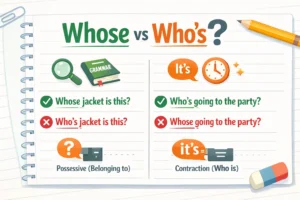
| Whose book | Who’s book |
| Their going | They’re going |
Apostrophes are powerful.
Use them wisely or not at all.
A Quick Case Study: How One Apostrophe Changed the Tone
Consider these two sentences:
- We received lots of complaints this month.
- We received lot’s of complaints this month.
The first sounds professional and neutral.
The second feels careless, even if the message is the same.
Readers may not explain why, but they feel the difference.
That’s the power of small grammar choices.
Frequently Asked Questions (FAQs)
1. What is the difference between “lots” and “lot’s”?
“Lots” is the plural form of “lot,” meaning many or a large number. Example: There are lots of tasks on today’s schedule. “Lot’s” is a contraction of “lot is” or “lot has.” Example: This lot’s ready for online booking.
2. Can “lot’s” ever mean possession?
No. Unlike nouns that show ownership (e.g., the manager’s calendar), “lot’s” is not used to indicate possession. Apostrophes here are strictly for contractions.
3. Is “lots” acceptable in formal writing?
Yes, “lots” is widely accepted for informal and neutral contexts. In formal or professional writing, you might replace it with “many,” “numerous,” or “a large number of” to maintain a polished tone.
4. Do US and UK style guides treat these differently?
Not significantly. Both US and UK English follow the same rule: use “lots” for plurals and “lot’s” for contractions. The key is consistency throughout your writing.
5. How can I avoid confusing them in business communication?
Always check if the sentence needs a plural or a contraction. Reading aloud or using grammar tools can prevent mistakes in emails, reports, or project management documents.
Conclusion
Mastering the difference between Lots or Lot’s may seem small, but it can significantly improve your English usage, grammar, and professional communication. Understanding when to use the plural lots versus the contraction lot’s ensures clarity in everything from scheduling emails to broadcasting updates. By following style guides, considering regional preferences, and practicing consistency, you make your writing precise, polished, and professional.
Remember, a single apostrophe can change meaning, so paying attention to these details reflects your attention to time management, organization, and credibility. Once you get it right, your writing won’t just be correct — it will feel confident, clear, and authoritative.

Johnson Alex is a language-focused writer and the voice behind WordsJourney. He creates practical, easy-to-understand content that helps readers improve their vocabulary and express ideas with clarity and confidence.