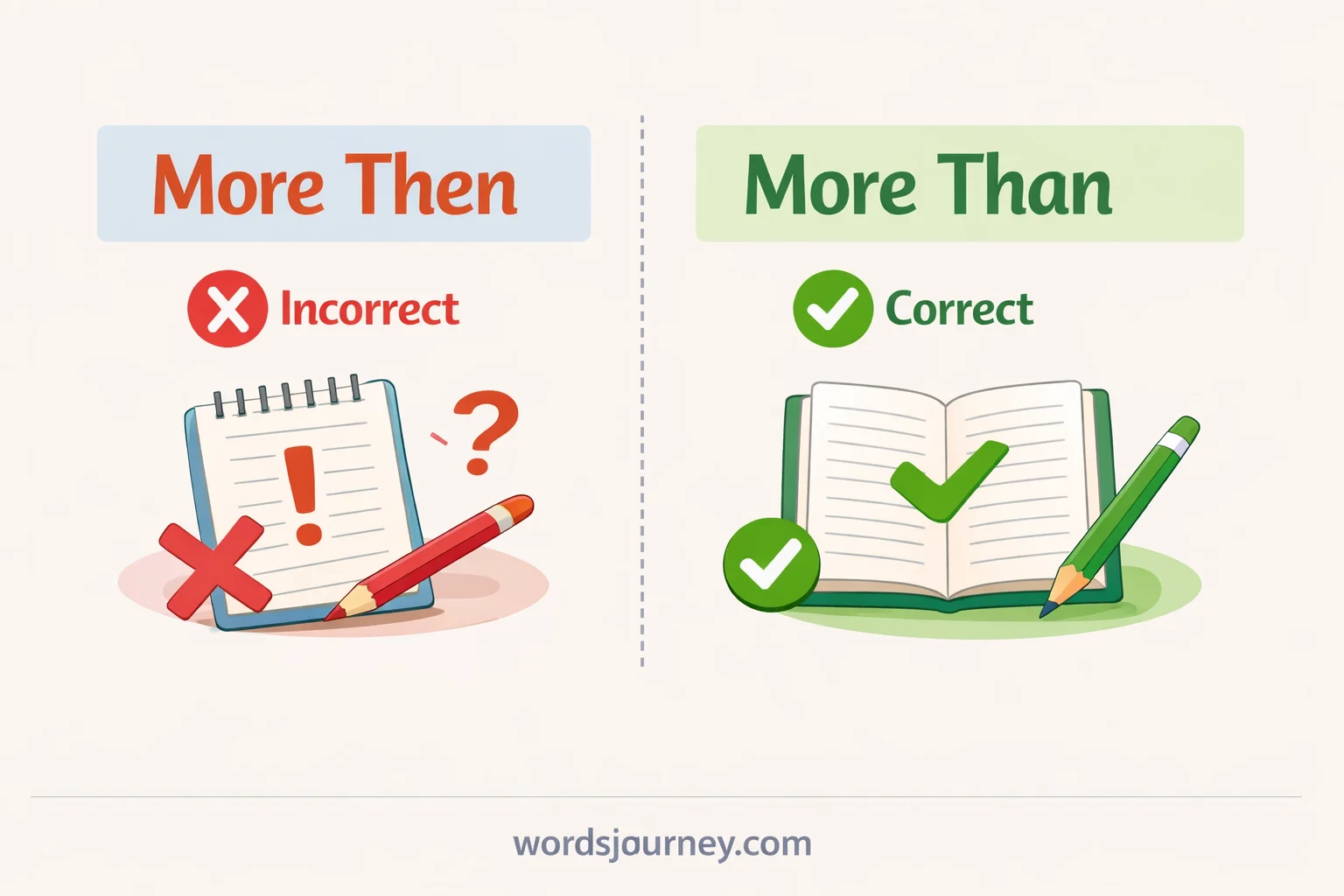
Ever paused mid-sentence and wondered which one sounds right “More Then or More Than”? You’re not alone. This tiny mix-up sneaks into emails, meetings, and online booking flows more often than people admit.
In fast-paced business communication, where time management and clear English usage matter, small grammar slips can blur meaning and chip away at professional credibility.
This guide breaks down the difference between then and than with crisp rules and real-world examples. You’ll see how each word works in formal writing, project management updates, broadcasting scripts, and everyday messages tied to your calendar and scheduling.
We’ll share quick memory tricks, common pitfalls, and clean examples you can copy into reports, proposals, and business communication without second-guessing.
We’ll also note how major style guides and regional preferences (US vs. UK) approach usage so you can keep consistency across teams and channels.
By the end, you’ll write with confidence, protect clarity in meetings, and keep your grammar sharp across emails, dashboards, and online booking confirmations. Small fixes, big impact especially when precision saves time and avoids confusion.
More Then or More Than: The Quick Answer
Here’s the rule you can lock in right now:
- “More than” is always correct when you compare amounts, numbers, or degrees.
- “More then” is grammatically incorrect in standard English.
That’s the whole story.
Correct examples:
- She has more than five years of experience.
- This phone costs more than the older model.
- The project took more than two weeks.
Incorrect examples:
- ❌ She has more then five years of experience.
- ❌ The results were more then expected.
If the sentence compares anything, you need than.
The Real Difference Between “Than” and “Then”
People mix these words up because they sound similar in casual speech. On the page, they serve totally different purposes.
What “Than” Means
Than introduces a comparison. It shows contrast between two things.
You use than when you compare:
- Amounts
- Quantities
- Levels
- Preferences
- Results
Examples:
- This plan offers more than basic coverage.
- She earned more than her peers.
- The update delivered more than expected.
What “Then” Means
Then relates to time, sequence, or consequence. It answers what happened next.
You use then when talking about:
- Order of events
- Cause and effect
- Past moments
Examples:
- Back then, the rules were different.
- Finish the report. Then send it.
- If traffic clears, then we’ll leave.
Notice how then never compares two things. It moves the story forward in time.
Why “More Then” Is Wrong (But Still Everywhere Online)
The phrase more then spreads because people write how they speak. When said fast, than and then blur together. That sound-alike trap fuels the mistake.
Other reasons this error sticks around:
- Fast typing on phones
- Autocorrect not flagging casual writing
- ESL learners mapping spoken English to writing
- Social media normalizing informal errors
Search engines even show millions of pages using more then, which reinforces the confusion. Still, professional editors never accept it.
Key takeaway: Popular mistakes do not become correct rules.
Correct vs Incorrect Usage in Real Situations
Here’s a quick table you can scan when proofreading.
| Context | Incorrect Usage | Correct Usage |
| Quantity | More then 20 people attended | More than 20 people attended |
| Comparison | More then expected | More than expected |
| Professional writing | Costs more then last year | Costs more than last year |
| Personal message | I care more then you think | I care more than you think |
| Business report | Revenue grew more then forecast | Revenue grew more than forecast |
Every comparison requires than. No exceptions.
Memory Tricks That Actually Work
Grammar rules stick when you can visualize them.
Use this simple mental shortcut:
- Than = comparison
- Then = time
Another trick:
- If you can replace the phrase with “greater than”, you want than.
- The price is greater than before.
- The price is more than before.
That swap test works almost every time.
Common Phrases That Always Use “More Than”
Some expressions lock in the rule through repetition.
- More than enough
- More than likely
- More than ever
- More than once
- More than a feeling
These phrases show up in headlines, songs, and everyday speech. None of them ever use then.
Subtle Edge Cases and Advanced Usage
In formal writing, more than often works as an adverbial phrase. It can modify verbs, adjectives, and clauses.
Examples:
- The policy matters more than it seems.
- Results improved more than expected.
- Clarity matters more than speed.
Editors prefer more than because it keeps comparisons tight and precise. Academic and business style guides follow the same rule.
For More Visit: Premise or Premises: Ultimate Guide to Use Each Word
Why This Mistake Hurts Credibility
Language signals competence. Small grammar errors chip away at trust.
In professional contexts, this mistake can affect:
- Blog authority
- Marketing credibility
- Academic tone
- Brand voice
Readers may not call it out. They still notice.
A clean sentence builds confidence. A flawed one plants doubt.
How to Fix This Mistake in Your Writing Workflow
A few habits make this error vanish.
Use a quick self-edit checklist:
- Scan for “then” after words like more, less, better, or rather
- Ask if the sentence compares two things
- Replace the phrase with “greater than” as a test
- Read the line out loud
Mini Quiz: Test Your Instincts
Fill in the blank with than or then.
- She finished in less time ___ expected.
- Back ___, remote work was rare.
- The cost rose more ___ last quarter.
- Review the draft. ___ publish it.
Answers:
- than
- then
- than
- then
If you scored four out of four, your instincts are locked in.
FAQs: More Then or More Than
1. What is the correct phrase: More then or More than?
The correct phrase is More than. Than is used for comparisons, such as quantity, degree, or preference. Example: This task took more than two hours. Then relates to time, sequence, or order and does not fit in comparisons.
2. Why do people confuse then and than so often?
The confusion happens because the words look similar and sound alike in fast speech. In busy contexts like meetings, project management, and business communication, writers often type quickly and overlook small grammar errors. Over time, these mistakes become habits.
3. Is it ever correct to write more then?
In standard English usage and formal writing, more then is incorrect. The only time then is correct is when referring to time or sequence. Example: Finish the report, then schedule the meeting. When comparing amounts or levels, always use more than.
4. Does using the wrong word affect professional writing?
Yes, even small errors can weaken clarity, credibility, and consistency. In business communication, broadcasting, and online booking systems, grammar mistakes can confuse readers and reduce trust. Clean language supports better time management and smoother workflows.
5. Do US and UK style guides treat this differently?
No. Both US and UK style guides agree on the same rule:
- Than = comparison
- Then = time or sequence This makes it easier to keep consistency across global teams, shared calendars, and collaborative project management tools.
6. How can I remember the difference quickly?
Try this memory trick:
- ThAN = compArisoN → use than for comparisons.
- ThEN = timE, thEN → use then for sequence or order. It’s simple, fast, and easy to apply during meetings or quick emails.
Conclusion
The choice between More Then or More Than may seem small, but it carries real weight in formal writing, business communication, and everyday English usage. When your work involves scheduling, project management, online booking, and clear updates in meetings, precision matters. One wrong word can change meaning and create confusion.
By learning the simple rule use “than” for comparisons and “then” for time you protect clarity and improve consistency across emails, reports, and shared calendars. Style guides in both the US and UK support this standard, so the guidance stays universal. Master this distinction once, and your writing becomes cleaner, more professional, and easier to trust.

Aliya Ray is a passionate writer and language enthusiast at WordsJourney. She enjoys exploring words, phrases, and everyday expressions to help readers communicate more clearly and confidently. Her content focuses on alternative ways to say common phrases, simple explanations, and real-life examples that make language easy to understand.
Aliya believes the right words can make any message stronger. Through clear, friendly writing, she helps readers improve their vocabulary without feeling overwhelmed or confused.