Have you ever paused before addressing someone in an email or formal letter, unsure whether to use Mr or Mrs?
Choosing the right title can seem trivial, but it plays a crucial role in business communication, formal writing, and online interactions.
From calendar invites to project management tools, and even broadcasting schedules, getting titles right ensures professionalism and demonstrates respect.
Understanding the difference between Mr or Mrs is also key for English usage, grammar, and consistency. While Mr universally refers to men, Mrs traditionally indicates a married woman, but nuances exist depending on regional style guides, like US versus UK conventions.
These subtle distinctions affect everything from meetings and scheduling emails to formal documents and online bookings, making knowledge of correct usage essential.
In this article, we’ll break down the proper contexts for Mr or Mrs, explore common mistakes, and provide practical tips for applying them across emails, formal letters, and professional correspondence.
By the end, you’ll confidently navigate titles in English grammar, ensuring your communication always appears polished, precise, and professional.
What Does “Mr” Mean?
Mr is one of the most commonly used honorifics in English. It originated from the word “Master”, which historically referred to young men or men of status. Today, it’s universally applied to adult men, regardless of marital status.
Some key points about Mr:
- Gender: Male
- Marital Status: Any
- Usage: Formal and professional contexts
For example:
- Correct: Mr. John Smith will attend the meeting tomorrow.
- Incorrect: Using Mr for a woman (e.g., Mr. Jane Doe).
Common misconceptions: Some people assume that Mr is only for older men or married men. In reality, it’s suitable for all adult men.
Table: Mr Usage Examples
| Context | Correct Usage | Notes |
| Formal Email | Dear Mr. Anderson, | Professional and respectful |
| Business Letter | Mr. David Lee | Always include last name |
| Introduction | This is Mr. Thomas | Spoken introductions remain formal |
| Invitation | Mr. & Mrs. Johnson | Combined with Mrs for married couples |
What Does “Mrs” Mean?
Mrs refers specifically to married women. It comes from the word “Mistress”, which historically denoted respect and authority. Today, it clearly indicates a woman who is married and is often paired with her husband’s last name, although modern usage sometimes combines it with her own surname.
Key points about Mrs:
- Gender: Female
- Marital Status: Married
- Usage: Formal and traditional contexts
For example:
- Correct: Mrs. Sarah Thompson will join us for dinner.
- Incorrect: Using Mrs for unmarried women (use Ms instead).
Table: Mrs Usage Examples
| Context | Correct Usage | Notes |
| Formal Letter | Mrs. Emily Clark | Traditional, formal etiquette |
| Invitations | Mr. & Mrs. Roberts | For married couples only |
| Greeting | Hello, Mrs. Anderson | Polite and respectful |
| Forms | Mrs. Jennifer Smith | Indicates marital status clearly |
Key Differences Between Mr and Mrs
Understanding the differences between Mr and Mrs is essential to avoid awkward mistakes.
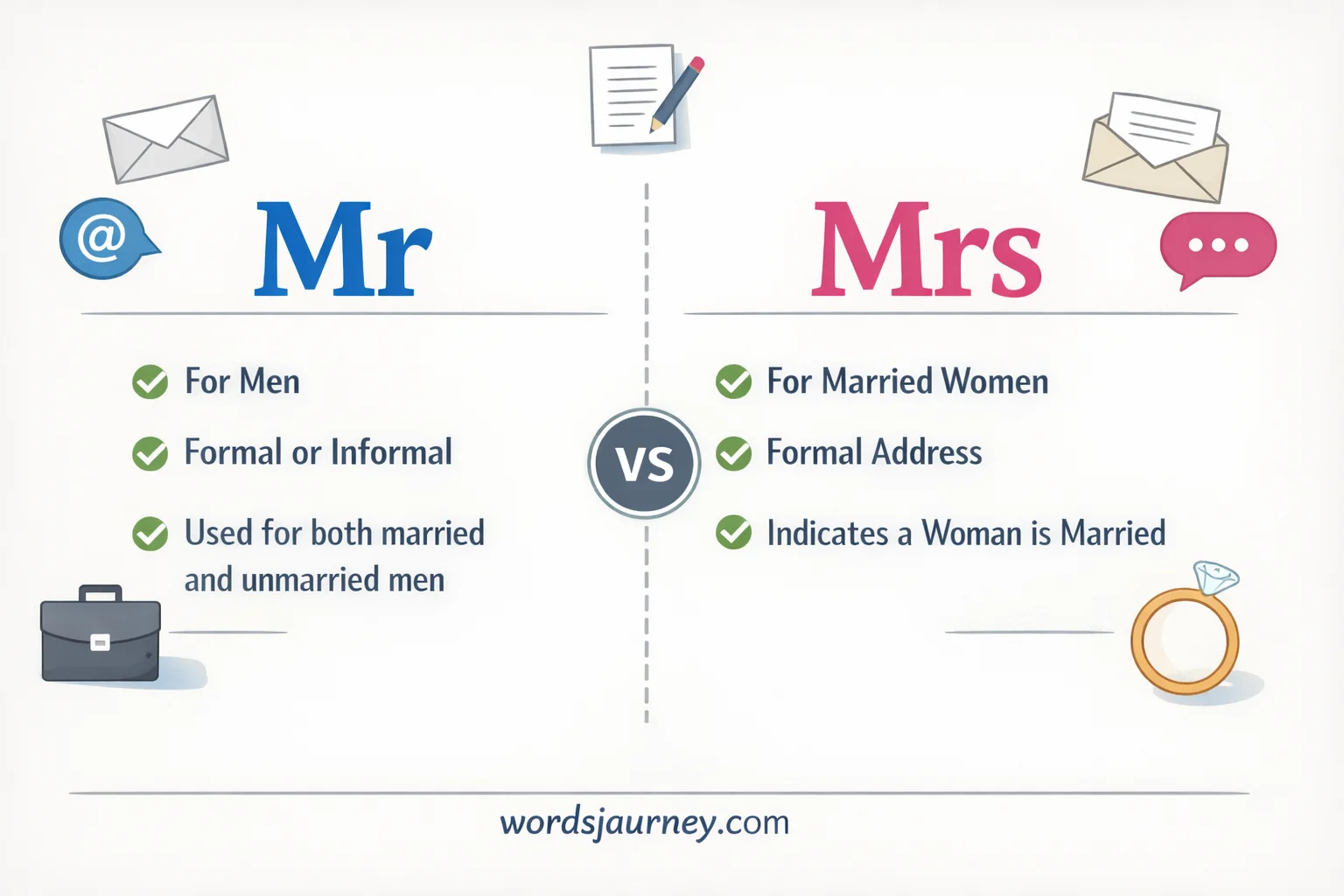
- Gender: Mr = men, Mrs = married women
- Marital Status: Mr = irrelevant, Mrs = married
- Professional Tone: Mr is universal; Mrs is traditional and formal
Quick Reference Comparison
| Title | Gender | Marital Status | Modern Usage |
| Mr | Male | Any | Universal, formal/professional |
| Mrs | Female | Married | Formal, traditional |
| Ms | Female | Any/unknown | Neutral, professional |
A simple diagram can help visualize this:
Diagram Idea: A flowchart showing “Male → Mr”, “Female → Married → Mrs / Unknown → Ms”.
Common Mistakes When Using Mr or Mrs
Even simple titles can cause confusion. Here are frequent mistakes people make:
- Using Mrs for unmarried women
- Using Mr for women
- Omitting the period in US English (e.g., writing “Mr John Smith” instead of “Mr. John Smith”)
- Assuming all women prefer Mrs rather than Ms
Case Study
A company once sent a formal invitation addressed to Mrs. Emily Johnson, unaware she had never married. She was polite but confused, showing how a small error can affect professionalism.
When to Use Mr or Mrs in Professional Settings
In professional communication, correct usage matters. Here’s how to approach it:
- Emails: Start with “Dear Mr. Smith” or “Dear Mrs. Clark”
- Business letters: Include the full title with the surname
- Invitations: Use Mr. & Mrs. for married couples
- Unknown recipients: If unsure about marital status, consider using Ms instead
Example Email:
Dear Mr. Thompson,
I am writing to confirm your attendance at the upcoming conference.
Example Invitation:
You are cordially invited to the wedding of Mr. & Mrs. Jonathan Reed.
Mr, Mrs, and Ms: A Quick Guide
Sometimes, Ms is preferable when marital status is unknown or irrelevant. It avoids assumptions while maintaining professionalism.
Comparison Table: Mr | Mrs | Ms
| Title | Gender | Marital Status | When to Use |
| Mr | Male | Any | Formal/professional correspondence |
| Mrs | Female | Married | Traditional/family contexts |
| Ms | Female | Any/unknown | Neutral, professional or polite |
Using Ms in business emails or letters is increasingly common, particularly in modern workplaces that value equality and privacy.
Also Read: Disc vs Disk The Complete Guide to Understanding the Difference
Regional and Cultural Variations
Address etiquette can differ across regions:
- US vs UK: Both use Mr, Mrs, and Ms, but the UK sometimes omits periods (“Mr Smith”)
- Other cultures: Some countries prefer titles like Dr., Sir, or Señora, so cross-cultural awareness is crucial
- Tip: When addressing international clients, research preferred titles or default to neutral forms like Mr or Ms
Quick Tip: Always confirm the recipient’s preferred title if possible.
Practical Tips for Using Mr or Mrs Correctly
Here’s a simple step-by-step guide:
- Identify Gender: Male → Mr, Female → Mrs/Ms
- Check Marital Status (for women): Married → Mrs, Unknown → Ms
- Use Full Name: Always pair the title with the surname
- Professional Context: Err on the side of formality
- Double-Check: Spelling of names and punctuation
Mnemonic to remember:
M – Male → Mr
R – Married → Mrs
S – Single or unknown → Ms
Real-world example: An HR manager addressing candidates should write:
Dear Ms. Carter,
Thank you for applying to our company.
This avoids assuming marital status and keeps communication polite.
FAQs About “Mr or Mrs”
1. What is the difference between Mr and Mrs?
Mr is used for men, regardless of marital status, while Mrs is traditionally used for married women. Usage varies depending on regional style guides like US vs. UK conventions.
2. Can I use Mrs for an unmarried woman?
No. Mrs specifically denotes a married woman. For unmarried women, Ms is preferred in modern formal writing and professional contexts.
3. Is it acceptable to use Mr or Mrs in emails and online bookings?
Yes. Proper titles in emails, scheduling, and online booking systems ensure professionalism, clarity, and consistency, especially in business communication and project management.
4. Should I always use Mr or Mrs in meetings or calendar invites?
Using titles in formal meetings and calendar invites is optional but recommended for first-time interactions or formal business settings. Once familiarity is established, first names may suffice.
5. Are there regional differences in Mr or Mrs usage?
Yes. In the UK, formal writing may still follow traditional conventions strictly, while in the US, modern usage favors Ms for women regardless of marital status to promote neutrality and inclusivity.
Conclusion
Mastering the use of Mr or Mrs is more than just following grammar rules it reflects professionalism, attention to detail, and respect. Whether you are drafting emails, sending calendar invites, or managing project schedules, using the correct title ensures clarity and avoids misunderstandings.
By understanding the nuances of English usage, regional style guides, and formal writing, you can confidently address anyone in business communication, online bookings, or broadcasting contexts. Consistency in using Mr or Mrs not only enhances your credibility but also demonstrates polished time management and communication skills.
With these insights, choosing the right title becomes second nature, helping your formal correspondence stand out for all the right reasons.

Johnson Alex is a language-focused writer and the voice behind WordsJourney. He creates practical, easy-to-understand content that helps readers improve their vocabulary and express ideas with clarity and confidence.