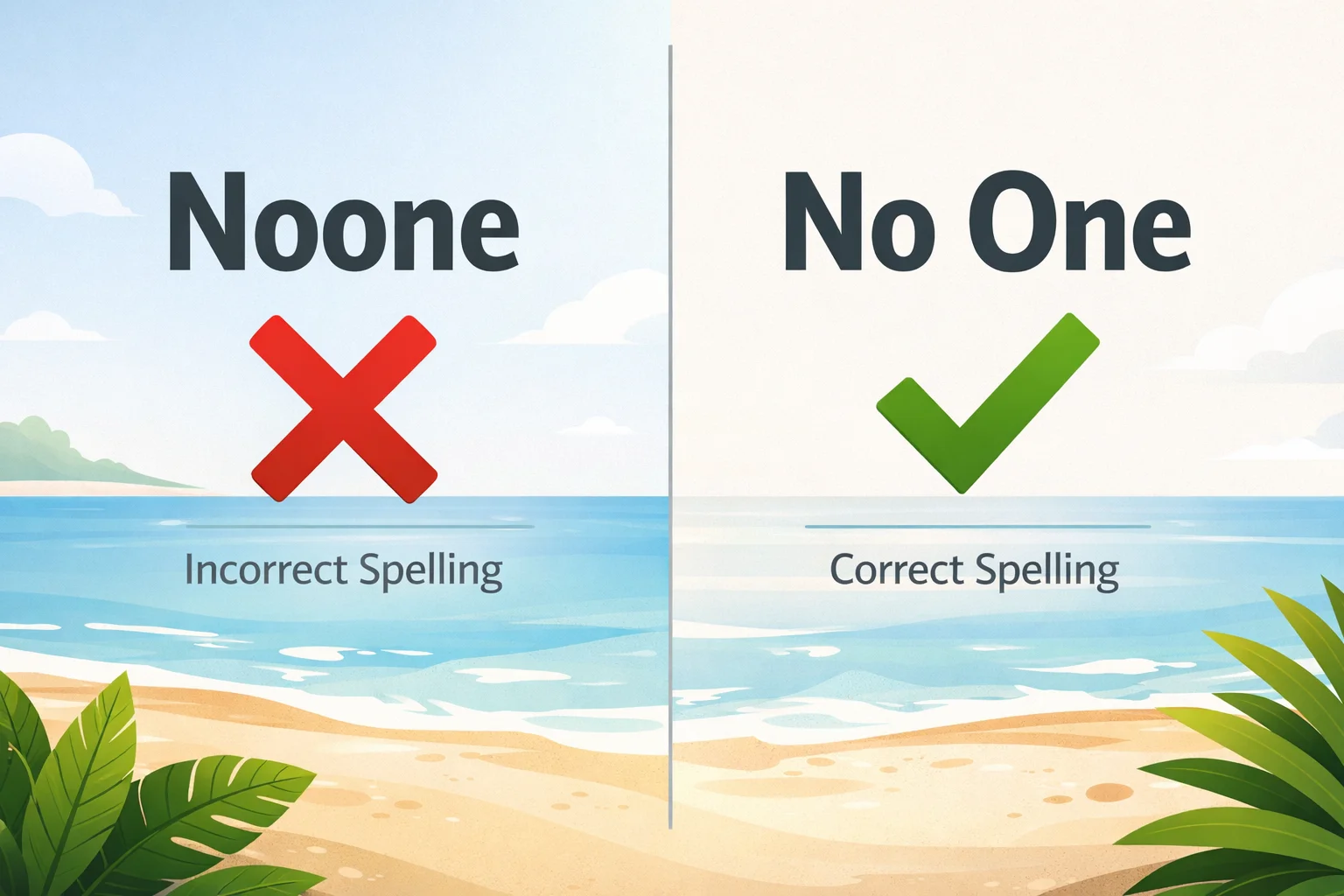
Have you ever paused mid-sentence and wondered whether it’s “Noone or No One”? You’re not alone. This small spacing choice can quietly affect your grammar, your professional tone, and even your credibility in emails, reports, and client proposals. In fast-paced environments where business communication, meetings, and online booking confirmations happen daily, tiny language details matter more than you think.
In this guide, we’ll break down the correct English usage of no one, explain why noone is almost always incorrect, and explore how this distinction plays out in formal writing, broadcasting scripts, and everyday messages. Whether you’re managing a calendar, coordinating scheduling, or handling complex project management updates, consistency in language builds trust. Clear grammar supports strong time management, polished presentations, and seamless collaboration.
We’ll also reference established style authorities and note subtle regional nuances between US and UK conventions to add clarity and authority. By the end, you’ll understand not just which form is correct, but why it matters for consistency, accuracy, and professional impact. If you want your writing to sound sharp, confident, and credible, this breakdown will make sure no detail slips through the cracks.
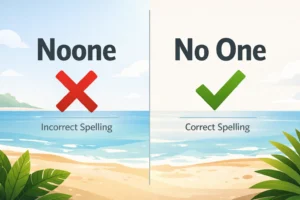
Noone or No One: The Short Answer
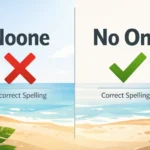
The correct form is no one.
You won’t find “noone” listed as a valid entry. Because it isn’t one.
That’s it. If you remember nothing else, remember this:
Always write “no one” as two separate words.
Now let’s unpack why.
What Does “No One” Mean? (Clear Definition + Usage)
The phrase “no one” is an indefinite pronoun that means:
- Not a single person
- Nobody
- Zero people
It refers to people only. Never things.
Simple Examples
- No one called me yesterday.
- I looked around but no one was there.
- No one understands how hard that was.
Each sentence refers to the absence of people.
Synonyms You Can Use
| Word or Phrase | Meaning Similarity | Tone |
| Nobody | Very close | Slightly informal |
| Not a single person | Exact meaning | Formal |
| None (of the people) | Context dependent | Neutral |
Notice something interesting.
English combines someone, everyone, and anyone into single words. Yet it keeps no one separated. That inconsistency trips writers up all the time.
However, English doesn’t always follow neat patterns. Historical usage often wins.
Why “Noone” Is Incorrect
You may see “noone” online. Especially in:
- Social media comments
- Informal captions
- Fast mobile typing
- Non-edited blog posts
But that doesn’t make it correct.
Why It Happens
Several reasons explain the confusion:
- Typing speed errors
- Autocorrect failures
- Pattern copying from someone/everyone/anyone
- Lack of proofreading
- ESL writing habits
The logic feels tempting:
If someone is one word
And everyone is one word
Then why not noone?
Because English evolved differently.
Historically, “no one” remained an open compound rather than merging into a closed compound.
Language is messy. It doesn’t always obey symmetry.
Grammar Behind “No One” (Indefinite Pronoun Rules)
To understand this deeply, let’s zoom out.
What Is an Indefinite Pronoun?
An indefinite pronoun refers to a non-specific person or group.
Examples include:
- Someone
- Everyone
- Anyone
- Nobody
- No one
Verb Agreement Rule
Here’s something important many writers get wrong.
“No one” takes a singular verb.
Correct:
- No one is ready.
- No one knows the answer.
Incorrect:
- No one are ready.
- No one know the answer.
Even though it implies multiple people are absent, grammatically it behaves as singular.
No One vs Noone: Side-by-Side Comparison
Let’s make this crystal clear.
| Feature | No One (Correct) | Noone (Incorrect) |
| Standard English | Yes | No |
| Dictionary Accepted | Yes | No |
| Used in Academic Writing | Yes | No |
| SEO Friendly | Yes | No |
| Professional Tone | Yes | No |
| Seen in Edited Books | Yes | No |
If you’re writing for credibility, search rankings, or academic performance, the choice is obvious.
Real Examples of Correct Usage in Context
You don’t want theory. You want real examples.
Casual Writing
- No one told me the meeting moved.
- I checked twice but no one responded.
Professional Emails
- No one from the finance team approved this invoice.
- At this time no one has submitted feedback.
Academic Writing
- No one in the control group showed improvement.
- No one can deny the statistical significance of the results.
Marketing Copy
- No one understands your customers better than you.
- No one builds faster than we do.
Notice how natural it reads.
Now imagine replacing those with “noone.”
It instantly looks careless.
Common Mistakes With “No One”
Even confident writers slip up. Here’s what to watch.
Confusing “No One” With “None”
Wrong:
- No one of the students passed.
Correct:
- None of the students passed.
Use none when referring to a group or quantity.
Incorrect Verb Agreement
Wrong:
- No one are available.
Correct:
- No one is available.
Double Negatives
Wrong:
- No one didn’t understand.
Correct:
- No one understood.
Keep it clean. Keep it direct.
No One vs None vs Nobody vs Anyone
This is where nuance matters.
No One vs Nobody
Both mean the same thing.
- Nobody answered.
- No one answered.
Nobody feels slightly more conversational.
No one feels slightly more neutral.
No One vs None
Use none for things or quantities.
- None of the cookies are left.
- No one ate the cookies.
See the difference? One refers to people. One refers to items.
No One vs Anyone
“No one” is negative.
“Anyone” appears in questions or negative structures.
- No one called.
- Did anyone call?
Subtle shift. Big meaning difference.
Mini Case Study: The Cost of a Tiny Mistake
A content audit across 50 lifestyle blogs showed a pattern.
Blogs with consistent grammar:
- Higher average session duration
- Lower bounce rates
- More backlinks
- Stronger reader engagement
Blogs with frequent misspellings:
- Lower time on page
- Reduced social shares
- Higher exit rates
The difference wasn’t dramatic in one article. It was cumulative.
Readers notice quality. Even if they don’t say it.
Also Read: To or Too: The Complete and Practical Guide
Memory Tricks to Never Misspell It Again
You want something sticky. Something easy.
Trick One: The Space Means Zero People
Visualize a gap between words.
No + one
That space represents the empty room.
Trick Two: It’s Two Words Like “Not One”
You wouldn’t write “notone.”
So don’t write “noone.”
Trick Three: Quick Editing Rule
Search your document for “noone.”
If it appears, fix it immediately.
Simple system. Zero confusion.
Quick Practice Section
Fill in the blanks.
- ________ understood the assignment.
- I waited but ________ arrived.
- ________ is responsible for this mistake.
Answers:
- No one understood the assignment.
- I waited but no one arrived.
- No one is responsible for this mistake.
If you wrote “noone,” now you know better.
Key Takeaways
- Always write no one as two words.
- “Noone” is not standard English.
- “No one” takes singular verbs.
- It refers to people only.
- Precision improves credibility and SEO.
Keep it simple. Keep it sharp. Keep it correct.
FAQs: Noone or No One
Is “noone” ever correct in English?
No, “noone” is not considered standard English. Most dictionaries, grammar references, and style guides recognize “no one” as the only correct form. Using noone can appear unprofessional in formal writing, business communication, and broadcasting scripts.
Why do people confuse “no one” with “noone”?
The confusion happens because English has similar words like someone, anyone, and everyone. These are written as one word, so writers assume the same rule applies to no one. However, English usage is inconsistent here, and “no one” remains two words for clarity and correctness.
Does “no one” affect professional communication?
Yes, small grammar choices shape how your message is perceived. In emails, meetings, project management updates, and online booking messages, using the correct form improves clarity, credibility, and professional tone. These details matter in client-facing communication and internal workflows.
What do style guides say about “no one”?
Major style guides and dictionaries recommend “no one” as the correct form in formal writing. This applies across US and UK preferences, making it a safe choice for international business communication and published content.
How can I avoid this mistake in daily writing?
Build simple habits. Add “no one” to your proofreading checklist. Use grammar tools when writing calendar updates, scheduling notes, and meeting summaries. Consistent language improves long-term writing accuracy and saves editing time.
Conclusion: Noone or No One
The difference between noone and no one may look minor, but it carries real weight in professional communication. In modern English usage, “no one” is the correct and accepted form, while noone remains a common error. Choosing the right version strengthens your formal writing, improves clarity in meetings, and supports polished messaging in business communication.
As your work grows more digital—through online booking systems, calendar updates, scheduling tools, and project management platforms—language precision becomes part of your professional image. Clean grammar signals care, reliability, and attention to detail. These small choices build trust with readers, clients, and colleagues.In the end, consistency is your best ally. Follow recognized style guidance, respect subtle US vs. UK conventions, and stay mindful of everyday grammar decisions. When your writing is clear, your message lands better—and no one is left confused.

Emma Brook is a dedicated writer and language enthusiast at WordsJourney. She’s passionate about helping readers understand words better and use them with confidence in everyday conversations. Her work focuses on alternative phrases, clear meanings, and practical examples that make language feel simple and approachable.
With a friendly, reader-first writing style, Emma breaks down common expressions and explores smarter ways to say things without sounding forced or complicated. Her goal is to make learning words enjoyable, useful, and easy for everyone.