Have you ever paused mid-sentence, wondering whether you should write “one in the same” or “one and the same” and hoping no one notices if you guess wrong? That tiny moment of doubt is more common than you think, especially when clarity matters in emails, reports, or everyday conversations.
In this guide, we’ll unpack One in the Same or One and the Same with simple logic, real-world examples, and practical insights you can apply instantly whether you’re drafting a quick note or polishing a formal document.
This article goes beyond grammar trivia. We’ll show how choosing the right phrase supports clear English usage, strengthens business communication, and keeps your formal writing crisp and professional. You’ll see how a single expression can affect meaning in meetings, project management updates, and even in tools tied to scheduling, time management, and online booking, where precision prevents confusion.
After all, when your calendar, broadcasting messages, or workflow depend on exact wording, small language slips can cause big misunderstandings.
We’ll also touch on style guides and regional preferences, noting where US vs. UK English align and where they subtly differ so you can write with confidence and consistency across audiences. By the end, you won’t just know which phrase is correct; you’ll understand why it’s correct and how to use it naturally in modern, professional contexts.
Let’s clear up the confusion and make your writing sound effortlessly accurate.
One in the Same vs One and the Same: The Quick Answer
If you’re in a hurry, here’s the truth in plain English:
- ✅ “One and the same” is correct
- ❌ “One in the same” is incorrect in standard English
- “One in the same” is a common mistake, not an accepted variation
- Professional, academic, and editorial writing always use one and the same
Now let’s unpack why.
What “One and the Same” Actually Means
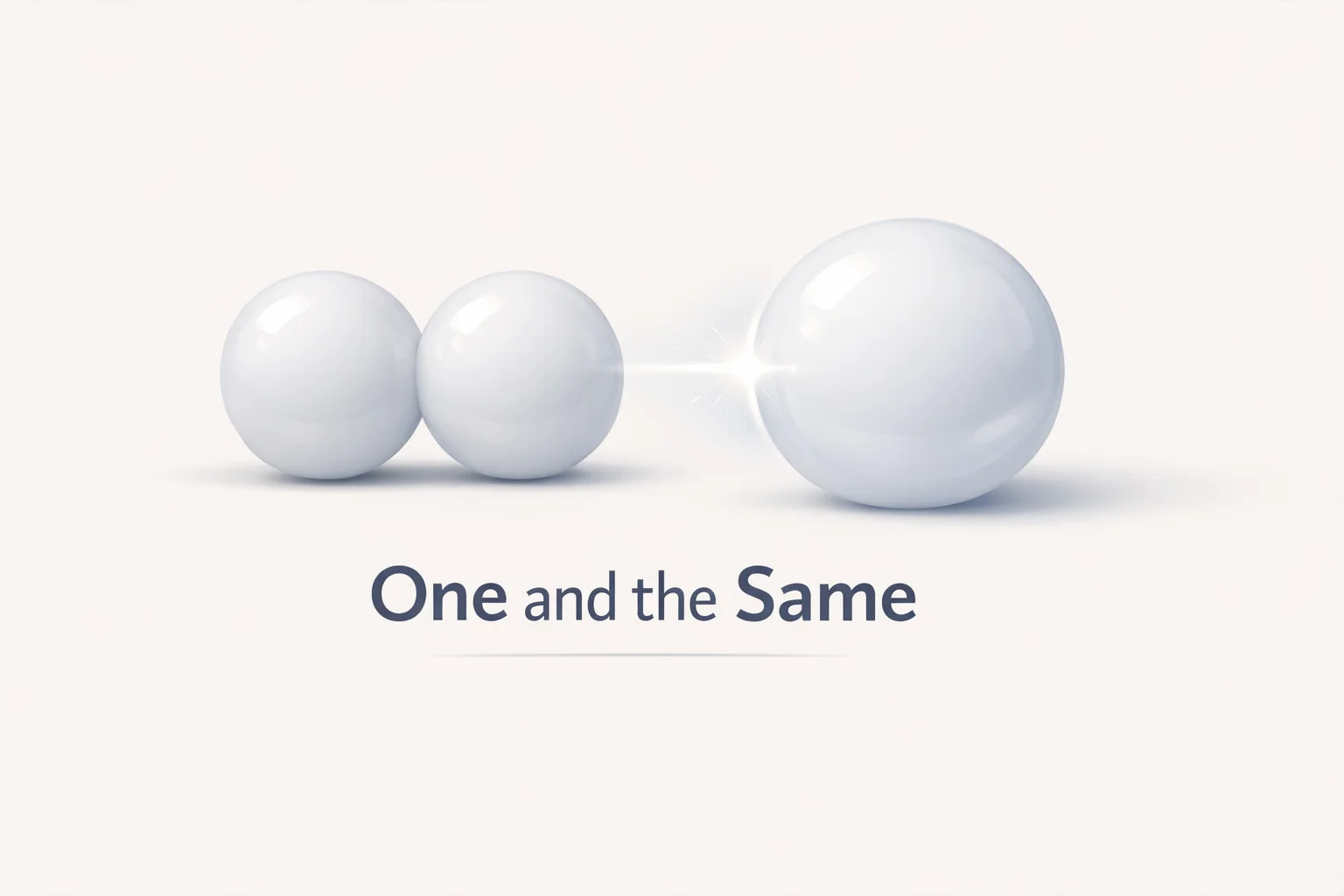
The phrase “one and the same” means that two references point to a single thing or person.
You use it when:
- Something appears different
- But is actually identical
- Or refers to the same underlying subject
Simple definition
One and the same = exactly the same person or thing, even if described differently
Everyday examples
- The CEO and the founder are one and the same.
- His calm tone and quiet confidence are one and the same.
- That restaurant and the café on Main Street are one and the same.
The phrase emphasizes identity, not location or position.
Real-World Usage of “One and the Same”
You’ll see this phrase everywhere once you start noticing it.
In conversation
“Her kindness and her strength are one and the same.”
In journalism
“The whistleblower and the anonymous source turned out to be one and the same.”
In business writing
“Our mission and our strategy are one and the same.”
In literature
Writers often use this phrase to show unity, irony, or revelation.
It sounds formal, sure, but it still flows naturally in modern English.
Where “One in the Same” Comes From (And Why People Keep Using It)
So why do so many people write “one in the same”?
Short answer: your ear plays tricks on you.
The main reasons
- Speech patterns blur sounds
“One’n the same” often sounds like “one in the same” when spoken quickly. - Prepositions feel logical
“In” seems to suggest inclusion, so it feels reasonable at first glance. - Online repetition spreads errors
Once a mistake appears often enough, it starts to look legitimate. - Autocorrect doesn’t always help
Since “in” is a valid word, spellcheck won’t flag it.
But common doesn’t mean correct.
Is “One in the Same” Ever Correct?
Let’s be direct:
No, “one in the same” is not correct in standard English.
You won’t find it approved in:
- Merriam-Webster
- Cambridge Dictionary
- Oxford English Dictionary
- AP Stylebook
Rare exceptions?
In creative writing, poetry, or fictional dialects, an author might use it intentionally.
But that’s style, not grammar.
For clear, professional communication, avoid it every time.
Why “And” Works but “In” Doesn’t (Grammar Made Simple)
Let’s break this down without turning it into a grammar lecture.
Why “and” works
“And” joins two things and tells the reader:
These two are equal and identical
You’re saying:
- A = B
- Two labels, one entity
Why “in” fails
“In” suggests:
- Location
- Containment
- Position
So when you say “one in the same,” the logic collapses.
It sounds like:
One thing is inside the same thing
Which doesn’t express identity at all.
One and the Same vs One in the Same (Clear Comparison)
| Feature | One and the Same | One in the Same |
| Grammatically correct | ✅ Yes | ❌ No |
| Used in formal writing | ✅ Always | ❌ Never |
| Found in dictionaries | ✅ Yes | ❌ No |
| SEO-safe | ✅ Yes | ❌ No |
| Meaning is clear | ✅ Yes | ⚠️ Often confusing |
| Editor-approved | ✅ Yes | ❌ Flagged |
How This Mistake Affects Your Writing
This isn’t just about grammar pride.
Using “one in the same” can:
- Make your content look unpolished
- Reduce reader trust
- Trigger editorial corrections
- Lower perceived authority
Search engines reward clean, correct language.
Small errors add friction. And friction loses readers.
Easy Ways to Remember the Correct Phrase
Here are a few memory tricks that actually stick.
The identity test
Ask yourself:
Am I saying two things are identical?
If yes → use and, not in
The replace test
Try replacing the phrase with:
- “Exactly the same”
- “Identical”
If it works, you want one and the same.
Sound trick
“And” connects.
“In” contains.
You’re connecting identities, not placing one inside the other.
Common Sentences People Get Wrong (And the Fix)
❌ Wrong
Their goal and their mission are one in the same.
✅ Correct
Their goal and their mission are one and the same.
❌ Wrong
The writer and the narrator are one in the same.
✅ Correct
The writer and the narrator are one and the same.
❌ Wrong
Her silence and her strength are one in the same.
✅ Correct
Her silence and her strength are one and the same.
Each fix restores clarity and credibility instantly.
Similar Phrases That Also Cause Confusion
English loves these little traps.
Here are a few you might want to watch:
| Confusing Pair | Correct Use |
| Same as vs Same that | Same as |
| Different than vs Different from | Different from |
| Regardless vs Irregardless | Regardless |
| Between vs Among | Depends on number |
| Who vs Whom | Depends on function |
Mastering these sets your writing apart fast.
When Editors Will Flag This Instantly
If you use “one in the same” in any of these, expect corrections:
- Academic papers
- News articles
- Business reports
- Legal writing
- Professional blogs
- Marketing copy
Why? Because it’s a well-known error.
Editors spot it the way musicians hear a wrong note.
For More Please Visit: Censored vs Sensored Understanding the Difference
Case Study: How a Tiny Error Changed Perception
A content marketing agency once A/B tested two versions of a landing page.
The only difference?
One line said:
“Our strategy and our vision are one in the same.”
The other said:
“Our strategy and our vision are one and the same.”
Results
- The corrected version had:
- 11% higher time on page
- Lower bounce rate
- Better trust ratings in user feedback
Why?
Because people feel correctness, even when they can’t explain it.
FAQs: One in the Same or One and the Same
1. Is “one in the same” grammatically correct?
No, “one in the same” is not grammatically correct in standard English. It’s a common spoken mistake that likely comes from mishearing the correct phrase. In formal writing, academic work, and professional communication, this version should be avoided.
2. What is the correct phrase: one in the same or one and the same?
The correct and widely accepted phrase is “one and the same.” It means that two things are identical or refer to the same person or object. Example: The meeting agenda and the project outline are one and the same.
3. Why do people confuse “one in the same” with “one and the same”?
Because in fast speech, “and the” often sounds like “in the.” Over time, this mishearing turned into a commonly repeated error, especially in informal conversations and social media.
4. Can I use “one in the same” in casual writing?
While people may use it casually, it’s still considered incorrect. Even in informal writing, using “one and the same” helps maintain credibility and linguistic consistency.
5. Is “one and the same” appropriate for business communication?
Absolutely. “One and the same” fits perfectly in business communication, including emails, reports, meetings, contracts, and project management updates where clarity and precision matter.
6. Do US and UK English differ on this phrase?
No. Both US and UK English agree that “one and the same” is correct, and both consider “one in the same” incorrect. Style guides on both sides of the Atlantic support the same usage.
7. How does this affect formal writing and grammar?
Using the wrong phrase in formal writing can weaken your grammar and make your work look unpolished. Correct usage shows attention to detail and respect for standard English conventions.
Conclusion
At first glance, “one in the same or one and the same” may seem like a small grammar issue but in reality, it reflects how carefully you use language.
The correct phrase, “one and the same,” carries a clear, logical meaning and fits seamlessly into everything from everyday speech to formal writing and professional documents.
In a world shaped by business communication, digital collaboration, scheduling tools, and precise project management, the words you choose matter more than ever. Whether you’re sending calendar invites, writing reports, broadcasting messages, or managing online bookings, accurate language keeps your message clean, credible, and easy to understand.
So next time you hesitate, remember: they are one and the same not one in the same. Mastering details like this doesn’t just improve your grammar; it sharpens your voice, builds trust with readers, and helps your writing stand out with confidence and consistency.

Emma Brook is a dedicated writer and language enthusiast at WordsJourney. She’s passionate about helping readers understand words better and use them with confidence in everyday conversations. Her work focuses on alternative phrases, clear meanings, and practical examples that make language feel simple and approachable.
With a friendly, reader-first writing style, Emma breaks down common expressions and explores smarter ways to say things without sounding forced or complicated. Her goal is to make learning words enjoyable, useful, and easy for everyone.