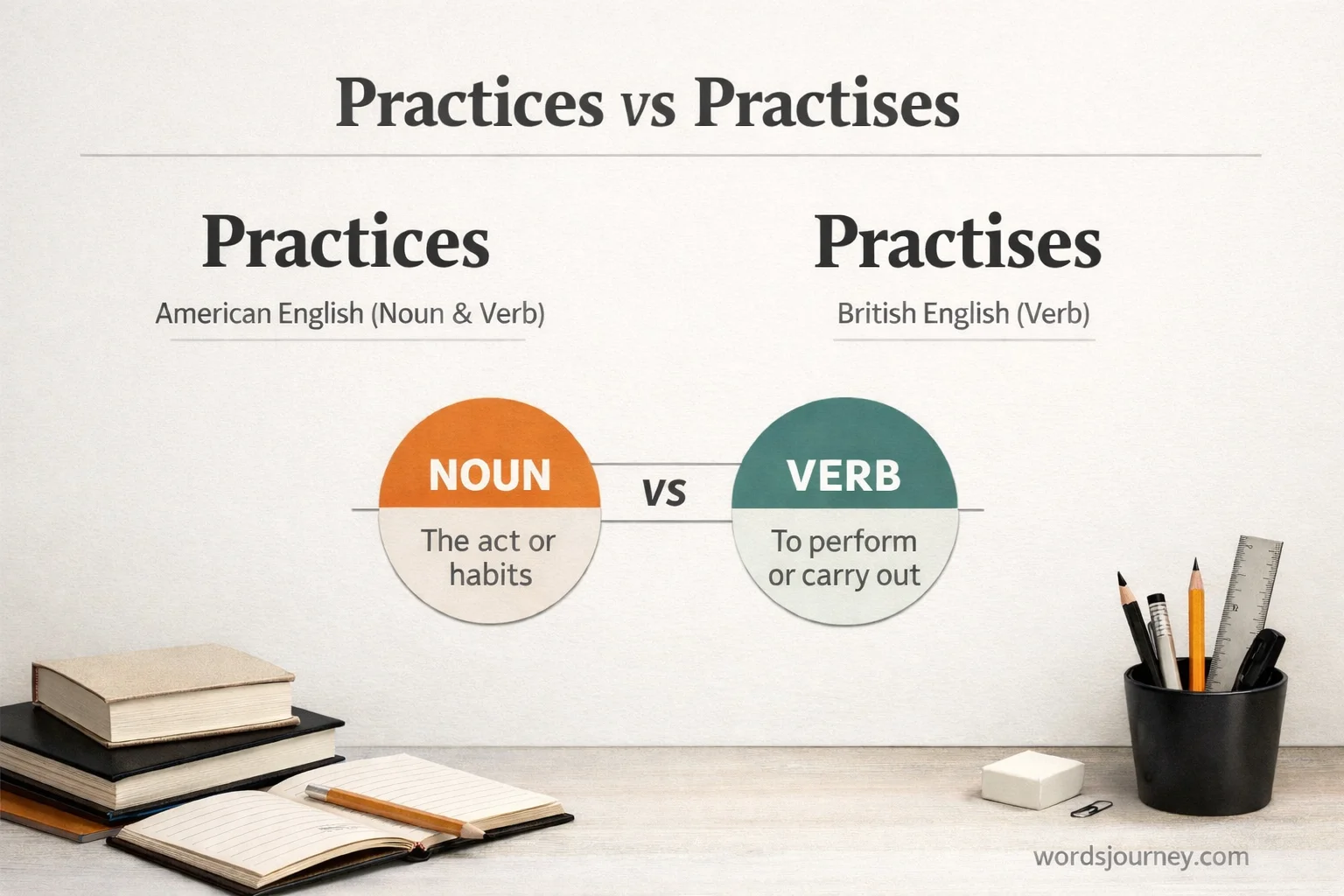
Have you ever paused while writing, unsure whether to use “Practices or Practises”? This small spelling difference can subtly change the tone of your text, especially in formal writing, business communication, or project management contexts. Understanding which form to choose is crucial for maintaining consistency across documents, emails, or online booking systems, where clarity and professionalism matter.
The distinction between practices and practises often comes down to regional preferences. In American English, “practices” is almost always correct, while British English sometimes allows “practises” as a verb form. This nuance impacts everything from calendar scheduling and meeting planning to broadcasting protocols and time management strategies. Knowing the right usage helps you avoid confusion and strengthens your credibility.
In this article, we’ll explore the difference between practices and practises, explain when to use each, and provide clear examples for grammar, formal writing, and everyday professional contexts. Whether you’re drafting business emails, managing projects, or navigating English usage rules, this guide ensures you choose the correct spelling with confidence and clarity.
What Does “Practice” Mean?
In English, practice serves primarily as a noun, though in American English, it doubles as a verb too.
As a noun, “practice” refers to:
- A professional business or office: “The doctor’s practice is in downtown New York.”
- Repeated action to improve skill: “She needs more practice before the recital.”
Key points:
- In American English, practice functions for both noun and verb.
- In British English, practice remains only a noun.
Table: Practice as a Noun
| Usage Type | Example | Region |
| Professional office | “He runs a law practice in London.” | UK & US |
| Skill improvement | “Daily practice improves performance.” | UK & US |
Breaking it down like this shows you why practice is safe to use almost everywhere as a noun.
What Does “Practise” Mean?
Here’s where confusion sets in. The word practise exists primarily in British English as the verb form of “practice.” It denotes the act of doing something repeatedly to improve a skill.
Examples:
- “She needs to practise her piano scales every day.”
- “Lawyers must practise ethically and professionally.”
Important:
- American English does not use practise. Americans write practice for both noun and verb.
- If you use practise in an American context, it will be flagged as a spelling error.
Quick Tip Box:
“In the US, you’ll never see ‘practise.’ Always stick to ‘practice.’”
Key Differences Between “Practice” and “Practise”
Understanding the distinction comes down to region and grammatical function. The following table summarizes the differences clearly:
| Form | Type | Usage | Example | Region |
| Practice | Noun & Verb | Refers to professional work or repeated action | “I need more practice.” | US & UK (noun), US (verb) |
| Practise | Verb | Performing an action repeatedly | “She practises law daily.” | UK only (verb) |
Quick takeaways:
- If you’re in the US, always use practice.
- If you’re in the UK, use practice for nouns, practise for verbs.
- A mnemonic:
“I practise an action, I have a practice for a thing.”
Common Mistakes and Confusions
Even seasoned writers stumble on this topic. Here are the most frequent errors:
- Using practise as a noun in UK writing. Example: “He opened a new practise.” ❌ Correct: “He opened a new practice.”
- Using practise in American English. Example: “She will practise piano.” ❌ Correct: “She will practice piano.”
- Misunderstanding the verb form. People often think practice as a verb is wrong in the UK, but it’s acceptable in informal settings, though practise is preferred.
Mini anecdote:
A British law student emailed a US professor:
“I will practise daily.”
The professor replied, puzzled, thinking it was a typo. Small mistakes like this can alter clarity.
Practical Tips to Remember Correct Usage
Here’s how to avoid mistakes and write confidently:
- US Writers: Always use practice for nouns and verbs.
- UK Writers:
- Noun = practice (“She has a dental practice.”)
- Verb = practise (“She practises daily.”)
- Mnemonic: “Practise for actions, practice for things.”
- Visual cue: If you can replace the word with “skill training” or “habit,” it’s likely a noun (practice).
Advanced Considerations
Formal vs Informal Writing:
- Academic papers, business reports, and official documents benefit from using the correct UK or US forms.
- Emails or casual writing can be more flexible, especially in global communication.
International Variations:
- Canada & Australia: Often follow UK English, but US influence may blur the distinction.
- Singapore & India: British spelling conventions prevail, so practise is used as the verb.
For More Please Visit: Alot or A Lot: The Ultimate Guide for Perfect Usage
Examples in Sentences
To clarify, here’s a table of real-life usage examples:
| Sentence | Correct Form | Explanation |
| I need to ___ my guitar daily. | practise | Verb, UK English |
| The doctor’s ___ is near the station. | practice | Noun, universal |
| You should ___ more before the exam. | practise | Verb, UK English |
| Good ___ makes perfect. | practice | Noun, universal |
| She will ___ speaking in public. | practise | Verb, UK English |
| He opened a new medical ___ last month. | practice | Noun, universal |
This quick reference is ideal for students, writers, and professionals alike.
Frequently Asked Questions (FAQs)
1. What is the difference between Practices and Practises?
Practices is the standard spelling in American English and is used for both nouns and verbs. Practises is primarily British English and is used as the verb form, while practice remains the noun.
2. Can I use Practises in American English?
No, in US English, “practises” is generally considered incorrect. Always use practices to maintain proper grammar and formal writing standards.
3. Which form should I use in professional documents?
Use practices in business communication, project management, calendar scheduling, and online booking contexts to ensure clarity and consistency. British audiences may accept “practises” in verb form, but consistency is key.
4. Does using the wrong form affect SEO or readability?
Yes. Consistent usage helps readers and search engines understand your content better. Mixing forms can reduce clarity and make text look unprofessional.
5. Are there other common grammar pitfalls like this?
Yes, similar differences include advice vs advise, license vs licence, and all right vs alright. Awareness of regional preferences improves English usage in formal writing.
Conclusion
Choosing the correct spelling between practices or practises is more than a minor detail—it reflects your attention to grammar, formal writing, and professional communication. For American English, always use practices, while British English allows “practises” for verbs. By understanding these differences, you can maintain consistency across emails, calendar schedules, project plans, and broadcasting or online booking platforms.Mastering this subtle distinction not only improves your English usage but also strengthens your credibility in business, academic, and professional contexts.

Emma Brook is a dedicated writer and language enthusiast at WordsJourney. She’s passionate about helping readers understand words better and use them with confidence in everyday conversations. Her work focuses on alternative phrases, clear meanings, and practical examples that make language feel simple and approachable.
With a friendly, reader-first writing style, Emma breaks down common expressions and explores smarter ways to say things without sounding forced or complicated. Her goal is to make learning words enjoyable, useful, and easy for everyone.