Ever typed a word, paused, and wondered if it “looks right”? That tiny doubt often shows up with Seamless vs Seemless, a pair that trips up writers in emails, posts, and business communication. In everyday English usage, choosing the correct form shapes clarity, credibility, and consistency.
This guide opens with the real difference between Seamless vs Seemless, why one is standard in formal writing, and how the mix-up sneaks into meetings, broadcasting, and even online booking pages.
You’ll learn how the correct spelling supports professional tone across project management, scheduling, and time management workflows. We’ll show practical examples from calendars, business documents, and customer-facing copy so your writing reads clean, confident, and polished. Clear grammar choices don’t just look good. They prevent confusion, protect your brand voice, and improve reader trust.
We’ll also touch on what major style guides recommend and note any light regional preferences (US vs. UK) where they matter. Expect quick rules, memory tricks, and real-world examples you can use right away.
By the end, you’ll know exactly when to write seamless, why seemless is a common error, and how to keep your writing consistent across every channel.
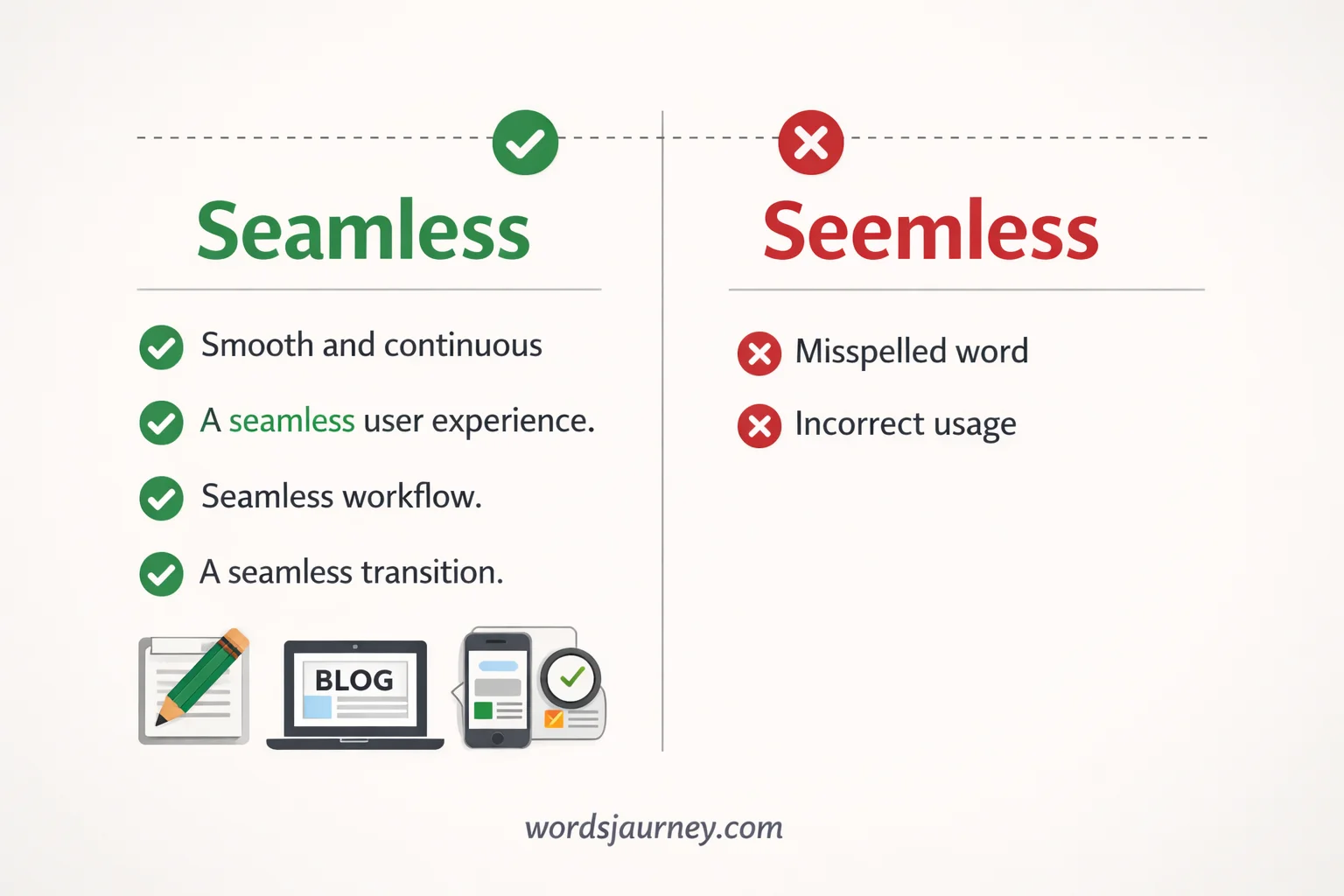
Seamless vs Seemless: Quick Comparison
Before we dig into details, here’s a snapshot comparison for quick reference:
| Word | Correct? | Meaning | Example Use Case |
| Seamless | ✅ Yes | Smooth, continuous, without gaps | seamless workflow |
| Seemless | ❌ No | Not a real English word | common spelling mistake |
This table is your quick cheat sheet. If you only remember one thing, it’s this: always spell it seamless, never seemless.
What Does “Seamless” Mean?
The word seamless describes something that is smooth, continuous, or without visible breaks. Imagine a perfectly stitched garment: no loose threads, no gaps. That’s seamless.
In writing and communication, the meaning expands depending on context:
- Design: A seamless interface feels intuitive and effortless.
- Technology: Seamless software integration means different apps work together without glitches.
- Business: A seamless workflow ensures tasks move smoothly from one step to another.
- Communication: Seamless storytelling flows naturally without abrupt transitions.
Common Collocations of Seamless
- Seamless integration – used in tech and business contexts.
- Seamless transition – common in writing, speeches, and presentations.
- Seamless experience – popular in UX, marketing, and customer service.
- Seamless workflow – frequent in project management and operational contexts.
While seamless adds sophistication to your writing, overusing it in marketing copy can feel cliché. Use alternatives like frictionless, smooth, or effortless when context allows.
Is “Seemless” a Real Word?
Short answer: No.
“Seemless” is a misspelling influenced by the word seem, which means “to appear.” People mistakenly write “seemless” because it sounds right or because of autocorrect errors.
Search trends reveal that thousands of users type seemless daily, but every authoritative dictionary marks it as incorrect. Google may even correct it automatically in search results, showing did you mean seamless?
Why the confusion happens:
- Phonetics: “Seemless” sounds almost identical to “seamless.”
- Influence of “seem”: Writers assume “seemless” implies “without seeming,” which isn’t how English works.
- Autocorrect blind spots: Some word processors fail to flag it, especially in informal writing.
Real-World Examples of Seamless in Context
Seeing seamless in real sentences helps cement correct usage. Here’s a table showing practical examples:
| Context | Correct Example | Explanation |
| Business | The onboarding process felt seamless. | Smooth transition from start to finish. |
| Technology | The app update delivered seamless syncing. | No interruption between devices. |
| Writing | The paragraphs flow in a seamless way. | Natural and uninterrupted narrative. |
| Customer UX | They aim for a seamless checkout experience. | Smooth process improves customer satisfaction. |
These examples show that seamless emphasizes continuity and flow, whether in text, design, or experience.
Seamless vs Seemless and Professional Writing
Spelling matters. Here’s why getting seamless right improves and professional credibility:
- Search Rankings: Google favors correct spelling and authoritative usage. Misspelled terms can lower ranking.
- Brand Trust: Errors make content seem careless. A single letter can affect credibility.
- Conversion Rates: Smooth, professional writing increases trust and engagement.
Some marketers deliberately target misspellings for search traffic, but this works only in niche FAQ or “common mistakes” posts. For main content, always stick to seamless.
Memory Tricks to Never Misspell Seamless
Here are simple ways to lock the correct spelling in your mind:
- Visual Trick: Picture a stitched seam. That’s literally in the word: seam + less.
- Phonetic Trick: Remember the pronunciation is “see-mless”, not “seem-less.”
- Mental Check: Ask yourself: “Does this word relate to a seam?” If yes, it’s correct.
One quick sentence rule: If you can picture a seam, you’ll spell seamless right.
Common Phrases With “Seamless”
Some phrases appear frequently in marketing, UX writing, and business communication. Watch for these:
- seamless experience
- seamless integration
- seamless transition
- seamless design
- seamless workflow
These phrases dominate professional writing because they convey efficiency, professionalism, and smooth operation. Miswriting them as seemless immediately undermines credibility.
Also Read: Mr or Mrs Understanding the Correct Usage
Seamless in Different Writing Contexts
Seamless is versatile but context-sensitive.
- Business Writing: Refers to processes, transitions, and workflow efficiency.
- UX & Product Design: Emphasizes intuitive design and smooth user experience.
- Academic Writing: Can describe logical flow or continuous argumentation.
- Marketing & Copywriting: Highlights effortless customer journeys.
- Casual Use: Shows smoothness in storytelling or social content.
Alternative Words to Use
Sometimes “seamless” gets overused. Consider:
- Frictionless – especially in UX and finance contexts.
- Smooth – informal writing and conversation.
- Effortless – describing human experience or interaction.
- Uninterrupted – formal and precise alternative.
Common Mistakes and How to Fix Them
Writers often misuse seamless in these areas:
- Blog titles (e.g., “A Seemless User Experience”)
- Product descriptions (e.g., “Enjoy seemless streaming”)
- Resume bullet points (e.g., “Managed a seemless workflow”)
- Landing page headlines (e.g., “Seemless Integration Solutions”)
Fix Framework:
- Read each word aloud. Does it relate to a seam?
- Use spellcheck and dictionary tools.
- Apply our visual trick: if it has a seam, it’s seamless.
- Double-check in professional content before publishing.
Grammar Check: Seamless vs Similar Words
It helps to separate similar-sounding words to avoid mistakes:
| Word | Meaning | Common Confusion |
| Seam | A line where two pieces join | Seamless |
| Seem | To appear or look like | Seemless |
| Seamless | Without seams or breaks | Seemless |
Confusing seam and seem leads directly to the misspelling seemless. Keeping the visual image of a “seam” helps avoid errors.
Printable Quick Reference Box
Remember: If you can picture a seam, you’ll spell seamless correctly.
This can be pinned, shared, or bookmarked for quick reference—perfect for writers, marketers, and UX designers.
FAQs: Seamless vs Seemless
1. What is the correct spelling: seamless or seemless?
The correct spelling is seamless. “Seemless” is a common misspelling and is considered incorrect in both formal writing and everyday business communication.
2. What does “seamless” mean?
Seamless describes something smooth, uninterrupted, or perfectly integrated. For example, a seamless online booking system allows users to schedule appointments without friction.
3. Can “seemless” ever be used correctly?
No, “seemless” is not recognized in standard English dictionaries. Always use seamless in professional writing, emails, project management, or broadcasting contexts.
4. Are there regional differences between US and UK usage?
No significant differences exist; seamless is standard in both US and UK English. Consistency matters more than regional preference in professional documents.
5. How can I avoid this spelling mistake?
- Use spell-check tools in calendar apps, scheduling platforms, and word processors.
- Remember: “seam” + “less”, like a garment without seams, not “seem.”
- Review style guides like AP or Chicago for formal writing consistency.
Conclusion
Understanding the difference between Seamless vs Seemless is more than just a spelling exercise it reflects attention to detail in business communication, project management, and daily English usage. Choosing seamless ensures your writing is professional, clear, and credible, whether it’s for online booking systems, team meetings, or broadcasting announcements.
By following the simple tips, referencing style guides, and staying consistent, you’ll never let this common error slip into your formal writing again. Mastering small details like this helps you communicate smoothly, just like the word seamless itself suggests.

Emma Brook is a dedicated writer and language enthusiast at WordsJourney. She’s passionate about helping readers understand words better and use them with confidence in everyday conversations. Her work focuses on alternative phrases, clear meanings, and practical examples that make language feel simple and approachable.
With a friendly, reader-first writing style, Emma breaks down common expressions and explores smarter ways to say things without sounding forced or complicated. Her goal is to make learning words enjoyable, useful, and easy for everyone.