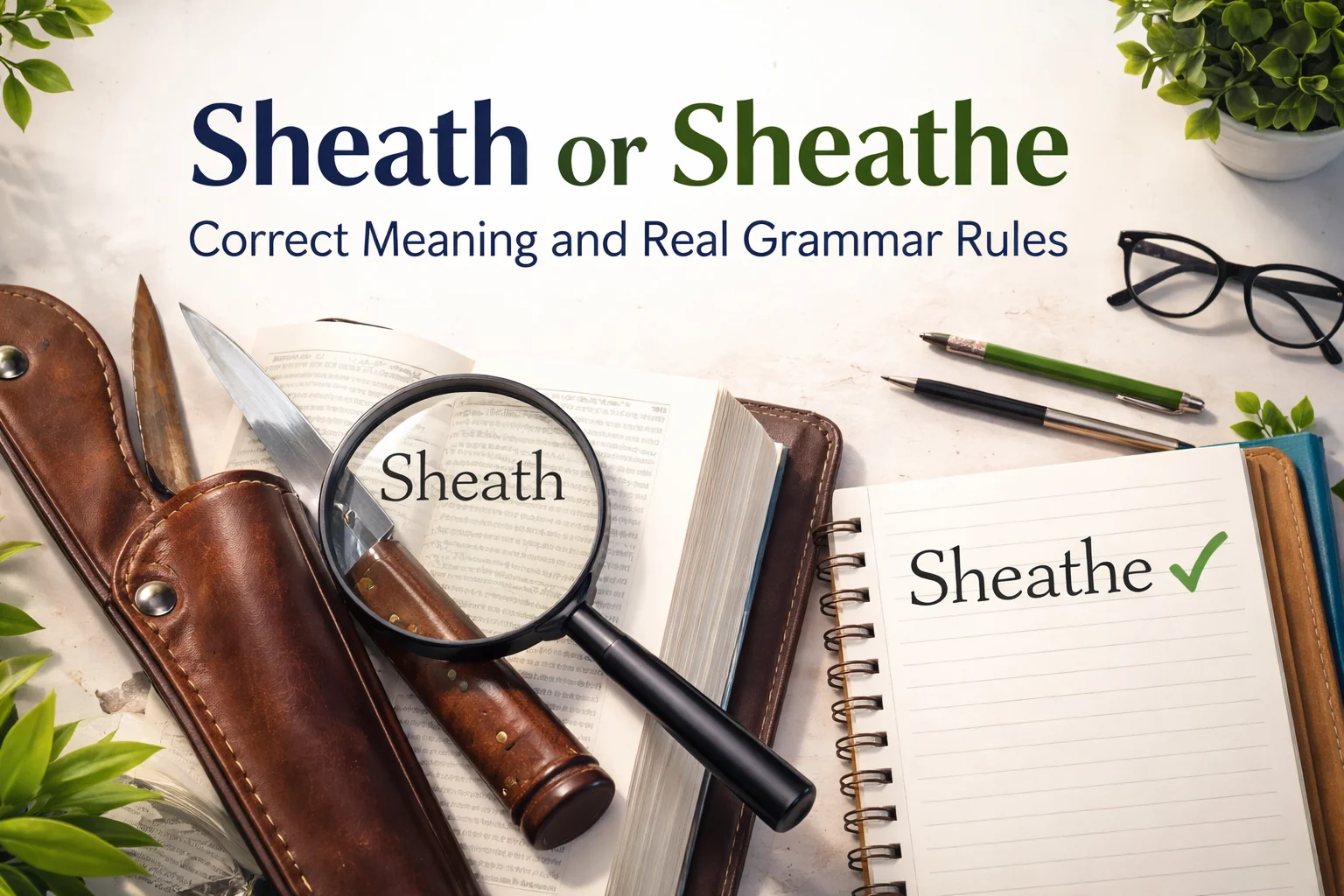
Ever paused over the spelling of “Sheath or Sheathe” and wondered which one truly fits your sentence? You’re not alone. Even skilled writers hesitate when choosing between these two similar-looking words, especially when aiming for clarity, precision, and professional tone. In this guide, we’ll untangle the confusion, explain the real difference, and help you use each form correctly in English usage, grammar, and formal writing—all while keeping readability smooth and engaging.
Understanding the right choice isn’t just about spelling. It’s about consistency, credibility, and effective communication, whether you’re writing for business communication, planning meetings, publishing broadcasting scripts, structuring online booking pages, or managing content around calendar, project management, scheduling, and time management contexts. Accuracy in small details like this strengthens your writing voice and builds trust with your audience.
We’ll also touch on style guide preferences and subtle regional differences, such as how US vs UK English sometimes approaches usage and spelling variations. By the end, you’ll know when to use sheath as a noun and sheathe as a verb, how to apply both confidently in sentences, and how to maintain polished, authoritative writing every time you encounter this pair. Let’s make the choice clear, practical, and easy to remember.
Sheath or Sheathe Quick Answer
If you want the fast truth without fluff, here it is.
- Sheath = noun
It is a thing. A cover or protective casing. - Sheathe = verb
It is an action. To put something inside a sheath.
If the word represents an object that protects, choose sheath.
If the word represents the act of placing something into that object, choose sheathe.
Simple rule:
“A sheath is what you have. You sheathe what goes inside it.”
Short. Clean. Accurate.
Understanding “Sheath” Meaning, Usage, and Real Context
What does “Sheath” mean?
A sheath is a protective cover or case. Most people instantly think of a sword sheath, yet it is far more universal in language. You see it in medicine, engineering, fashion, nature, and technology.
A sheath protects. It wraps. It shields.
Grammar Function
- Part of Speech: Noun
- Plural: Sheaths
- Role: Object, subject, or complement in a sentence
Real Everyday Meaning
You see a sheath when something needs safety or structure. It holds sharp things, delicate materials, medical instruments, wires, and even plant stems.
Common Real-Life Uses of “Sheath”
You encounter this word more often than you notice. Here are real, meaningful contexts where “sheath” appears and why it matters.
In Everyday Life
- Knife sheath
- Sword sheath
- Blade sheath
- Tool sheath
In Medical and Scientific Contexts
- Nerve sheath
- Myelin sheath
- Muscle sheath
- Bacterial cell sheath
In Technology and Engineering
- Cable sheath
- Wire insulation sheath
- Protective casing in machinery
In Fashion
- Sheath dress
- Sheath-style clothing
- Tight body-fitted garment structure
“A sheath protects what is inside. It shields from danger and preserves structure.”
Examples of “Sheath” in Sentences
Short. Clear. Practical.
- He placed the knife back in its sheath after cutting.
- Doctors explained that the myelin sheath protects nerve fibers.
- The sword hung from a leather sheath on his belt.
- Electric cables require a strong protective sheath for safety.
- She wore a sleek sheath dress that hugged perfectly.
Understanding “Sheathe” Meaning, Usage, and How to Use It Correctly
What does “Sheathe” mean?
Sheathe is a verb. It describes an action.
To sheathe means:
To insert something into a sheath
To cover something in a protective layer
To encase or envelop something
It is a movement. It is deliberate. It represents purpose.
Grammar Role of “Sheathe”
- Part of Speech: Verb
- Meaning: To put inside a sheath or cover
- Can be conjugated
Real-Life Contexts for “Sheathe”
Literal Physical Action
- Sheath a sword
- Sheath a knife
- Sheath a blade
- Sheath a surgical instrument
Figurative Meaning
Language loves drama. Writers use “sheathe” metaphorically to express emotional control.
- Sheathe your anger
- Sheathe your words
- Sheathe your hostility
It creates a powerful image. You withdraw sharpness. You calm aggression. You cover intensity with composure.
Also Read: Realize or Realise Which Spelling Is Correct?
Examples of “Sheathe” in Sentences
- He sheathed his sword after the duel ended.
- The warrior slowly sheathed his blade as peace returned.
- Doctors carefully sheathed the device to avoid contamination.
- She decided to sheathe her anger instead of arguing.
- The wind sheathed the mountains in white snow.
Notice how it confidently expresses movement or covering. That is the essence of sheathe.
Clear Difference Between Sheath and Sheathe
Here is the simplest and clearest comparison table.
| Word | Part of Speech | Meaning | Usage | Quick Memory |
| Sheath | Noun | A protective cover or casing | A thing that exists | A cover |
| Sheathe | Verb | To put inside a sheath or to cover | An action being done | A movement |
Memory Trick That Makes It Impossible To Forget
Think of the extra “e” at the end of sheathe as energy or effort.
A verb requires action. Action requires energy.
So:
- Sheathe ends with “e”
- Action needs energy
- Therefore sheathe = verb
It sticks instantly.
Correct Usage of Sheath and Sheathe in Sentences
Sentences Using “Sheath” (Noun)
- The hunter kept his knife in a sturdy sheath.
- The sheath of the cable prevents electrical hazards.
- The myelin sheath allows nerves to transmit signals smoothly.
- He admired the craftsmanship of the sword’s sheath.
- The dress fit like a sleek sheath, elegant and refined.
Sentences Using “Sheathe” (Verb)
- He sheathed his sword with confidence after the battle.
- The surgeon sheathed the needle for safety.
- You should sheathe your anger before saying something hurtful.
- The mountains were sheathed in layers of snow.
- She calmly sheathed her emotions behind a composed smile.
Common Mistakes Writers Make With Sheath vs Sheathe
Even experienced writers mess this up because the words feel close. Here are the most frequent mistakes and how to avoid them.
Mistakes
- Using sheath when they mean the action
- Using sheathe when referring to the object
- Treating them as interchangeable
- Forgetting part of speech rules
- Spelling errors like “sheat”
How to Avoid Them
Use this three-second test:
Ask yourself one question:
Is it a thing or an action?
If it is a physical object → SHEATH
If something is being placed or covered → SHEATHE
Grammar and Tense Guide for “Sheathe”
Writers often want to use sheathe in different tenses. Here is a simple tense table to keep everything smooth.
| Tense | Example |
| Present | I sheathe the blade carefully |
| Past | He sheathed his sword after winning |
| Future | They will sheathe their weapons soon |
| Present Continuous | She is sheathing the knife slowly |
| Past Continuous | He was sheathing the sword when they arrived |
| Perfect | She has sheathed the blade already |
| Perfect Continuous | They have been sheathing their tools all morning |
This makes the verb flexible and powerful in writing.
Figurative and Idiomatic Uses of Sheathe
Language becomes beautiful when words transform into emotions. “Sheathe” creates vivid narrative tone and emotional weight.
Powerful Figurative Uses
- Sheathe your anger
- Sheathe your sarcasm
- Sheathe your tongue
- Sheathe your emotions
These expressions suggest restraint, maturity, and strength.
“When someone sheathes their anger, they choose peace over pride.”
Writers in literature, movies, and speeches use this technique to portray emotional control.
Short Historical and Etymology Insight
Words do not just appear. They evolve.
- “Sheath” originates from Old English “scēth”
- It meant a cover for a knife or sword
- The functional meaning stayed strong through centuries
- “Sheathe” came later as the verb form describing the action associated with the sheath
So originally there was only the object. Later language naturally created a verb describing its purpose.
That explains their close relationship.
Sheath vs Sheathe in American English and British English
Unlike many tricky words, there is no regional spelling war here.
- American English uses sheath and sheathe
- British English uses sheath and sheathe
- Both meanings stay identical
- Both grammar roles remain unchanged
So no matter where you write, the rule never changes.
Real World Usage Comparison
Writers tend to use sheath far more because objects are mentioned more often than the action. However action-focused storytelling, fantasy writing, historical novels, and dramatic content use sheathe frequently.
Usage Trends
| Context | Mostly Used Word |
| Everyday conversation | Sheath |
| Literature and fantasy writing | Sheathe |
| Technology | Sheath |
| Science and Medicine | Sheath |
| Poetry and emotional writing | Sheathe |
| Action or combat scenes | Sheathe |
Quick Reference Guide You Can Screenshot
- Sheath = noun
- Sheathe = verb
- Sheath is a cover
- Sheathe is the act of covering
If you can touch it, it is a sheath.
If you can do it, you sheathe.
Case Study Example to Understand Better
Imagine a warrior scene.
He pulls out his sword from the sheath.
After victory, he sheathes it again.
See the natural relationship?
The sheath stays.
The action changes.
Helpful Mnemonic Cheat Sheet
Here is a fast learning trick:
- The noun is shorter → SHEATH
- The verb stretches longer → SHEATHE
- Physical items are simple so the word stays simple
- Actions require effort so the word extends
It becomes intuitive once you think this way.
FAQs:
1. What is the main difference between “sheath” and “sheathe”?
Sheath is a noun that refers to a covering or protective case, often for a knife, sword, or cable. Sheathe is a verb that means to put something into a sheath or to cover something securely.
2. Is “sheathe” ever used as a noun?
No. Sheathe is strictly a verb. When referring to the object itself, the only correct noun is sheath.
3. Can “sheath” and “sheathe” be used in business, technical, or professional contexts?
Yes. You’ll often see sheath used in technical writing, engineering, broadcasting equipment, and professional documentation, while sheathe appears in descriptive, instructional, or formal writing contexts when describing an action.
4. Do US and UK English treat “sheath” and “sheathe” differently?
Both US and UK English use the same distinction: sheath (noun) and sheathe (verb). The rules remain consistent across major style guides such as APA, Chicago, and Oxford.
5. Why does correct usage matter?
Choosing the right form enhances clarity, improves formal communication, and keeps writing consistent—important in business communication, project management, broadcasting, online platforms, and professional documents.
6. Can “sheathe” be used figuratively?
Yes. Writers sometimes use sheathe figuratively to describe covering or enclosing something, such as “sheathed in glass” when describing a building.
Conclusion
Choosing between “sheath or sheathe” becomes simple once you remember the core difference: sheath is the noun, and sheathe is the verb. This small distinction has a powerful impact on grammar accuracy, formal writing, and overall professional communication. Whether you’re crafting precise documents, managing business communication, writing for broadcasting, planning meetings, or creating clear instructions in project management and online platforms, using the correct form strengthens credibility and clarity.
With awareness of regional preferences, adherence to respected style guides, and consistent usage, you’ll communicate confidently and correctly every time. Now when you see “Sheath or Sheathe,” you’ll instantly know which one belongs in your sentence and why it matters.

Johnson Alex is a language-focused writer and the voice behind WordsJourney. He creates practical, easy-to-understand content that helps readers improve their vocabulary and express ideas with clarity and confidence.