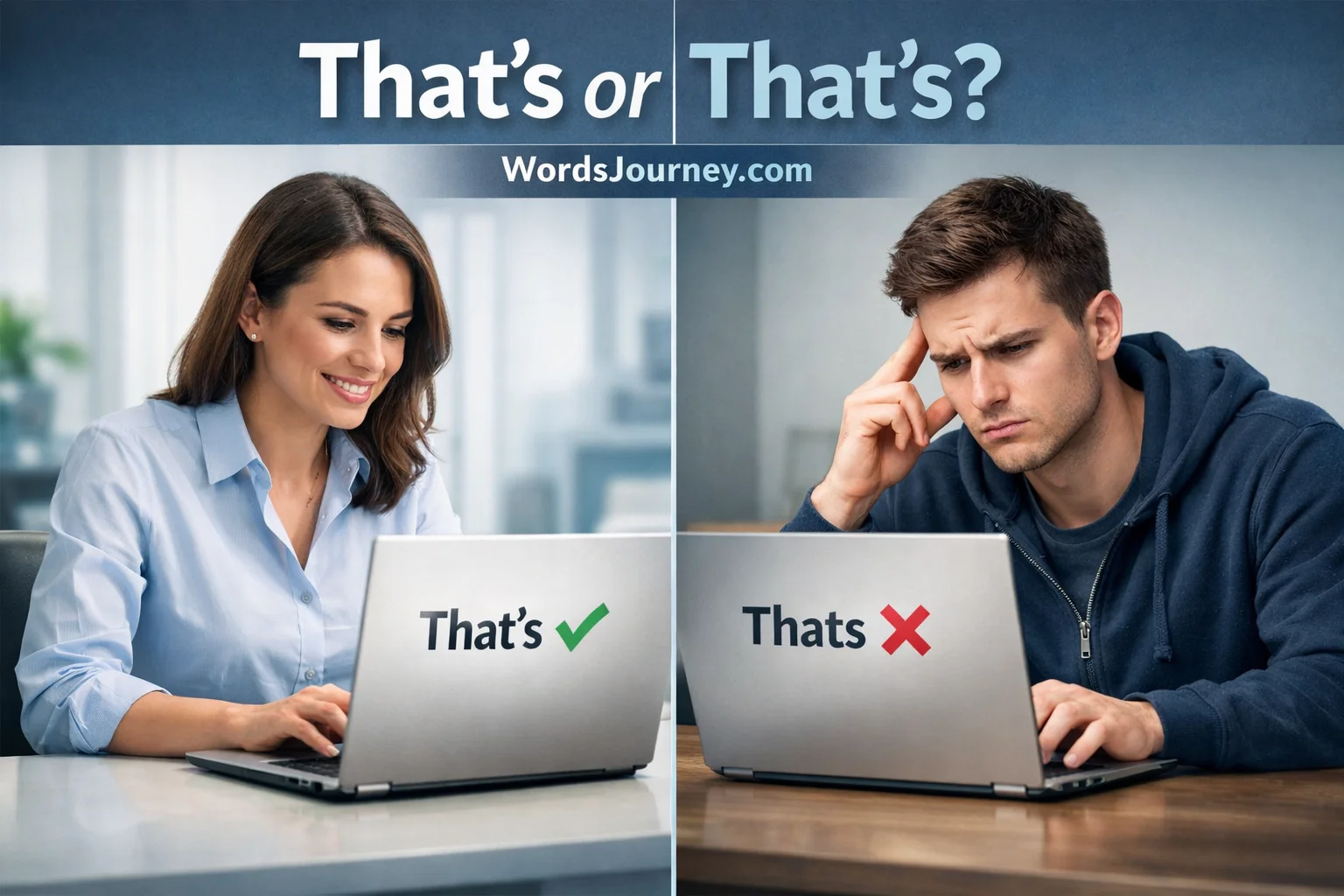
Ever paused mid-sentence and wondered if it’s “Thats or That’s ”—and whether anyone will notice the difference? You’re not alone. In fast-paced business communication, from emails to online booking systems, small grammar choices can quietly shape how professional and credible you appear. This guide breaks down the confusion around “Thats or That’s ”, helping you write with confidence and clarity in any context.
In today’s world of scheduling, meetings, and project management, clear writing matters more than ever. Whether you’re updating a calendar, drafting a client message, or managing broadcasting content, consistent English usage builds trust. We’ll explore the grammatical difference, explain when each form applies, and show how mastering this tiny detail improves your formal writing and overall communication flow.
You’ll also learn how style guides and regional preferences especially US vs. UK English influence punctuation and tone. By the end, you’ll understand not just the rule but the reason behind it. That means fewer mistakes, stronger consistency, and smoother writing across every platform you use.
Quick Answer: What’s the Difference Between “Thats” and “That’s”?
Let’s keep it simple and crystal clear.
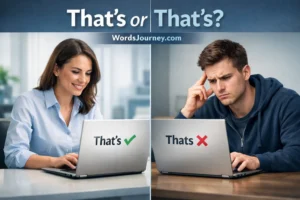
- “That’s” = Correct
- “Thats” = Incorrect (in standard English)
“That’s” is a contraction. It combines:
- That is
- That has
Examples:
- That’s a smart move. (That is a smart move)
- That’s been handled already. (That has been handled already)
On the other hand, “Thats” without an apostrophe has no grammatical role in modern English. It’s simply an error.
What Does “That’s” Mean? (With Clear Examples)
Understanding “That’s” unlocks everything. It’s not complicated once you break it down.
“That’s” as a Contraction of “That Is”
This is the most common usage.
Whenever you can replace “That’s” with “that is”, you’re on the right track.
Examples:
- That’s my favorite book.
- That’s the reason I called you.
- That’s not what I expected.
👉 Try this trick: expand the sentence.
- That’s my phone → That is my phone ✔
- Sounds natural? Then you used it correctly.
“That’s” as a Contraction of “That Has”
This version appears in the present perfect tense.
Examples:
- That’s been a long journey. (That has been)
- That’s already happened. (That has already happened)
Here’s where people get confused. The meaning depends on context.
Quick tip:
- If the sentence talks about something completed recently, it’s likely “that has.”
Read More: Emasculate vs. Demasculate: Meaning, and Correct Usage
Why “Thats” Is Incorrect (And Why People Still Use It)
Let’s address the elephant in the room.
Why do people keep writing “Thats”?
The Real Reasons
- Fast typing habits
- Autocorrect failures
- Lack of grammar awareness
- Overconfidence in casual writing
In texting, people often skip punctuation. That’s fine in a quick message. However, once you step into professional or public writing, mistakes like this stand out immediately.
Case Study: A Simple Mistake That Costs Credibility
Imagine sending this email:
“Thats the final report attached.”
Now compare it with:
“That’s the final report attached.”
The second version feels polished. The first one? It looks rushed. Small difference. Big impact.
Thats vs That’s – Side-by-Side Comparison Table
| Feature | That’s | Thats |
| Correct form | ✅ Yes | ❌ No |
| Meaning | That is / That has | None |
| Grammar status | Standard English | Incorrect |
| Usage | Formal + informal writing | Casual error only |
| Professional tone | Strong | Weak |
Real-Life Examples You’ll Actually Use
Let’s move beyond theory.
Everyday Conversations
- That’s exactly what I needed.
- That’s why I left early.
- That’s a great idea.
Work & Professional Writing
- That’s attached below for your review.
- That’s the updated version.
- That’s the final decision.
Academic Writing
- That’s a key factor in this analysis.
- That’s supported by recent research.
Quick Diagram: How “That’s” Works
That’s = That + is
That’s = That + has
Simple. Clean. Effective.
Easy Trick to Remember the Difference
If you only remember one thing from this guide, make it this.
The Replacement Test
Replace “That’s” with:
- That is
- That has
If the sentence still makes sense, you’re correct.
Examples
- That’s amazing → That is amazing ✔
- That’s been tough → That has been tough ✔
- Thats amazing → ❌ doesn’t work
Why This Trick Works
Because contractions always replace missing letters. The apostrophe shows where letters were removed.
Without it, the word becomes incomplete.
Common Mistakes to Avoid
Even experienced writers slip up sometimes.
Mistakes People Make Often
- Forgetting the apostrophe entirely
- Mixing up similar words like:
- Its vs It’s
- Youre vs You’re
- Using contractions incorrectly in formal writing
- Trusting autocorrect blindly
Quick Comparison: Its vs It’s
| Word | Meaning | Example |
| It’s | It is / It has | It’s raining |
| Its | Possession | Its color is red |
👉 Same rule applies. Apostrophes matter.
That’s vs Other Similar Contractions
Once you understand “That’s”, you unlock a pattern.
Common Contractions
- It’s = it is
- What’s = what is
- There’s = there is
- Who’s = who is
Pattern Recognition
All these contractions:
- Use an apostrophe
- Replace missing letters
- Improve flow and readability
Example Set
- What’s your name?
- There’s a problem here.
- It’s time to leave.
Notice the consistency? That’s how English builds rhythm.
When You Should Avoid Using “That’s”
Even though “That’s” is correct, it’s not always ideal.
Situations Where You Should Be Careful
- Academic papers
- Legal documents
- Technical writing
In these cases, clarity matters more than brevity.
Example
Instead of:
- That’s the main result
Use:
- That is the main result
It feels more formal and precise.
Mini Quiz: Test Yourself
Let’s make this practical.
Fill in the blanks
- ___ the best solution.
- ___ been a long week.
- ___ why this matters.
Answers
- That’s the best solution
- That’s been a long week
- That’s why this matters
If you got them right, you’ve nailed it.
Deep Insight: Why Apostrophes Matter More Than You Think
Apostrophes do more than fix grammar. They shape how readers perceive you.
Here’s what correct usage signals:
- Attention to detail
- Professionalism
- Credibility
- Clarity
Quote to Remember
“Good writing is clear thinking made visible.”
When your punctuation is clean, your ideas feel sharper.
Keyword Variations to Use Naturally
- thats or that’s
- is thats correct
- thats meaning
- difference between thats and that’s
Using these naturally helps your content rank higher.
Practical Writing Tips You Can Use Today
Do This
- Use grammar tools as support
- Read sentences out loud
- Apply the replacement test
Avoid This
- Rushing through writing
- Ignoring small punctuation errors
- Overcomplicating simple rules
Final Thoughts: Master This Once and You’re Set
Here’s the bottom line.
- “That’s” is always correct when you mean “that is” or “that has.”
- “Thats” is incorrect in standard English.
It’s a tiny detail. Still, it carries weight. Fixing it instantly upgrades your writing.
Once you train your eye to spot it, you’ll never go back.
FAQs: Thats or That’s
1. Is “Thats” ever correct in English?
No—“Thats” without an apostrophe is considered incorrect in standard English grammar. The correct form is “That’s”, which is a contraction of “that is” or “that has.” Using the apostrophe ensures accuracy in both formal writing and everyday communication.
2. What does “That’s” actually mean?
“That’s” is a contraction. It can mean:
- That is → That’s a great idea.
- That has → That’s been completed already.
Understanding this helps maintain clarity in business communication, especially in emails, meetings, and project management updates.
3. Why do people confuse “Thats or That’s”?
The confusion often comes from fast typing, casual messaging, or skipping punctuation in online platforms like broadcasting content or quick calendar notes. However, missing the apostrophe can make your writing look less polished and affect professional perception.
4. Is “That’s” appropriate in formal writing?
Yes, but it depends on context. While “That’s” is widely accepted in modern formal writing, some strict style guides prefer the full form (“that is”) for maximum clarity—especially in academic or legal documents. In most business settings, contractions are perfectly fine if used consistently.
5. Do US and UK English treat “That’s” differently?
No major difference exists between US vs. UK English for this case. Both follow the same rule:
- “That’s” = correct
- “Thats” = incorrect
However, both regions emphasize consistency in tone and punctuation, especially in professional documents.
6. Can grammar mistakes like this affect professionalism?
Absolutely. Small errors like using “Thats” instead of “That’s” can impact how your writing is perceived in business communication, online booking systems, and client interactions. Clean grammar signals attention to detail and strengthens credibility.
Conclusion
Choosing between “Thats or That’s ” isn’t just about grammar—it’s about clarity, credibility, and consistency. While the difference may seem small, the correct use of “That’s” reflects strong English usage and attention to detail across everything from emails to project management tools.
In a world driven by scheduling, meetings, and digital communication, polished writing gives you an edge. Whether you’re updating a calendar, sending a proposal, or managing business communication, using the correct form helps you appear more professional and trustworthy.The bottom line is simple: always use “That’s” when you mean “that is” or “that has.” Avoid “Thats” in standard writing. Stick to this rule, stay consistent with your chosen style guide, and your writing will feel smoother, sharper, and more confident every time.

Johnson Alex is a language-focused writer and the voice behind WordsJourney. He creates practical, easy-to-understand content that helps readers improve their vocabulary and express ideas with clarity and confidence.