Have you ever paused mid-sentence and wondered which spelling looks right “Theater or Theatre”? This tiny choice shows up everywhere, from formal writing and business communication to emails about meetings, shared calendars, and even online booking pages for live shows. It feels small, yet these details shape how professional and consistent your English usage appears.
In a world driven by scheduling, time management, and clear messaging, the words you choose matter more than you think.
This guide breaks down the real difference between the American and British spellings, explains where each form is preferred, and shows how to stay consistent across project management tools, broadcasting content, and everyday workplace writing. We’ll touch on how these choices affect grammar, tone, and clarity, especially when your content moves across teams, regions, and platforms.
You’ll also see how spelling conventions quietly influence credibility in professional contexts.
Along the way, you’ll learn how style guides and regional preferences (US vs. UK) shape modern usage, plus simple rules you can apply to keep your writing clean and consistent. Whether you manage meetings, maintain a shared calendar, or publish content for global audiences, this article gives you practical clarity.
By the end, choosing the right form will feel natural, confident, and easy.
Theater or Theatre: The Core Difference
Let’s start with the short answer.
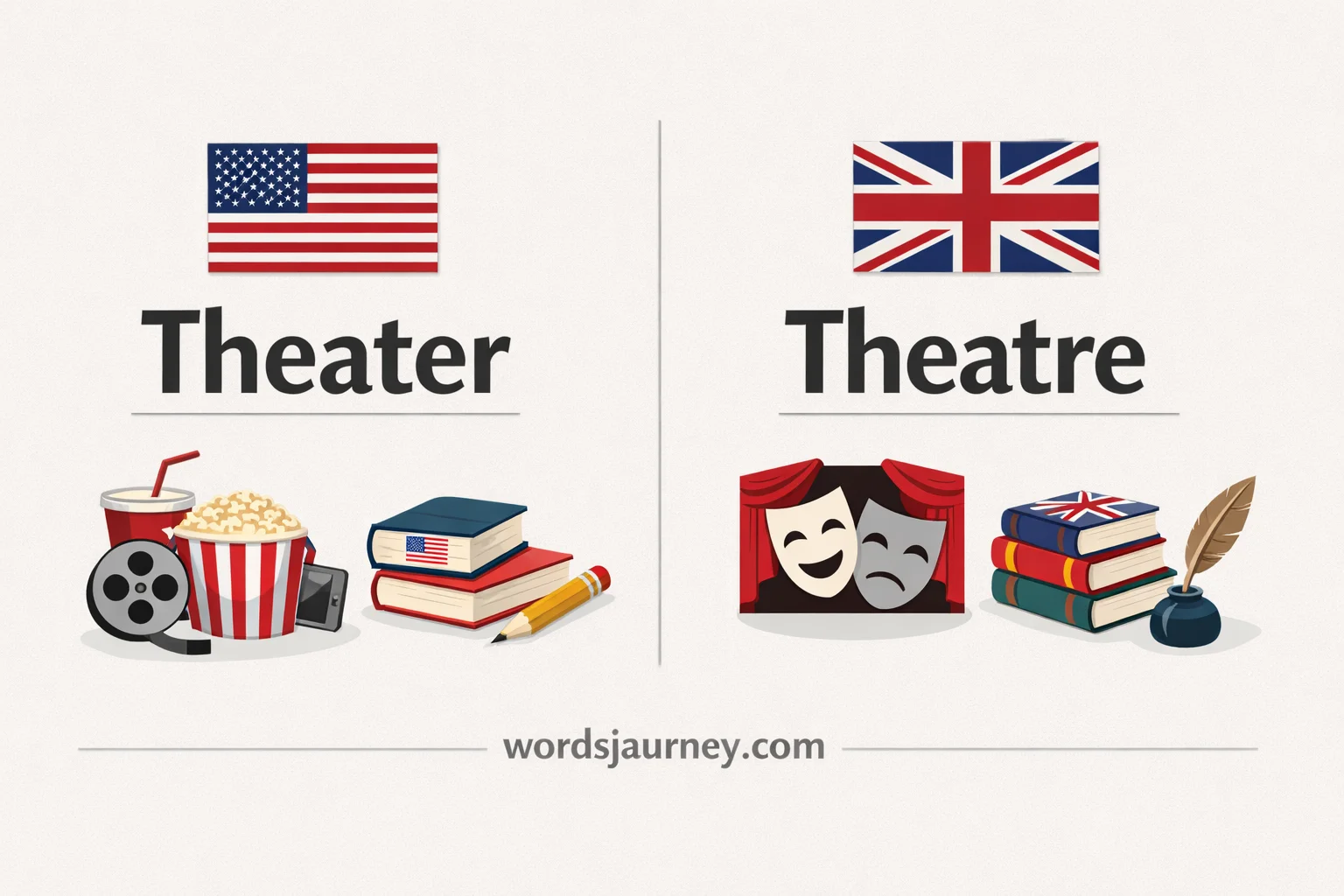
Theater and theatre mean the same thing. Both refer to a place where performances happen or the art of performance itself. The difference is regional spelling, not meaning.
Quick comparison table
| Feature | Theater | Theatre |
| Primary region | United States | United Kingdom |
| Common usage | Movies, buildings, education | Performing arts, institutions |
| Style guides | APA, MLA, Chicago (US) | Oxford, Cambridge |
| Meaning | Identical | Identical |
Key takeaway:
The word does not change meaning. The spelling changes based on where your audience lives.
Regional Usage in American and British English
English didn’t evolve in one neat line. It branched. That’s why spelling shifts across regions.
American English and “Theater”
In the United States, theater is the standard spelling.
You’ll see it in:
- Movie theater
- Theater department
- Community theater
- Broadway theater
Examples
- Centre → Center
- Metre → Meter
- Theatre → Theater
This trend took hold during 19th-century spelling reforms aimed at simplifying English for American readers.
British English and “Theatre”
In the UK and many Commonwealth countries, theatre rules.
You’ll see it in:
- National Theatre
- Theatre Royal
- Theatre studies
- Theatre criticism
British spelling preserves older French and Latin influences. That’s why “-re” endings remain common in British English.
Global English and Audience Awareness
English is global now. Writers in Canada, Australia, India, and Africa often follow British spelling in schools and publishing. Many international publications accept both spellings, as long as you stay consistent.
Smart rule:
Match your spelling to your audience’s region. Consistency beats preference every time.
Formal vs Informal Usage: Does One Sound More “Elegant”?
Some writers believe theatre sounds more refined. Others think theater feels modern and simple. Both impressions come from culture, not grammar.
Here’s the truth.
Neither spelling is more formal.
They simply reflect different English traditions.
Why do some American venues use “theatre” in their names?
- Branding choices
- A desire to signal tradition or prestige
- Artistic identity
Examples in the US
- The Fox Theatre
- The Guthrie Theater
- The Apollo Theater
- The Orpheum Theatre
Brand names follow marketing logic, not grammar rules. You should respect official spellings when referencing these places. Do not “correct” proper names.
Theater or Theatre in Different Contexts
Context shapes spelling choices. Let’s break it down by use case.
Academic Writing
In academic work, style guides matter more than personal taste.
Common rules
- US journals and universities → theater
- UK journals and universities → theatre
- International journals → Follow house style
Example sentences
- American context:
The study analyzed audience behavior in modern theater spaces. - British context:
The research focused on immersive design in contemporary theatre venues.
Always check the journal or institution’s style sheet before you submit.
Creative Writing and Fiction
Creative writing gives you more freedom. Setting and voice guide spelling.
Best practice
- Writing a story set in New York? Use theater.
- Writing a novel set in London? Use theatre.
- Writing global fiction? Pick one form and stick to it.
Consistency helps readers stay immersed. Switching spellings can break the spell.
Business and Branding
Business writing is practical.
Examples
- Movie chains in the US use theater
- Cultural institutions may prefer theatre for branding
- Event marketing should mirror the venue’s official spelling
Must Read: Mr or Mrs Understanding the Correct Usage
Common Mistakes People Make
Even skilled writers slip up here. These mistakes show up often.
Frequent errors
- Mixing spellings in the same article
- Choosing spelling based on “which looks nicer”
- Changing spellings inside direct quotes
- Ignoring house style rules
- Relying only on spellcheck
Simple consistency checklist
- Pick one spelling per document
- Match spelling to your audience
- Respect proper names
- Follow your style guide
- Proofread for uniform usage
Consistency signals credibility. Inconsistency distracts readers.
Theater vs Theatre in Real Sentences
Examples make rules stick. Here’s how both spellings look in context.
Usage table
| Context | Example |
| American setting | The movie theater opens at noon. |
| British setting | The theatre closed after the final show. |
| Academic writing | The paper examined spatial design in urban theater venues. |
| Creative writing | The old theatre creaked with every step. |
| Business copy | The new theater offers luxury seating and sound. |
Notice how the meaning never changes. Only the spelling shifts.
Quick Decision Guide: Which One Should You Use?
When you feel stuck, use this fast decision map.
Choose your spelling
- Writing for a US audience → theater
- Writing for a UK audience → theatre
- Writing globally → Pick one and stay consistent
- Writing about a brand → Follow official spelling
- Writing academic content → Follow the style guide
This simple rule prevents 90% of mistakes.
Theater or Theatre in Other English Variants
English spreads across continents. Spelling habits travel with it.
Regional patterns
- Canada → Mixed usage, British influence strong
- Australia → British spelling dominant
- India → British spelling common
- South Africa → British spelling standard
Education systems shape spelling habits. Writers trained in British curricula often default to theatre even when writing for US audiences.
Best practice for global content
- Choose a target market
- Optimize spelling for that audience
- Mention both spellings if the topic is language-focused
Why Both Spellings Exist: A Short History
The word comes from the Greek theatron, meaning “a place for viewing.” It passed into Latin, then French, and finally English.
British English kept the French-influenced -re ending.
American English shifted many -re endings to -er during spelling reforms in the 1800s.
This reform aimed to:
- Simplify spelling
- Reflect pronunciation
- Standardize American English
That’s why you see patterns like:
- Theatre → Theater
- Centre → Center
- Fibre → Fiber
History shaped spelling. Neither form is wrong.
Mini Style Guide for Writers and Editors
Use this quick reference when writing or editing content that includes Theater or Theatre.
Style rules
- Match spelling to audience region
- Never mix spellings in the same document
- Follow house style over personal preference
- Keep official names unchanged
- Optimize spelling for search intent
- Review headings for consistency
Editorial tip
Create a style sheet for your website or publication. Lock in one spelling and save time on future edits.
FAQs: Theater or Theatre
1. Is “theater” or “theatre” correct?
Both theater and theatre are correct spellings. The difference depends on regional English usage. Theater is standard in American English, while theatre is preferred in British English and many other international varieties. Choosing one form and maintaining consistency improves clarity in formal writing and professional contexts.
2. Which spelling should I use for business communication?
In business communication, follow your audience’s regional preference. Use theater for US-based teams and theatre for UK or international audiences. This small choice supports clearer grammar, professional tone, and smoother collaboration in meetings, shared calendars, and project management tools.
3. Does spelling matter in online booking and broadcasting content?
Yes, spelling affects user trust and brand consistency. In online booking systems, broadcasting platforms, and event pages, consistent usage prevents confusion and improves the overall user experience. It also supports SEO by aligning with regional search intent and English usage patterns.
4. What do style guides recommend for “theater” vs. “theatre”?
Most style guides follow regional norms. American guides favor theater, while UK guides recommend theatre. When working with global teams, document your choice in your brand or editorial guide to ensure formal writing remains consistent across emails, reports, and content platforms.
5. Can I use both spellings in the same document?
Avoid mixing spellings within one document. Inconsistent usage weakens clarity and professionalism, especially in business communication, scheduling, and project management workflows. Pick one form based on your audience, then apply it across every section.
Conclusion: Choosing the Right Form with Confidence
The choice between theater and theatre may look minor, yet it carries real weight in formal writing, business communication, and digital content. Regional preferences guide the spelling, with American English favoring theater and British English preferring theatre. When your writing supports meetings, scheduling, online booking, or broadcasting, consistency builds credibility and avoids subtle confusion.
By aligning your spelling with style guides and your audience’s expectations, you strengthen clarity across emails, shared calendars, and project management tools. Pick one form, apply it consistently, and move forward with confidence. Small language choices create a polished voice that feels professional, reliable, and easy to trust.

Aliya Ray is a passionate writer and language enthusiast at WordsJourney. She enjoys exploring words, phrases, and everyday expressions to help readers communicate more clearly and confidently. Her content focuses on alternative ways to say common phrases, simple explanations, and real-life examples that make language easy to understand.
Aliya believes the right words can make any message stronger. Through clear, friendly writing, she helps readers improve their vocabulary without feeling overwhelmed or confused.