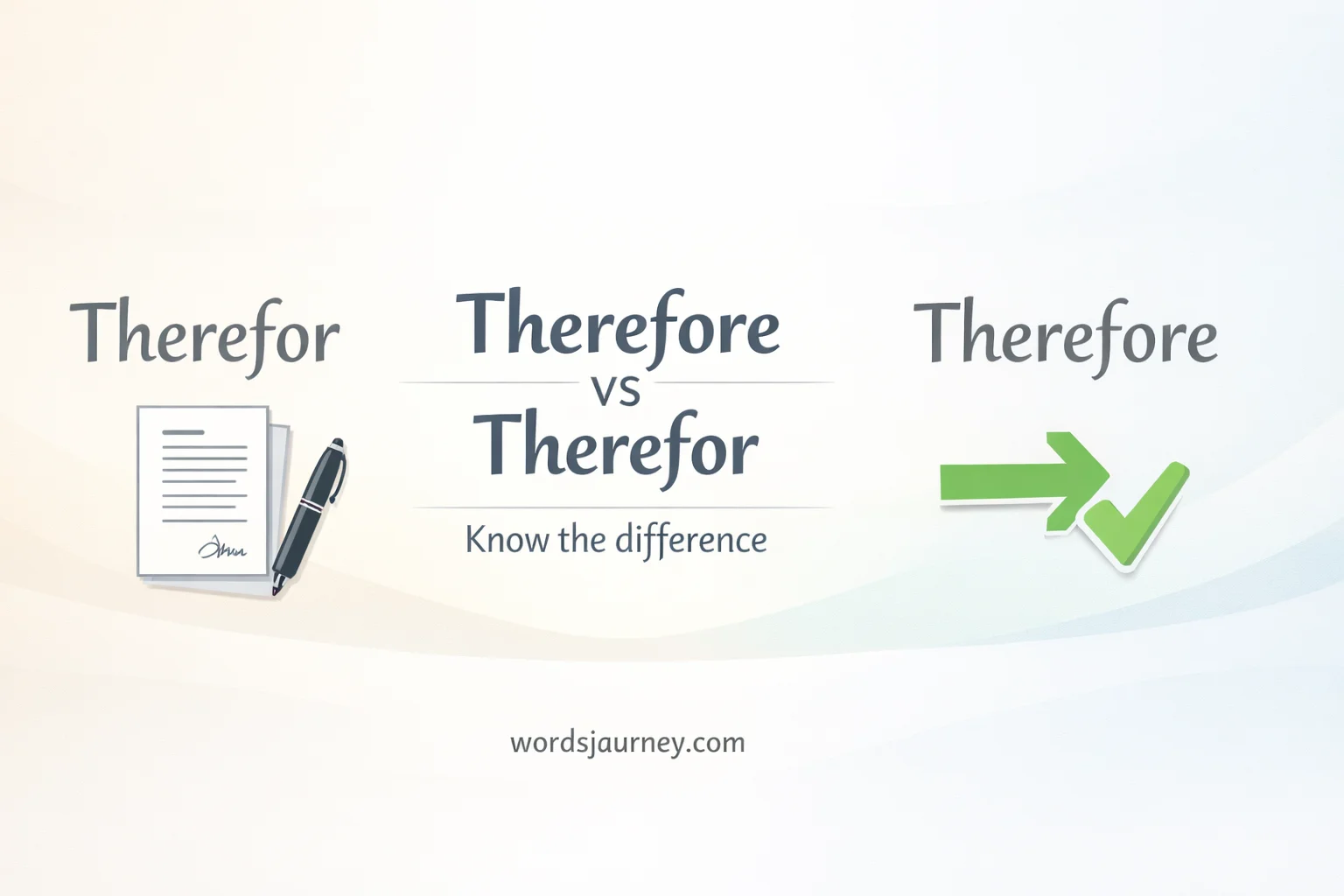
Have you ever paused mid-sentence, wondering whether to use therefore or therefor in your writing? This subtle distinction can trip up even experienced professionals, especially in business communication, formal writing, or when managing meetings, scheduling, and project management tasks.
Understanding the difference not only strengthens your English usage but also ensures consistency across emails, reports, and calendar entries.
In many contextswhether drafting an online booking confirmation, preparing a broadcasting script, or coordinating team schedulesthe choice between therefore or therefor can affect clarity and tone. Style guides often highlight this distinction, with slight preferences depending on US vs. UK English, making it essential to know which term fits grammar rules and professional conventions.
This article will clarify when to use therefore or therefor, providing practical examples for time management, business communication, and other real-world scenarios.
By the end, you’ll confidently apply each term, improving formal writing, project coordination, and overall English proficiencyall while keeping your content precise, professional, and reader-friendly.
What Does Therefore Mean?
Therefore is one of the most common words in English. Its primary function is to indicate a result or consequence. Think of it as a bridge connecting a cause with its effect. Whenever you’re showing that something happened because of something else, therefore is the word to use.
Examples of Therefore in Sentences
- “It rained heavily last night; therefore, the soccer match was canceled.”
- “She didn’t submit her assignment; therefore, she lost marks.”
- “The company’s profits fell by 20% last quarter; therefore, they had to reduce expenses.”
Key Points About Therefore
- Part of speech: Conjunction or adverb.
- Usage: Everyday, academic, and professional writing.
- Function: Highlights cause and effect.
Whenever you’re unsure if a sentence calls for a result, think therefore.
What Does Therefor Mean?
Unlike therefore, therefor is rarely used in everyday English. It appears mostly in legal, financial, or formal documents. Its meaning is “for that” or “for it”referring to something previously mentioned, often in contracts or agreements.
Examples of Therefor in Sentences
- “The plaintiff received $50,000 therefor after signing the settlement.”
- “He delivered the goods and was paid $10,000 therefor.”
- “The lease agreement stipulates compensation therefor in case of damages.”
Key Points About Therefor
- Part of speech: Adverb
- Usage: Legal or formal writing, rarely in casual English.
- Function: Refers back to something previously stated, often indicating payment, compensation, or consideration.
Think of therefor as “for that”, while therefore means “so” or “as a result”.
Differences Between Therefore and Therefor
It’s easier to remember the differences when you see them side by side. Here’s a quick reference table:
| Feature | Therefore | Therefor |
| Meaning | Shows result or consequence | Means “for that” or “for it” |
| Usage | Everyday, academic, business writing | Legal, contractual, formal writing |
| Part of speech | Conjunction / adverb | Adverb |
| Frequency | Very common | Rare |
| Examples | “It was raining; therefore, the match was canceled.” | “He signed the contract and was paid $10,000 therefor.” |
The distinction is simple once you know it: therefore = result, therefor = for that.
Common Mistakes and Misuse
Many people mix these words because they sound almost identical, but using the wrong one can confuse readers. Here’s what to watch out for:
- Using therefor instead of therefore in everyday writing.
❌ Example: “I was hungry; therefor, I ate.” ✅ Correct: “…therefore, I ate.” - Using therefore in legal documents when therefor is intended.
❌ Example: “The defendant was compensated therefore.” ✅ Correct: “…compensated therefor.” - Spelling errors due to pronunciation similarity.
Tips to Avoid Mistakes
- Ask yourself the context: Are you showing a result, or referring back to something for compensation/reference?
- Use a mnemonic:
- Therefore = so → result or effect
- Therefor = for that → legal/payment reference
- Read aloud: If the sentence sounds like “because of that,” use therefore. If it sounds like “in exchange for that,” use therefor.
Usage Tips
Understanding the rules is one thing, applying them is another. Here are some actionable tips:
- Check your audience: For legal or financial documents, therefor might be appropriate. For essays, emails, reports, and casual writing, stick to therefore.
- Keep a cheat sheet: A quick reference can prevent errors.
- Be mindful of style guides: AP Style, Chicago Manual, or legal writing guides may differ slightly in usage, especially for therefor.
Real-Life Examples
Seeing these words in action makes them easier to remember.
Everyday English:
- “I missed my bus; therefore, I arrived late to work.”
- “She forgot her presentation notes; therefore, she improvised during the meeting.”
Legal / Business English:
- “The contractor completed the project and was paid $15,000 therefor.”
- “The company granted additional shares to the investor therefor.”
Interactive Exercise (Try It Yourself):
Choose the correct word:
- He forgot to submit the invoice; ______, payment was delayed.
- The tenant repaired the broken window and received compensation ______.
(Answers: 1 = therefore, 2 = therefor)
For More Please also Visit: Censored vs Sensored Understanding the Difference
Quick Rules Cheat Sheet
For fast reference, here’s a compact guide:
- Use therefore to indicate consequence or result.
- Use therefor in formal/legal contexts meaning “for that” or “for it.”
- Mnemonic:
- Therefore = so → result
- Therefor = for that → payment/reference
- When in doubt, read the sentence aloud and check if it conveys result or compensation/reference.
FAQs About Therefore or Therefor
1. What is the difference between “therefore” and “therefor”?
Therefore is an adverb meaning as a result or consequently, often used to show logical connections between ideas. Therefor is a formal term meaning for that or for it, mostly found in legal or financial contexts.
2. Can I use “therefor” in everyday writing?
Typically, no. Therefor is rare outside contracts, invoices, or formal documents. In most business communication and formal writing, therefore is preferred for clarity.
3. Does regional English affect usage?
Yes. While US English and UK English treat therefore the same way, therefor remains mostly in legal or accounting texts globally. Always check style guides if you’re writing for professional audiences.
4. How does using the wrong word impact my writing?
Using therefor instead of therefore (or vice versa) can confuse readers, disrupt project management documentation, or affect online booking instructions and calendar entries. Correct usage ensures consistency and professionalism.
5. Are there tips for remembering the difference?
Think “therefore = result” and “therefor = for that”. In meetings, emails, or broadcasting scripts, if you’re showing cause-and-effect, therefore is almost always correct.
Conclusion
Choosing between therefore or therefor may seem minor, but it can significantly enhance your English usage, clarity, and professionalism. In formal writing, business communication, and time management documentation, using the correct term shows attention to detail.
By understanding the distinction therefore for results, therefor for formal “for that” references you can write with precision in emails, contracts, project plans, and calendars. Mastering this small nuance improves not only grammar but also reader confidence in your work.
Next time you draft a report, schedule a meeting, or prepare an announcement, pause to choose the right word. Consistency, clarity, and correctness will set your writing apart.

Emma Brook is a dedicated writer and language enthusiast at WordsJourney. She’s passionate about helping readers understand words better and use them with confidence in everyday conversations. Her work focuses on alternative phrases, clear meanings, and practical examples that make language feel simple and approachable.
With a friendly, reader-first writing style, Emma breaks down common expressions and explores smarter ways to say things without sounding forced or complicated. Her goal is to make learning words enjoyable, useful, and easy for everyone.