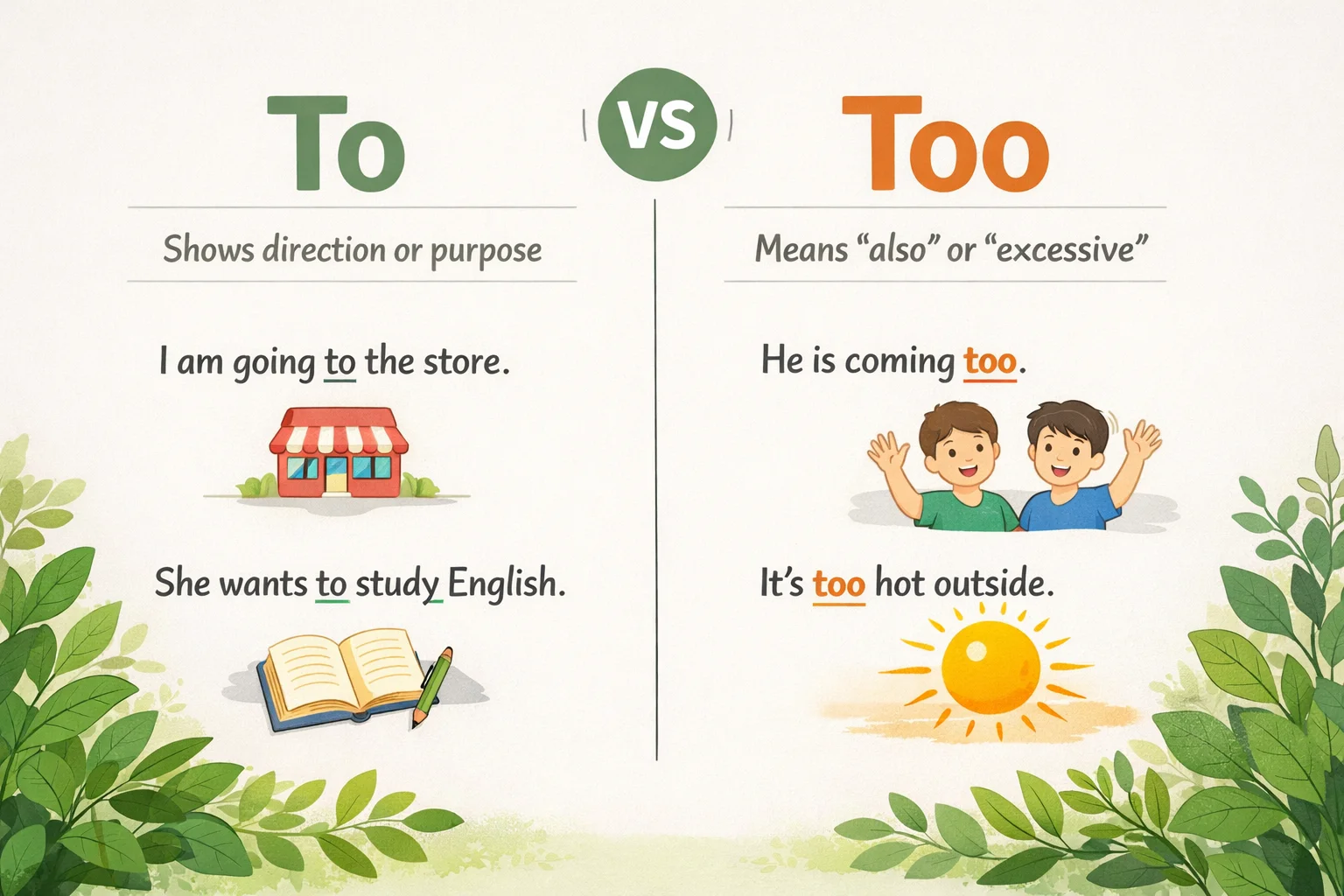
Do you ever pause before hitting send, wondering if you chose the right word? The tiny mix-up between “Too or To” trips up even confident writers. In fast-paced business communication, quick emails, and everyday English usage, small slips can quietly undermine clarity. This guide opens with clear, practical insight, so you can write with confidence, precision, and consistency.
In modern workflows, language meets logistics. Think scheduling meetings, managing a calendar, confirming online booking, or planning broadcasting updates. One misplaced word can blur meaning and slow time management across teams. We’ll show how these choices affect formal writing, project management, and daily messages, with examples you can use right away.
You’ll also get quick rules, real-world examples, and memory-friendly tips that stick. We’ll note where style guides and regional preferences (US vs. UK) align, so your tone stays polished across audiences. By the end, you’ll write with clarity, keep your message professional, and maintain consistent usage in every context.
To or Too: What’s the Real Difference?
Although to and too sound the same, they serve different jobs in a sentence. Think of them as tools built for separate tasks. Use the right tool and the sentence clicks. Use the wrong one and the meaning wobbles.
What To Means in Everyday English
To works in two major ways. It points toward something. It also links a verb to an action.
As a preposition, to shows direction, purpose or relationship.
You move to a place.
You give something to a person.
You point to an idea.
As an infinitive marker, to pairs with a base verb.
You plan to learn.
You hope to grow.
You choose to wait.
Core facts about “to”
- It often sits before nouns and pronouns.
- It links directly to base verbs in infinitives.
- It never means “also.”
- It never signals excess.
Everyday phrases with “to”
- According to
- In order to
- Used to
- Up to you
- Get back to me
Each phrase leans on direction, purpose or connection. That’s the role to plays.
What Too Means in Everyday English
Too acts as an adverb. It adds extra meaning. It either means “also” or “more than needed.”
Meaning one: “also”
- I want dessert too.
- She’s coming too.
- We felt relieved too.
Meaning two: “excess”
- The bag feels too heavy.
- The music plays too loud.
- The pace moves too fast.
Core facts about “too”
- It modifies adjectives and adverbs.
- It often appears before the word it intensifies.
- It can appear at the end of a sentence to mean “also.”
- It never links a verb to its action.
When you want to add or intensify, reach for too.
To vs Too: A Clean Side-by-Side Comparison
| Feature | To | Too |
| Part of speech | Preposition or infinitive marker | Adverb |
| Main meaning | Direction, purpose, verb link | Excess or addition |
| Can replace with “also”? | No | Yes |
| Can replace with “very”? | No | Often |
| Typical placement | Before nouns or verbs | Before adjectives or at sentence end |
| Example | I need to rest. | I’m too tired. |
This table acts as a fast reference when doubt creeps in.
How to Choose the Right One Fast
When you write on the fly, you need quick tests. These checks work in seconds.
The “Also” Test
If “also” fits, use too.
I enjoyed the movie too.
I enjoyed the movie also.
Both sound right. Too works.
The “Very” Test
If “very” fits, use too.
The task feels too hard.
The task feels very hard.
That works. Choose too.
The Verb Link Test
If the word leads into a verb, use to.
I want to learn.
She plans to leave.
The Direction Test
If the sentence shows movement or transfer, use to.
Send this to finance.
Walk to the door.
One-line memory rule
If it points or links, use to.
If it adds or exaggerates, use too.
Also Read: Rhythm or Rythm: Meaning and Usage
Real-World Examples You’ll Actually Use
Seeing both words in natural settings locks in the difference.
In Conversations
- I’m heading to the gym.
- I’m tired too.
- It’s too late to start now.
One sentence can carry both words without conflict. Each plays its own role.
In Professional Writing
- Please forward the invoice to accounts.
- The timeline feels too tight to revise.
- I’d love to help too.
Clean grammar in emails signals care and competence. Tiny details shape first impressions.
In Social Media and Captions
- Ready to travel.
- Coffee first. Me too.
- It’s too hot to function today.
Short posts amplify mistakes. Readers notice fast.
Common Mistakes With To vs Too
Most errors follow the same patterns. Spot them once and you’ll avoid them.
Mistake one: Using “too” before a verb
- ❌ I want too learn.
- ✅ I want to learn.
Mistake two: Using “to” to mean “also”
- ❌ I like it to.
- ✅ I like it too.
Mistake three: Overcorrecting
Writers who fear mistakes sometimes swap every to with too. That creates new errors.
Mistake four: Trusting spellcheck blindly
Spellcheck sees both as real words. It rarely flags misuse. Context matters more than spelling.
Grammar Rules That Actually Matter
Skip the heavy theory. Focus on what helps you write better today.
Placement of “too”
- Before adjectives: too loud
- Before adverbs: too quickly
- At the end for “also”: I agree too
Infinitives with “to”
- Always pair to with the base verb.
- Avoid adding endings.
- Correct: to go
- Incorrect: to going
Punctuation and clarity
Word choice changes tone.
- The task is too hard to finish today.
That line signals excess and purpose in one smooth move.
Memory Tricks That Stick
Good memory hooks turn rules into habits.
The “extra O” trick
Too has an extra “o.”
Think of that extra “o” as extra meaning.
Extra means “also” or “more than needed.”
The arrow trick
Picture to as an arrow →
Arrows point toward something.
That matches direction and purpose.
One-sentence mnemonic
Two “o”s mean too much or me too.
To, Too and Two: Why the Mix-Up Happens
All three words sound alike. Linguists call these homophones. The brain hears sound first. It processes spelling later. Fast typing makes the problem worse.
Quick contrast table
| Word | Meaning | Example |
| To | Direction or verb link | Go to work |
| Too | Also or excess | I’m tired too |
| Two | The number 2 | I have two books |
Voice typing and autocorrect often guess wrong. A quick proofread fixes most slips.
Mini Practice: Lock It In
Fill in the blanks. Check your instinct.
- I want ___ finish this today.
- This room feels ___ loud.
- She wants coffee ___.
Answers
- I want to finish this today.
- This room feels too loud.
- She wants coffee too.
Try spotting to vs too in your next email before you hit send. That habit pays off fast.
Where Accuracy Really Matters
Small grammar choices shape how people read your work.
Academic writing
Clear grammar protects your argument. Errors distract readers from your ideas.
Business communication
Clients judge professionalism by details. Clean language builds trust.
Brand voice
Consistent grammar supports brand credibility. Sloppy writing erodes authority.
A tiny fix can raise the perceived quality of a full page.
FAQs: Too or To
1. What is the main difference between to and too?
To is a preposition or part of an infinitive verb. It shows direction, purpose, or action, such as going to work or to complete a task. Too is an adverb. It means also or excessively, as in I want to join too or this meeting is too long. The meaning changes with one extra “o,” so accuracy matters in formal writing and daily business communication.
2. Why do people confuse too and to so often?
They sound the same in speech, which leads to errors in writing. Fast typing, casual tone, and auto-correct also play a role. In emails about scheduling, meetings, or online booking, these slips can happen when speed beats review. A quick proofread helps keep grammar and English usage on point.
3. Is it unprofessional to mix up too and to in business emails?
Yes, frequent errors can weaken your message and affect credibility. Clear language supports strong time management, smooth project management, and reliable broadcasting updates. Using to and too correctly signals care, competence, and attention to detail.
4. Are the rules for too and to different in US vs. UK English?
No, the rules are the same in both regions. Major style guides agree on usage, so regional preferences do not change the grammar. What differs is tone and spelling in other areas of English, not the meaning of to and too.
5. How can I remember when to use too?
A simple trick helps. If you can replace the word with “also” or “very,” then too is correct. For example, I’m coming too equals I’m also coming. If the sentence shows direction or purpose, choose to, like send the file to the team.
Conclusion
The difference between to and too may look small, but its impact is real. In everyday writing, emails, and professional content, these tiny words shape meaning and tone. Clean grammar supports clarity, strengthens formal writing, and keeps your message easy to follow across meetings, calendar invites, and project management updates.
As work becomes more digital, precision matters more. Whether you’re handling scheduling, confirming online booking, or drafting broadcasting notes, accurate word choice saves time and avoids confusion. These habits improve time management and help teams move faster with fewer missteps.
Mastering “Too or To” is a simple win. With a few clear rules and quick checks, you can write with confidence, stay consistent, and communicate like a pro. Small changes create strong results, and great writing always starts with getting the basics right.

Aliya Ray is a passionate writer and language enthusiast at WordsJourney. She enjoys exploring words, phrases, and everyday expressions to help readers communicate more clearly and confidently. Her content focuses on alternative ways to say common phrases, simple explanations, and real-life examples that make language easy to understand.
Aliya believes the right words can make any message stronger. Through clear, friendly writing, she helps readers improve their vocabulary without feeling overwhelmed or confused.