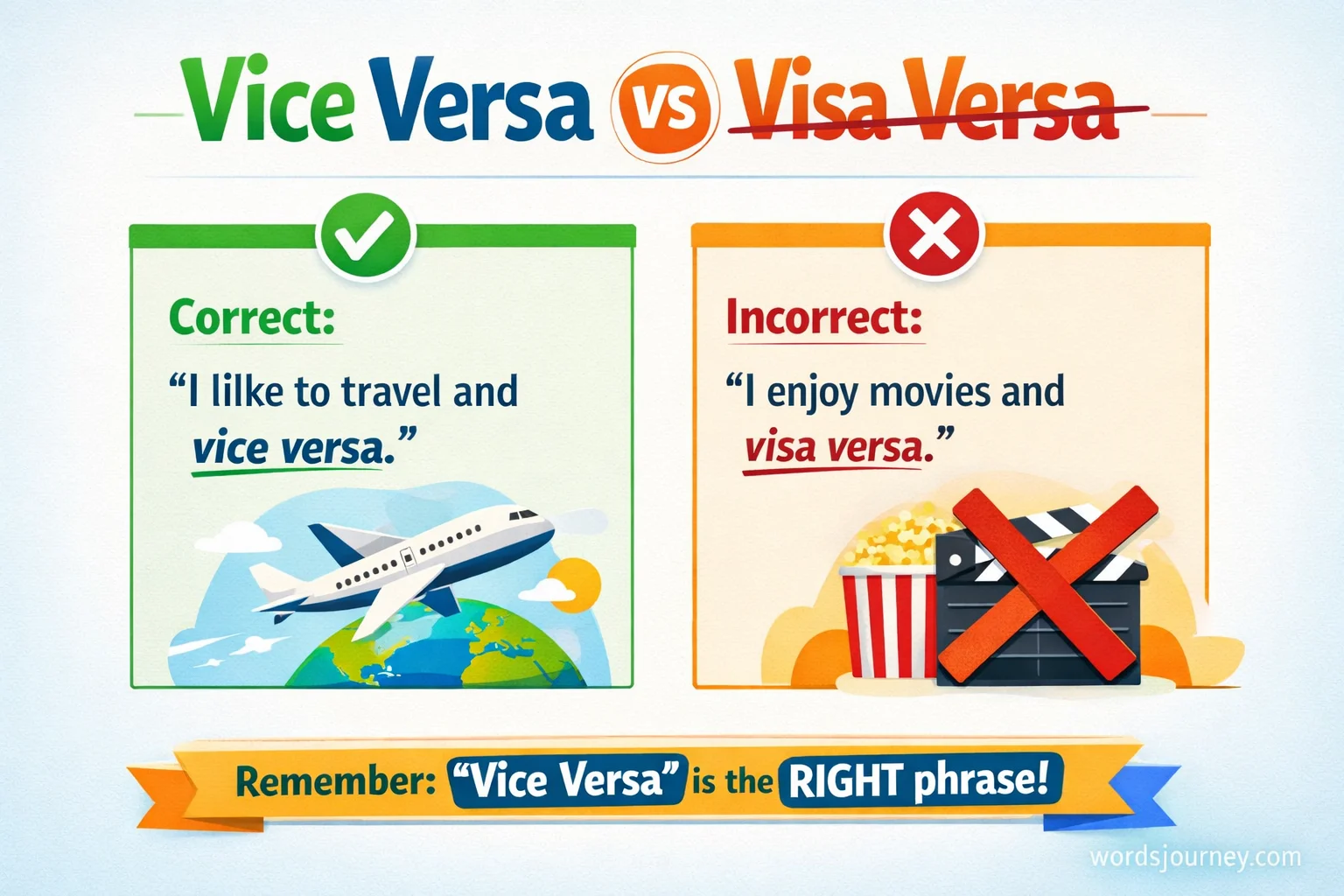
Ever found yourself pausing mid-email or text, unsure whether to write “Vice Versa or Visa Versa”? You’re not alone. Many professionals, students, and writers stumble over this subtle but crucial detail in English usage. From business communication to project management, using the correct form ensures clarity and maintains a polished, credible voice in your formal writing.
Understanding the difference goes beyond spelling—it affects consistency, tone, and even how your message lands in scheduling, meetings, or calendar invites. Whether you’re coordinating online bookings, crafting broadcast scripts, or managing team workflows, misusing this phrase can subtly undermine your professionalism. Knowing which version aligns with style guides and regional preferences—US vs. UK English—keeps your writing precise and authoritative.
In this article, we’ll explore the correct usage of Vice Versa or Visa Versa, uncover its origins, and provide clear, practical examples. You’ll learn how to confidently apply it in time management, project planning, and daily business communication, ensuring your words convey exactly what you intend. By the end, confusion over this common mistake will be a thing of the past.
What Does Vice Versa Mean?
Vice Versa is a Latin phrase that has been fully adopted into English. Its literal translation is “the other way around.” In simple terms, it’s used to indicate that the reverse of what was just said is also true.
For example:
- “I like her, and vice versa.”
This means she likes me too.
Key points about Vice Versa:
- It’s an adverbial phrase.
- It implies reciprocity or reversal.
- It’s commonly used in both formal and casual English.
Some practical examples:
- “John trusts Mary, and vice versa.”
- “Students respect their teachers, and vice versa.”
- “The dog follows its owner, and vice versa.”
In each case, Vice Versa signals a two-way relationship or situation.
Why “Visa Versa” Is Incorrect
The spelling “Visa Versa” is a widespread mistake. This error usually happens because:
- People mishear the phrase
- They associate it with the word “visa” as in passports
- Typing habits and autocorrect errors
Consequences of using “Visa Versa”:
- Reduces professional credibility
- Can confuse readers
- Makes your writing look careless
For example:
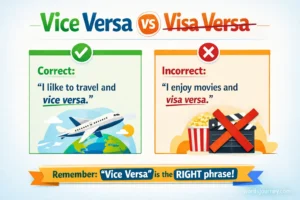
- ❌ “I trust him, and visa versa.”
- ✅ “I trust him, and vice versa.”
Always remember: “Vice” is correct, not “Visa.”
Pronunciation Guide
Pronouncing Vice Versa correctly can help you spell it correctly. The proper pronunciation is:
/ˌvaɪs ˈvɜːrsə/
Tips to remember:
- Start with “Vice” like “advice” without the “ad.”
- “Versa” rhymes with “purse-a”
When you say it aloud correctly, your brain reinforces the right spelling and prevents the “Visa” mistake.
Grammar and Usage Rules
Vice Versa is flexible but has a few rules:
- Part of speech: It functions as an adverb.
- Sentence placement: Can be at the beginning, middle, or end.
- “Vice versa, the outcome could be disastrous.”
- “She admires him, and vice versa.”
- Punctuation: Often preceded by a comma when at the end of a sentence.
- Do not pluralize or modify it: Never say “vice versas” or “very vice versa.”
Common mistakes:
- Using “visa” instead of “vice”
- Treating it like a noun: ❌ “The vice versa of the situation…”
- Misplacing it in the sentence: “The outcome vice versa is true.”
Follow these rules, and you’ll sound polished and fluent.
Real-Life Examples
Here are correct vs incorrect examples in practical use:
| Correct Usage | Incorrect Usage | Notes |
| “I like her, and vice versa.” | “I like her, and visa versa.” | Correct meaning, reciprocal action |
| “Teachers respect students, and vice versa.” | “Teachers respect students, and visa versa.” | Common in education contexts |
| “The dog follows its owner, and vice versa.” | “The dog follows its owner, and visa versa.” | Everyday conversation |
Examples from literature and media:
- In Harry Potter: “He trusts Dumbledore, and vice versa.”
- In business articles: “Company A supports Company B, and vice versa.”
These examples show that Vice Versa works in casual conversation, professional writing, and creative contexts.
Mnemonics and Memory Tricks
Struggling to remember the correct spelling? Try these tips:
- Think Latin roots: “Vice” = “in place of,” “Versa” = “turned.”
- Visualize flipping something: Imagine the word flipping sides like a seesaw.
- Associate with advice, not a visa: “Advice flips back and forth” → Vice Versa.
- Read it aloud often: Sound reinforces spelling.
A little daily practice goes a long way.
Quick Reference Table
| Correct Term | Incorrect Term | Meaning | Example |
| Vice Versa | Visa Versa | The other way around | “She likes him, and vice versa.” |
This table is a handy cheat sheet for writers, students, and professionals.
Frequently Asked Questions (FAQs)
1. Is it “Vice Versa” or “Visa Versa”?
The correct phrase is Vice Versa. “Visa Versa” is a common misspelling. Always use Vice Versa in formal writing, business communication, or professional documents.
2. What does Vice Versa mean?
Vice Versa is a Latin phrase meaning “the other way around”. It’s used to indicate that the reverse of a statement is also true. For example: “She helps him, and vice versa.”
3. Can I use Vice Versa in emails or formal writing?
Yes. Vice Versa is widely accepted in formal writing, including emails, project plans, reports, and calendar invites. Just ensure consistent spelling across all communication.
4. Are there regional differences in usage?
The spelling Vice Versa is standard in both US and UK English. No regional variation changes the correct form.
5. How do I avoid confusing it with Visa Versa?
Remember: “Vice” refers to “in place of” in Latin, while Visa relates to travel or permissions. A quick mental check prevents the common typo.
6. Can I use it in scheduling and project management tools?
Absolutely. Vice Versa can clarify reciprocal actions, like in online booking, broadcasting schedules, or team task assignments, making instructions clear and professional.
Conclusion
Mastering the difference between Vice Versa or Visa Versa is more than just spelling—it’s about precision, professionalism, and clarity. Using Vice Versa correctly ensures your English usage remains polished, whether in formal writing, business communication, or everyday project management.
From time management to meetings, the correct application helps avoid misunderstandings and keeps your communication consistent and authoritative. Remember, the reverse relationship implied by Vice Versa can simplify explanations, improve readability, and strengthen your credibility in professional contexts.In short, Vice Versa is your go-to choice—while Visa Versa belongs firmly in the “common mistakes” category. By applying this knowledge, your writing will stay clear, confident, and correct every time.

Johnson Alex is a language-focused writer and the voice behind WordsJourney. He creates practical, easy-to-understand content that helps readers improve their vocabulary and express ideas with clarity and confidence.