Have you ever wondered whether to write “yea or nay” in your emails, meeting notes, or formal documents?
This small phrase carries more weight than it seems, especially in business communication, scheduling, and project management contexts. Whether you’re confirming a vote, responding to a calendar invitation, or handling online booking, understanding the correct usage ensures clarity, consistency, and professionalism.
In this guide, we’ll explore the subtle but important difference between yea and nay, highlighting how these terms appear in English usage, grammar, and formal writing. We’ll also touch on regional preferences, such as US vs. UK style guides, so you know when each term is appropriate.
From meetings and broadcasting decisions to time management in collaborative projects, knowing the right choice can prevent misunderstandings and maintain your professional tone.
By the end of this article, you’ll confidently distinguish between yea or nay, mastering not just the words themselves but their proper application in emails, project plans, and formal correspondence.
With clear examples, expert tips, and real-world scenarios, this guide will make sure your communication is precise, consistent, and aligned with modern business English standards.
What Does “Yea or Nay” Mean?
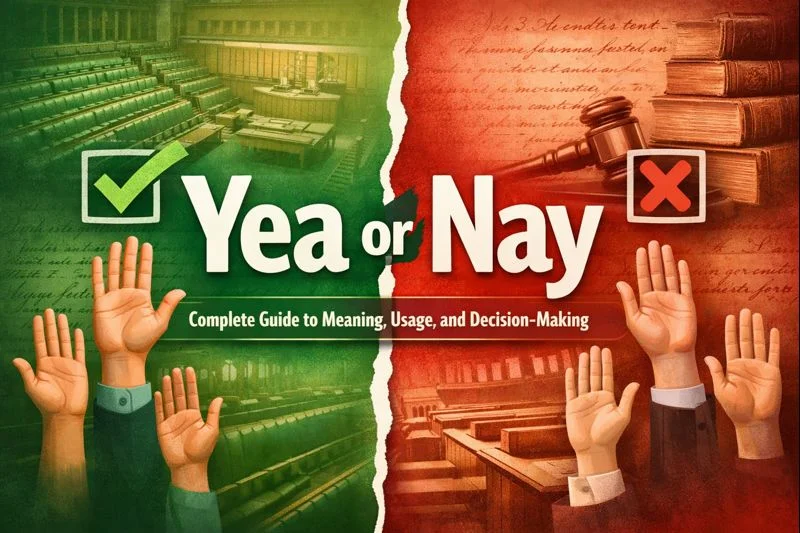
At its core, “yea or nay” is a formal way of saying yes or no, mostly used in official voting or decision-making. But there’s more nuance than meets the eye.
- Yea: An affirmative response, equivalent to “yes.” Traditionally used in parliamentary and legislative contexts.
- Nay: A negative response, equivalent to “no.” Often heard in formal meetings, councils, or older texts.
Origins of “Yea” and “Nay”
Both words trace back to Old English and Middle English, dating over 600 years.
- Yea comes from ġēa, meaning “yes.”
- Nay comes from nā, meaning “not ever” or “no.”
They became standard in legislative voting, where every vote mattered and clarity was crucial. Even today, the terms are used in parliamentary procedures and some formal assemblies.
Yea vs Nay vs Yes vs No
| Word | Meaning | Usage | Formality Level |
| Yea | Yes | Parliamentary votes, formal agreements | High |
| Nay | No | Parliamentary votes, formal disagreements | High |
| Yes | Yes | General affirmation | Low-Medium |
| No | No | General negation | Low-Medium |
This table makes it clear: yea and nay are more formal, while yes and no dominate casual conversations.
Proper Usage of “Yea or Nay”
Using yea or nay isn’t rocket science, but context is everything. Here’s how to navigate it:
- Formal Settings:
- Legislative votes, council meetings, committee decisions.
- Example: “All those in favor, say yea; all opposed, say nay.”
- Informal Settings:
- Rarely used outside playful polls, debates, or rhetorical questions.
- Example: “Do you want pizza for dinner—yea or nay?”
Common Mistakes
Many people confuse “yea” with “yeah” or use “nay” casually in ways that sound stilted. Avoid saying, “I’ll nay that” in casual speech—it’ll sound unnatural.
Yea or Nay in Modern Communication
Even though yea and nay feel old-fashioned, they still appear today:
- Online polls: Platforms sometimes use “yea or nay” for thematic or stylistic purposes.
- Apps and social media: Occasionally used in playful or formal voting apps.
- Cultural shifts: In the U.S., the use of “yea” and “nay” remains mostly legislative, while casual conversation leans on yes/no.
Tip: Stick to yes/no in digital communication unless the tone is deliberately formal or playful.
Psychological and Decision-Making Perspective
Ever wonder why “yea or nay” feels weightier than a simple yes/no? There’s a psychology behind it:
- People associate yea/nay with formal authority. It signals thoughtfulness and decisiveness.
- In group decisions, a “yea” or “nay” can reduce ambiguity, especially in voting scenarios.
Case Study: In the U.S. Congress, votes are called as “yea” or “nay” to clearly record every member’s decision. This avoids confusion and ensures accountability.
Tips for Deciding Confidently
- Understand the context: Is it formal, casual, or playful?
- Be consistent: Don’t mix yea/nay with yes/no in the same voting process.
- Think before answering: A quick pause can prevent miscommunication.
Read More: Happy New Year or Happy New Years: Which Should be Used?
Common Misconceptions and Errors
Even seasoned English speakers can stumble with these terms.
- Yea vs Yeah: “Yeah” is informal, “yea” is formal.
- Nay in casual conversation: Saying “nay” casually can sound archaic.
- Overuse: Don’t sprinkle “yea” and “nay” unnecessarily—it draws attention to awkward phrasing.
Quick Dos and Don’ts
- Do: Use “yea or nay” in votes or formal debates.
- Don’t: Use “nay” in casual text messages.
- Do: Keep your usage consistent in formal settings.
- Don’t: Confuse “yea” with “yeah.”
Fun Facts and Trivia
- Historical trivia: The first documented parliamentary use of “yea” dates back to the 14th century.
- Pop culture references:
- Shakespeare occasionally used “nay” in dialogue.
- Movies depicting courtroom or parliamentary scenes often show “yea or nay” votes.
- Quirky uses: Some social media polls and games have revived “yea or nay” for stylistic flair.
Practical Guide to Using “Yea or Nay” Today
Here’s a clear guide to help you decide when to use these terms:
| Situation | Use Yea/Nay? | Alternative |
| Parliamentary vote | ✅ Yes | N/A |
| Office decision meeting | ✅ Yes | Approve/Reject |
| Text message poll | ❌ Rarely | Yes/No |
| Friendly debate | ✅ Optional | Yes/No |
| Online poll | ✅ Stylish | Yes/No |
Step-by-Step Usage
- Assess formality: Is it an official or casual context?
- Choose your term: Formal = “yea/nay,” casual = “yes/no.”
- Use consistently: Avoid mixing in the same context.
- Speak clearly: In voting, a confident “yea” or “nay” avoids confusion.
FAQs: Yea or Nay
1. What does “yea or nay” mean?
“Yea” indicates agreement or a positive vote, while “nay” signifies disagreement or a negative vote. It’s commonly used in formal meetings, parliamentary procedures, and business decisions.
2. Is “yea or nay” formal or informal?
The phrase is considered formal, especially in professional writing, project management, and official communications. Informally, people may use yes or no, but for clarity and consistency, “yea or nay” is preferred in structured settings.
3. Should I use “yea or nay” in US or UK English?
Both US and UK English recognize the terms, though US style guides often use them in business or legal contexts, while UK usage appears more in parliamentary and historical contexts.
4. Can “yea or nay” be used in emails or online scheduling?
Absolutely. For example, when confirming meetings, broadcasts, or online bookings, using yea or nay keeps your communication professional and unambiguous.
5. Are there common mistakes to avoid?
Yes. Avoid using yea to mean a casual “yes” in informal writing, and ensure you match your tone with the audience. Inconsistent usage in project management updates, calendar invites, or team communications can cause confusion.
Conclusion
Mastering yea or nay may seem minor, but it can make a big difference in formal writing, business communication, and project coordination. Using the correct term ensures your messages are clear, professional, and consistent, whether in meetings, emails, or online scheduling tools.
By understanding regional preferences, grammar rules, and proper contexts, you’ll avoid mistakes and communicate with confidence. Next time you’re faced with a decision or vote, you’ll know whether to mark it yea or nay, making your communication precise, efficient, and authoritative.
Remember, in professional English, even small words carry weight—so choose wisely, stay consistent, and elevate your time management, broadcasting, and project planning with clear language.

Johnson Alex is a language-focused writer and the voice behind WordsJourney. He creates practical, easy-to-understand content that helps readers improve their vocabulary and express ideas with clarity and confidence.