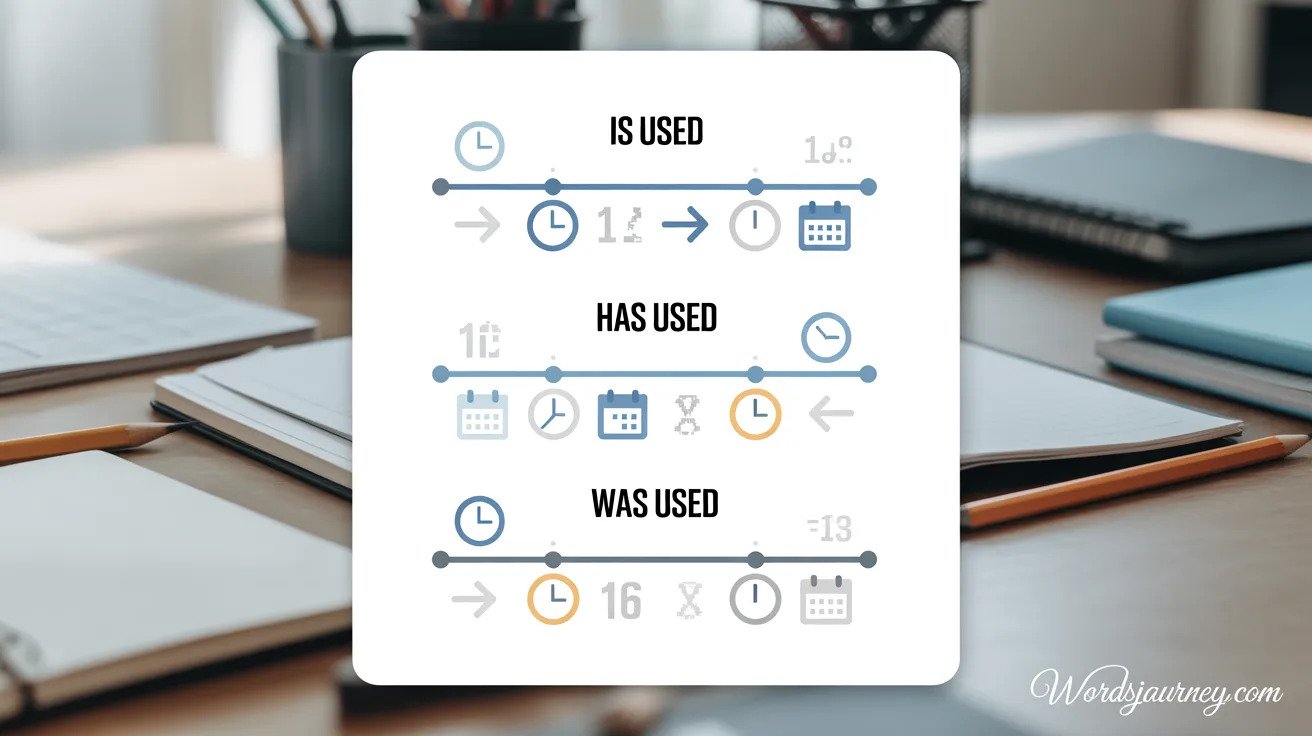
Understanding Is Used vs Has Been Used vs Was Used is essential for mastering English grammar and improving clarity in both writing and speaking. These three passive forms show how tense and time reference change meaning in different contexts. “Is used” describes a present method or function, showing what generally happens, for example a tool that is used to solve problems.
“Has been used” highlights a present perfect passive structure, where an action started in the past but still has relevance in the present, such as a technique that has been used for decades. On the other hand, “was used” refers to a completed action in the past, tied to a specific time, like a tool used by ancient builders. Choosing the correct form depends on context, timeline, and purpose of communication, which helps avoid confusion in writing.
In practical use, learners often get confused, but breaking it down into clear patterns, examples, and time markers makes grammar easier to understand. Using signal words, contextual examples, and correct sentence structure helps identify whether the action belongs to the present, past, or has ongoing relevance.
This clarity improves academic writing, business communication, and everyday English usage. With consistent practice and attention to tense accuracy, you can turn complex grammar rules into natural, fluent expressions.
Is Used vs Has Been Used vs Was Used — What’s the Real Difference?
At first glance, these phrases seem interchangeable. They aren’t. Each one answers a slightly different question:
- Is it generally true right now?
- Did it start in the past and still matter?
- Or did it happen and finish completely?
That’s the whole game. Once you understand this, everything clicks.
Quick Answer: The Difference at a Glance
Here’s the fastest way to understand it:
| Phrase | Meaning | Time Focus | Example |
| Is used | General truth or repeated action | Present | This tool is used in labs |
| Has been used | Past action still relevant now | Past → Present | This method has been used for years |
| Was used | Completed action in the past | Past only | This tool was used yesterday |
Simple Memory Trick
- Is used → Always true
- Has been used → Still matters
- Was used → Finished
Keep that in your head, and you’ll rarely go wrong.
Why These Phrases Feel So Confusing
Let’s be honest. The confusion makes sense.
All three:
- Use passive voice
- Use the same verb (use)
- Look structurally similar
But here’s the twist. The difference doesn’t come from the verb. It comes from the tense and time relationship.
Think of it like three lenses:
- One shows what is always happening
- One shows what started before and still connects to now
- One shows what is completely done
Miss that nuance, and everything blends together.
What Does “Is Used” Mean?
Core Idea: General Truth or Routine
When you say “is used,” you’re talking about something that:
- Happens regularly
- Is generally true
- Describes a system, habit, or rule
Structure
- Subject + is/am/are + past participle
Examples That Feel Natural
- English is used worldwide
- This software is used by engineers
- Sugar is used in baking
Each sentence describes something ongoing and true right now.
When You Should Use “Is Used”
Use it when:
- You describe facts
- You explain how something works
- You talk about regular practices
Real-Life Example
Think about a classroom:
- “English is used in class.”
This doesn’t refer to one moment. It describes a general situation.
Quick Tip
If you can add:
“usually” or “generally”
…and the sentence still makes sense, you’re likely in “is used” territory.
What Does “Has Been Used” Mean?
Core Idea: Past Action That Still Matters Now
This form connects the past to the present.
It tells you:
- Something started earlier
- It still has relevance today
- The exact time doesn’t matter
Structure
- Subject + has/have been + past participle
Examples That Show the Difference
- This method has been used for decades
- The system has been used successfully
- This technique has been used in many studies
Notice something?
There’s no exact time like yesterday or in 2020. That’s intentional.
When You Should Use “Has Been Used”
Use it when:
- You want to show experience
- You highlight duration
- You connect past action to the present situation
Real-Life Scenario
Imagine you’re writing a research paper:
- “This approach has been used in medical studies.”
You’re not talking about one event. You’re saying:
This method has a history and credibility.
Quick Tip
If your sentence answers:
“Does this still matter now?”
Then “has been used” is your best choice.
What Does “Was Used” Mean?
Core Idea: Completed Action in the Past
This one is straightforward.
It describes:
- Something that happened once or in a defined time
- Something that is completely finished
Structure
- Subject + was/were + past participle
Examples That Are Crystal Clear
- This method was used in 2020
- The tool was used yesterday
- A different system was used before
Each sentence points to a specific, finished moment.
When You Should Use “Was Used”
Use it when:
- You mention specific time
- You describe history
- The action is fully complete
Real-Life Scenario
Think of a report:
- “This device was used during testing.”
The testing is over. The action is done.
Quick Tip
If you can answer:
“When exactly?”
…then “was used” is usually correct.
Is Used vs Has Been Used vs Was Used Side-by-Side Comparison
Here’s where everything comes together:
| Feature | Is Used | Has Been Used | Was Used |
| Time | Present | Past → Present | Past |
| Status | Ongoing | Still relevant | Finished |
| Time Mentioned? | No | No | Often yes |
| Tone | General | Analytical | Narrative |
| Common Use | Facts, systems | Research, experience | History, events |
Real-Life Scenarios That Make It Stick
Technology Example
- This app is used by millions (general truth)
- This app has been used for years (ongoing relevance)
- This app was used in early testing (past only)
Education Example
- English is used in schools
- English has been used for decades
- English was used in yesterday’s lecture
Business Example
- This strategy is used in marketing
- This strategy has been used successfully
- This strategy was used last year
Common Mistakes
Mistake: Mixing Present Perfect with Specific Time
❌ This method has been used yesterday
✅ This method was used yesterday
Why?
Present perfect doesn’t work with exact time references.
Mistake: Using Past for General Truth
❌ English was used worldwide
✅ English is used worldwide
Why?
You’re describing something still true.
Mistake: Overusing “Is Used”
People often default to it because it feels safe.
But that leads to vague writing.
Instead of:
- “This method is used…”
Try:
- “This method has been used successfully in over 50 studies.”
That sounds stronger and more precise.
Active vs Passive Voice: A Quick Insight
All three forms are passive. That’s fine—but not always ideal.
Compare
Passive:
- The tool was used
Active:
- The team used the tool
When Passive Makes Sense
- The doer is unknown
- The focus is on the action
- You’re writing formally (reports, research)
When Active Is Better
- You want clarity
- You want stronger, more direct writing
A Simple Rule You Can Memorize
If you remember nothing else, remember this:
- Is used → Always true
- Has been used → Still relevant
- Was used → Finished
That’s your shortcut.
Case Study: How One Sentence Changes Meaning
Let’s take one idea and shift it:
Sentence Base:
“This method ___ in medical research.”
| Version | Meaning |
| Is used | It’s commonly used today |
| Has been used | It has a history and still matters |
| Was used | It was used before but not necessarily now |
Same sentence. Different meanings. That’s the power of tense.
Practice Section (Test Yourself)
Fill in the blanks:
- This method ___ used in modern labs
- This method ___ used for years
- This method ___ used in 2019
Answers
- is used
- has been used
- was used
Advanced Tip: Tone and Writing Style
Here’s something most guides don’t tell you.
“Has been used” sounds more formal
You’ll see it in:
- Research papers
- Academic writing
- Reports
“Is used” feels neutral
Best for:
- General writing
- Explanations
- Everyday language
“Was used” feels narrative
Perfect for:
- Storytelling
- Historical writing
- Reports on past events
Read More: Takes One to Know One: Meaning, Psychology and Origins
FAQs About “Is Used vs Has Been Used vs Was Used”
1. What is the difference between “is used”, “has been used”, and “was used”?
Is used describes a present habit or function, has been used shows an action that started in the past and still has present relevance, and was used refers to a completed past action.
2. When should I use “is used” in a sentence?
Use is used when talking about a general truth or current function, such as a method, tool, or system that is commonly used now.
3. What does “has been used” mean in English grammar?
Has been used as a present perfect passive form that shows something started in the past but is still relevant or important today.
4. When do we use “was used”?
Was used is used for a specific action in the past that is now finished and no longer continuing.
5. Why is it important to understand these passive forms?
They help improve clarity, accuracy, and professionalism in writing, speaking, academic work, and business communication.
6. Can these forms change the meaning of a sentence?
Yes, small changes in tense and structure can completely change the time frame and meaning of a sentence.
7. How can I remember the correct usage easily?
Focus on time markers: present facts → is used, ongoing relevance → has been used, finished past → was used.
Conclusion
Understanding Is Used vs Has Been Used vs Was Used is not just grammar learning, it is about mastering time, context, and clarity in communication. Each form carries a specific role in expressing present actions, ongoing relevance, or completed past events. When you correctly identify the time frame and purpose of a sentence, your writing becomes more precise and professional.
With regular practice, attention to context clues, signal words, and sentence structure, you can easily avoid confusion and use passive forms naturally. This strengthens your English fluency, writing quality, and communication confidence in both academic and real-life situations.

Aliya Ray is a passionate writer and language enthusiast at WordsJourney. She enjoys exploring words, phrases, and everyday expressions to help readers communicate more clearly and confidently. Her content focuses on alternative ways to say common phrases, simple explanations, and real-life examples that make language easy to understand.
Aliya believes the right words can make any message stronger. Through clear, friendly writing, she helps readers improve their vocabulary without feeling overwhelmed or confused.