Have you ever paused while writing and wondered whether to use “Forgo vs Forego” in professional communication? This common confusion often appears in business communication, scheduling, and time management contexts, especially when drafting emails, managing a calendar, meetings, or online booking systems.
Even in project management and formal writing, choosing the wrong form can quietly affect clarity and consistency, making strong English usage more important than ever.
Understanding “Forgo vs Forego” is essential for anyone aiming to improve grammar accuracy, professional tone, and written consistency. While both words appear similar, they serve different purposes in modern English usage across broadcasting, corporate documentation, and digital communication platforms.
Style guides also highlight subtle US vs. UK English preferences, which adds another layer of importance for writers working in global environments.
In this guide, you will learn the clear difference between “Forgo vs Forego”, how each term functions in real-world contexts, and when to use them correctly. We’ll also explore practical examples from business communication, scheduling workflows, and formal writing scenarios to help you apply them with confidence.
By the end, you’ll strengthen your grammar precision, writing clarity, and professional consistency in everyday English.
What Does Forgo Mean?
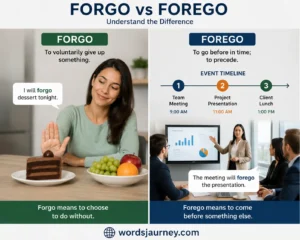
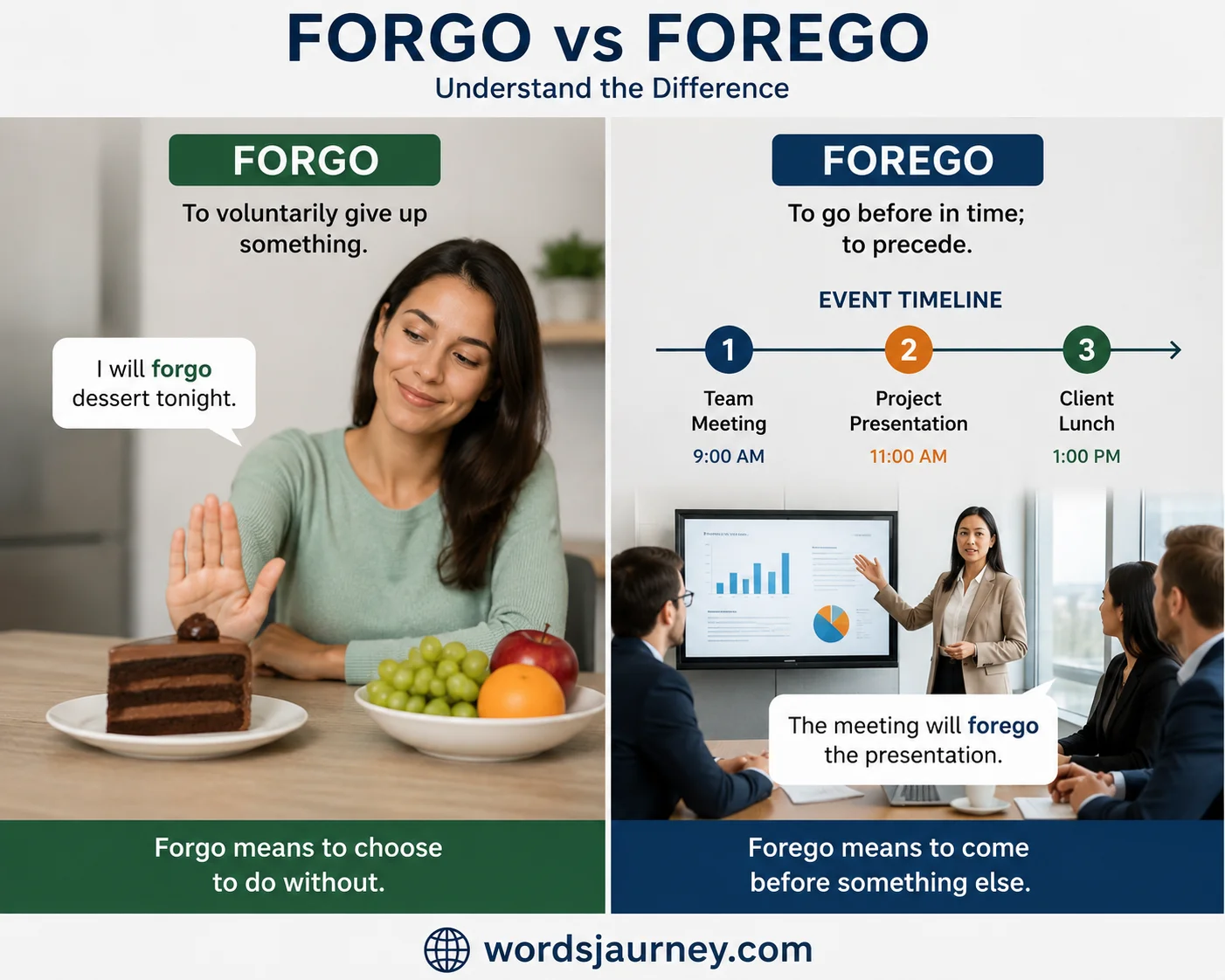
The word forgo means to give up something voluntarily. When you forgo something, you decide not to take it. The choice is intentional.
This word usually appears in everyday decisions. It fits situations where someone sacrifices comfort, benefits, or options.
Core Meaning of Forgo
- To give up
- To skip on purpose
- To do without something
- To decide against something
The key idea is choice. You actively decide to let something go.
Real-Life Examples of Forgo
- You forgo dessert to stay healthy.
- She forgoes coffee to reduce caffeine intake.
- The company forgave bonuses during a budget cut.
- He forgoes vacation time to finish the project.
In each case, the action involves a conscious decision.
Where Forgo Is Commonly Used
You will see forgo in:
- Business writing
- Personal development content
- Health discussions
- Financial planning
- Formal documents
It fits well in professional communication because it sounds precise.
Why Forgo Is the Preferred Modern Form
In today’s English, forgo is far more common than forego when referring to giving something up. Style guides and modern publications prefer it.
It is shorter. It is clearer. It avoids confusion with time-based meanings.
What Does Forego Mean?
The word forego means to go before in time or place. It refers to order, sequence, or precedence.
This meaning is different from giving something up. Instead, it focuses on what happens first.
Core Meaning of Forego
- To come before
- To precede
- To happen earlier
- To lead in sequence
The focus is timing rather than choice.
Real-Life Examples of Forego
- A warning foregoes the main announcement.
- An introduction foregoes the full report.
- The opening remarks forego the presentation.
- In history, one event foregoes another.
Here, the idea centers on order.
Where Forego Appears Most
You will see forego more often in:
- Formal writing
- Historical analysis
- Literary contexts
- Structured documents
It is less common in casual speech.
Why Forego Sounds More Formal
Forego appears in older texts more frequently. Modern writers rarely use it for everyday sequencing. Instead, they may use words like precede.
Because of this shift, forego can feel slightly outdated in modern communication.
Forgo vs Forego: The Key Differences
Although the spelling difference is only one letter, the meaning changes completely.
Meaning Comparison
| Word | Meaning | Core Idea |
| Forgo | To give up | Voluntary choice |
| Forego | To go before | Time or order |
Usage Frequency
- Forgo is common in modern English.
- Forego is less common today.
Writers often choose forgo unless they specifically need the time-related meaning.
Context Differences
Use forgo when talking about:
- Sacrifices
- Decisions
- Personal choices
- Business trade-offs
Use forego when talking about:
- Order
- Sequence
- Events
- Formal introductions
Quick Rule to Remember
If you mean give up, use forgo.
If you mean go before, use forego.
That simple rule prevents mistakes.
Why People Confuse Forgo and Forego
Confusion happens for several reasons.
Similar Spelling
Both words share:
- The letters f, o, r, and g
- Nearly identical structure
- Similar pronunciation patterns
That visual similarity tricks the brain.
Shared Linguistic Roots
Both words trace back to older forms of English. Over time, meanings separated. However, spelling stayed close.
Modern Usage Overlap
In some contexts, writers historically used forego for both meanings. Language evolves. Today, style guides favor clearer distinctions.
Pronunciation Guide
Both words sound very similar in speech.
- Forgo: /for-GO/
- Forego: /for-GO/
The pronunciation overlap increases confusion in writing.
Because they sound the same, context becomes critical when reading.
Real-World Comparison Examples
Let’s compare both words in similar sentences.
Example Set One
- She decided to forgo dessert.
- The introduction will forego the main discussion.
In the first sentence, someone gives something up.
In the second sentence, something happens first.
Example Set Two
- He chose to forgo his bonus this year.
- A brief summary will forego the detailed report.
Again, meaning depends on context.
Case Study: Business Communication Example
Imagine a company planning a conference.
The organizer writes:
The keynote speech will forego the closing remarks.
This means the speech happens first.
Now consider another sentence:
The company decided to forgo printed materials to reduce costs.
Here, the company chose to skip printing.
Both sentences are correct. However, they communicate different ideas.
This example shows why precision matters in professional writing.
Common Mistakes Writers Make
Here are frequent errors:
Using Forego Instead of Forgo
Many writers accidentally use forego when they mean give up. This mistake appears often in blogs and informal writing.
Treating Them as Interchangeable
They are not synonyms. Their meanings differ clearly.
Ignoring Context
Context determines the correct word. Always ask yourself what the sentence truly means.
Read More: Wonder vs. Wander: The Ultimate Guide and Common Mistakes
Memory Tricks to Avoid Confusion
You can remember the difference with simple strategies.
Trick One: Focus on the Letter “R”
Forego contains an extra “e” that suggests order.
Think of “earlier” when you see fore.
Trick Two: Connect Forgo With “Give”
Forgo relates to giving something up.
Both words contain “go,” which hints at letting something go.
Trick Three: Think About Time
If the sentence involves timing, choose forego.
If it involves sacrifice, choose forgo.
These mental cues make selection easier.
Usage in Modern Writing
Today, most writers prefer forgo.
You will see it in:
- News articles
- Academic writing
- Business reports
- Health blogs
- Financial advice
Forego appears less often but still remains grammatically correct when used properly.
Style Guide Preferences
Major English style guides generally recognize both words. However, modern preference leans toward forgo for clarity.
Writers often avoid forego unless sequence is important.
Clarity drives modern usage.
Historical Background
Both words come from older English forms. Historically, spelling variations were common. Standardized dictionaries helped separate meanings more clearly.
Over time, usage patterns shifted. Forgo became dominant in everyday communication.
Language evolves naturally. Word frequency often changes with cultural trends.
Quick Comparison Table for Easy Reference
| Feature | Forgo | Forego |
| Main Meaning | Give up voluntarily | Go before in order |
| Common Today | Yes | Less common |
| Context | Decisions, sacrifices | Sequence, timing |
| Formal Use | Yes | Yes |
| Risk of Confusion | Moderate | Moderate |
When Should You Use Forgo?
Use forgo when you mean:
- Skip a meal
- Decline an offer
- Avoid an expense
- Give up a benefit
- Sacrifice comfort
If your sentence involves personal choice, this is usually the correct word.
When Should You Use Forego?
Use forego when you mean:
- Something comes first
- An introduction precedes content
- An event happens earlier
- One section leads another
If timing is central to your meaning, choose this word.
Professional Writing Tip
When in doubt, choose forgo. It appears more frequently in modern writing.
However, always check context. Meaning must guide your decision.
Precision improves credibility.
Frequently Asked Questions (FAQs)
1. What is the main difference between “forgo” and “forego”?
“Forgo” means to give up or do without something, while “forego” means to go before or precede something. In modern usage, “forgo” is far more common in everyday writing.
2. Is “forego” still correct in modern English?
Yes, “forego” is still correct, but it is mostly used in formal or historical contexts. In most business communication and formal writing, “forgo” is preferred.
3. Which word is used more in US vs UK English?
Both US and UK English largely prefer “forgo” in modern usage. “Forego” appears less frequently and is often limited to specific or traditional contexts.
4. Can I use “forego” instead of “forgo” in emails?
It’s not recommended. In professional emails, meetings, and scheduling-related communication, “forgo” is clearer and more widely accepted.
5. Does “forego” always mean something different from “forgo”?
Yes. “Forego” relates to something happening earlier, while “forgo” refers to choosing to skip or abandon something.
6. Why do people confuse forgo vs forego so often?
They sound similar and are spelled almost the same. This confusion often appears in grammar usage, project management writing, and online communication.
7. Which one should I use in professional writing?
In most cases, use “forgo”. It ensures better clarity, consistency, and alignment with modern English usage standards.
Conclusion
The confusion between “forgo vs forego” is common, but the distinction is simple once understood. “Forgo” dominates modern English and fits naturally into business communication, scheduling, meetings, and formal writing, where clarity and precision matter most.
On the other hand, “forego” carries a more traditional meaning of something preceding another event, making it less common in everyday usage. Most modern style guides, grammar references, and English usage standards favor “forgo” for simplicity and consistency.By mastering this small but important difference, you improve your overall grammar accuracy, professional tone, and writing confidence. Whether you’re managing a calendar, drafting reports, or handling project management communication, choosing the right word ensures your English stays clear, consistent, and professional.

Emma Brook is a dedicated writer and language enthusiast at WordsJourney. She’s passionate about helping readers understand words better and use them with confidence in everyday conversations. Her work focuses on alternative phrases, clear meanings, and practical examples that make language feel simple and approachable.
With a friendly, reader-first writing style, Emma breaks down common expressions and explores smarter ways to say things without sounding forced or complicated. Her goal is to make learning words enjoyable, useful, and easy for everyone.