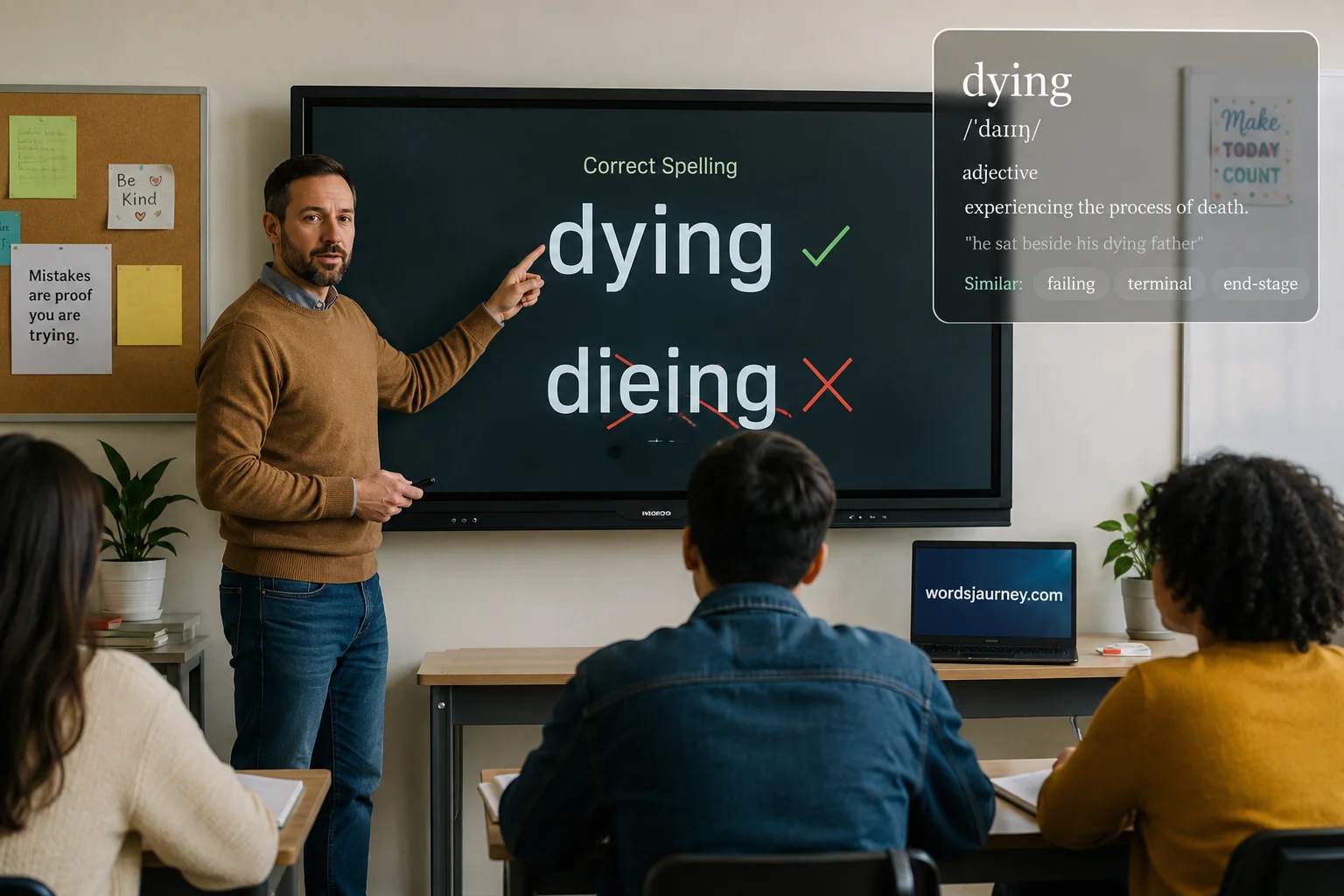
Have you ever paused while writing and wondered about “Dying vs Dieing” and which one is actually correct? This common spelling confusion often creates doubt in English writing. Many readers search for clarity because small grammar mistakes can change meaning and credibility.
Understanding spelling differences, English grammar rules, and common writing errors is essential for clear communication. The term “dying” is widely used in everyday language, while “dieing” often appears due to typing mistakes or misunderstanding of verb forms. This confusion affects learners, writers, and even native speakers who aim for accurate usage and strong language skills.
In this article, you will learn the correct usage of dying, why dieing is considered incorrect, and how grammar rules apply in real writing situations. We will also explore examples, common mistakes, and simple tips to avoid confusion in the future. Let’s break it down step by step for complete clarity.
- Why “dying” is correct
- Why “dieing” appears in writing mistakes
- How to remember the rule forever
- Real-world usage examples
- Clear comparisons with similar words like dyeing
By the end, you won’t second-guess it again. You’ll just write it correctly without thinking twice.
What “Dying” Means in English (The Correct Form in Dying vs Dieing)
Let’s start with the real word: dying.
“Dying” is the present participle of the verb die. It describes the process of something coming to an end.
Core meanings of “dying”
- Literal death
- A person or animal nearing death
- Emotional intensity
- Extreme laughter or excitement
- Figurative decline
- Something losing strength or importance
Real examples of “dying” in use
- The patient is dying in the hospital.
- I’m dying of laughter at that joke.
- The plant is dying without sunlight.
- The old tradition is slowly dying out.
Notice something important here. “Dying” does not always mean physical death. English uses it in emotional and figurative ways too.
That flexibility is one reason the word appears so often in writing and conversation.
Why People Write “Dieing” Instead of “Dying”
Now let’s talk about the mistake itself: dieing.
You might wonder why so many people still type it incorrectly. The answer comes down to expectation versus rule.
The “logical rule” problem
Most English verbs follow a simple pattern:
- make → making
- take → taking
- ride → riding
So writers assume:
- die → dieing
It feels consistent. It feels safe. But English doesn’t always behave logically.
The real spelling rule
When a verb ends in silent “e”, we usually drop the “e” before adding “-ing”:
- die → dying
- make → making
- take → taking
So the correct transformation is:
die → dying (NOT dieing)
Why your brain gets tricked
There are three main reasons:
- Your brain applies patterns too quickly
- You type fast without checking structure
- “Dieing” visually looks familiar, even though it’s wrong
This is a classic example of what linguists call pattern overgeneralization.
Is “Dieing” Ever Correct in Dying vs Dieing Grammar?
Let’s clear this up completely.
Short answer: No.
In modern standard English:
- “Dieing” is not accepted
- It does not appear as a valid form of the verb die
Where confusion sometimes comes from
People often confuse it with:
- Typing errors in informal writing
- Older or incorrect internet content
- Confusion with the word dyeing
Important distinction
Here’s where things get interesting:
| Word | Meaning | Correct Usage |
| dying | becoming dead or fading | correct |
| dieing | incorrect spelling of dying | avoid |
| dyeing | coloring fabric or material | correct |
Key insight
Most “dieing” mistakes actually come from mixing up dying and dyeing, not from grammar rules alone.
Dying vs Dieing vs Dyeing: The Ultimate Comparison
Let’s break this down in a way that sticks.
Quick comparison table
| Word | Pronunciation | Meaning | Example |
| dying | /ˈdaɪ.ɪŋ/ | nearing death or decline | The plant is dying |
| dieing | /ˈdaɪ.ɪŋ/ (incorrect spelling) | not valid | ❌ avoid this form |
| dyeing | /ˈdaɪ.ɪŋ/ | coloring fabric | She is dyeing her hair |
Why they get mixed up
They all sound identical when spoken. That’s the real trap.
So when you hear:
- “I’m dying my hair”
It should actually be:
- “I’m dyeing my hair”
That small spelling shift changes everything.
Read More: “Lath” vs “Lathe” Meaning and Real-World Examples
Simple Grammar Rule Behind “Dying vs Dieing”
Now let’s lock in the rule so you never forget it.
The drop-the-E rule
When a verb ends in silent “e”:
- Remove the “e”
- Add “-ing”
Examples you already know
- die → dying
- make → making
- hope → hoping
- write → writing
Why this rule exists
English avoids awkward vowel stacking. Writing “dieing” would create a strange visual and pronunciation flow.
So the language simplifies it.
Grammar insight: English often sacrifices visual symmetry for readability.
Real-Life Usage of “Dying” in Sentences
Let’s bring this into everyday writing so it feels natural.
Casual conversation examples
- I’m dying to leave this place.
- He is dying of curiosity.
- They are dying laughing at the video.
Formal writing examples
- The ecosystem is dying due to pollution.
- Several industries are dying under economic pressure.
- The patient remained dying despite treatment.
Incorrect vs correct examples
| Incorrect | Correct |
| The plant is dieing. | The plant is dying. |
| She is dieing of laughter. | She is dying of laughter. |
| The system is dieing out. | The system is dying out. |
Memory Tricks to Remember “Dying vs Dieing”
Let’s make this stick permanently.
Visual trick
Picture the word “die.” Now imagine it losing its “e” as it fades away.
That fading process becomes:
- die → dying
Just like life fading out.
Sound trick
“Dying” sounds smooth and continuous. That matches the meaning of something fading slowly.
“Dieing” looks clunky. That’s your mental red flag.
Shortcut rule
If it relates to death or decline, it is always “dying.”
Common Mistakes People Make with Dying vs Dieing
Even experienced writers slip up sometimes.
Mistake 1: Fast typing
You type “dieing” because your fingers move faster than your grammar rules.
Mistake 2: Overthinking rules
You try to force consistency where English doesn’t allow it.
Mistake 3: Mixing similar words
You confuse:
- dying
- dyeing
Mistake 4: Ignoring proofreading
Small spelling errors slip through emotional or rushed writing.
Expert Insight on “Dying vs Dieing”
Linguists often point out that English spelling is shaped by history more than logic.
As one grammar reference explains:
“Spelling rules in English prioritize clarity over phonetic consistency.”
That explains why “dieing” never became standard, even though it looks logical.
Quick FAQ on Dying vs Dieing
1. What is the correct spelling: dying or dieing?
The correct spelling is dying. It follows standard English grammar rules, while dieing is considered incorrect in most contexts.
2. Why is “dieing” wrong in English?
“Dieing” is usually a spelling mistake. The verb die changes to dying when forming the present participle, not “dieing.”
3. What does “dying” mean in grammar?
In grammar, dying is the present participle of the verb “die.” It describes an ongoing action or state of life ending.
4. Is “dieing” ever used in English?
Rarely, yes—but only in very specific technical contexts like engineering (e.g., “die” in metal work). In everyday writing, it is incorrect.
5. How can I avoid confusing dying and dieing?
Remember this rule: drop the “e” before adding “-ing.” So die → dying, not dieing.
6. Does spelling “dieing” affect writing quality?
Yes, it can reduce credibility. Using the correct form dying improves clarity and professionalism in writing.
7. What are some examples of “dying” in sentences?
Example: “The plant is dying without water.” Another: “The patient is dying peacefully.”
Conclusion
Understanding the difference between dying and dieing is simple once you know the grammar rule behind it. The correct form dying is used in all standard English contexts, while dieing is generally a spelling error. Learning this small but important distinction helps improve your writing accuracy and communication skills. Keep practicing proper verb forms, and your English will become clearer and more professional over time.

Aliya Ray is a passionate writer and language enthusiast at WordsJourney. She enjoys exploring words, phrases, and everyday expressions to help readers communicate more clearly and confidently. Her content focuses on alternative ways to say common phrases, simple explanations, and real-life examples that make language easy to understand.
Aliya believes the right words can make any message stronger. Through clear, friendly writing, she helps readers improve their vocabulary without feeling overwhelmed or confused.