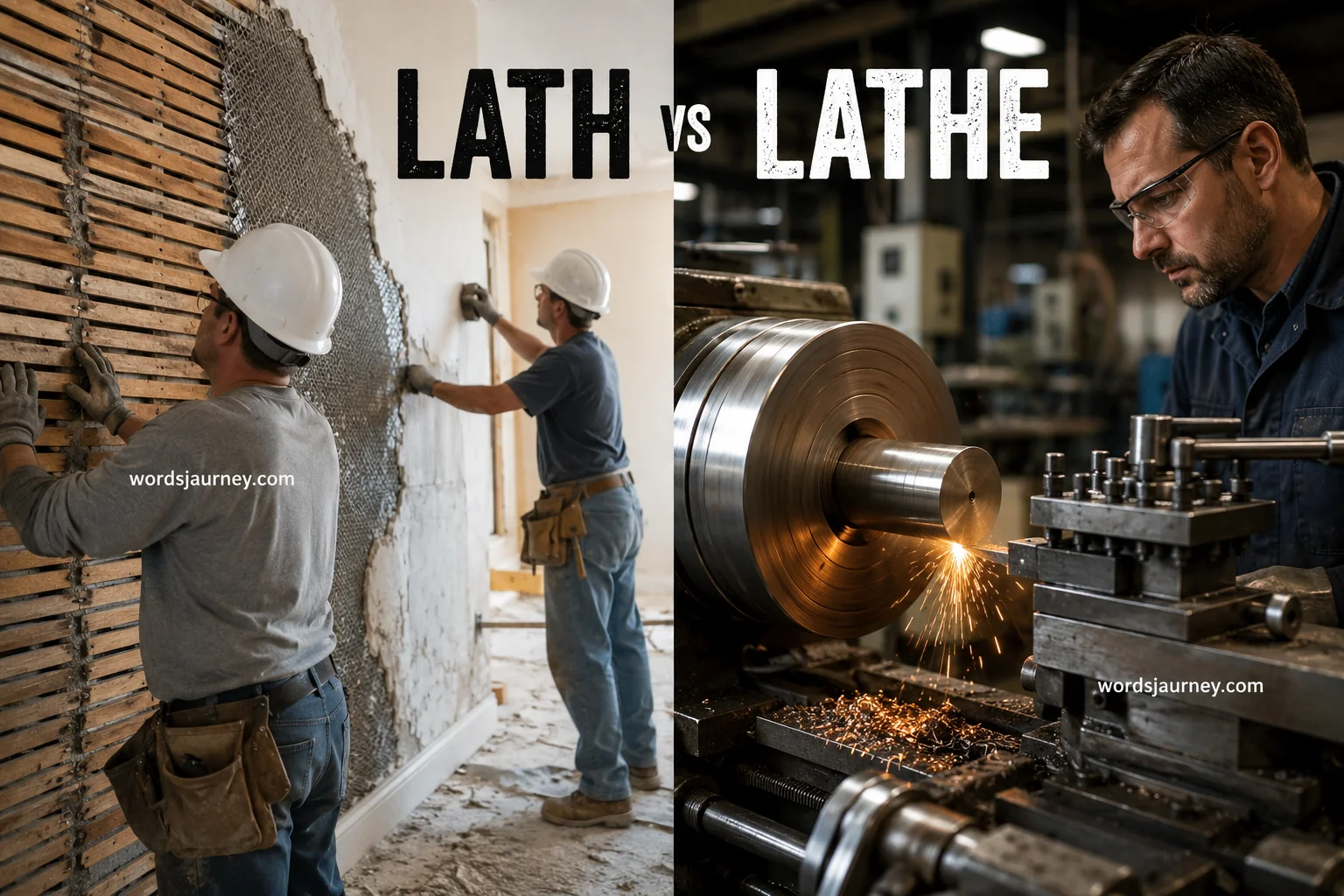
Have you ever wondered whether it’s “Lath vs Lathe” or simply a spelling mistake? Many people searching for woodworking tools or machining equipment often get confused by these two similar-looking terms. This confusion can easily lead to wrong searches and misunderstood tool meanings in both carpentry and metalworking contexts.
Understanding the difference between lath and lathe is important for anyone working with a turning machine, whether in woodworking, engineering, or industrial manufacturing. A lathe is a precise machine used for shaping wood, metal, or other materials, while “lath” often refers to thin strips of wood used in construction. Knowing this distinction helps improve search accuracy and strengthens your understanding of tool terminology and technical vocabulary.
In this article, you’ll clearly learn the difference between lath and lathe, their correct usage, and where each term applies in real-world contexts. We’ll also explore common spelling mistakes, practical examples, and how these terms are used in woodworking and machining industries. Let’s dive deeper and clear up the confusion once and for all.
Lath vs Lathe Quick Answer
Let’s make this crystal clear right away.
- Lath = a thin strip of wood or metal used in construction to support plaster or wall finishes
- Lathe = a rotating machine tool used to shape wood, metal, or plastic
That’s it. Two completely different things.
One is a building material. The other is a precision machine.
What Is a Lath? Meaning, Uses, and Real Construction Role
A lath is a thin strip of material used as a base structure in construction work. It usually supports plaster, tiles, or finishing layers on walls and ceilings.
You won’t find it moving or spinning. It stays fixed inside a wall system.
Basic Meaning of Lath
A lath is typically:
- A narrow wooden strip
- A metal mesh sheet
- A synthetic support strip in modern buildings
It creates a rough surface so plaster can grip better.
Without lath, plaster would slip or crack easily on smooth surfaces.
Where You See Lath in Real Life
Even if you never noticed it, lath is everywhere in older or traditional construction.
Common uses include:
- Interior plaster walls in old houses
- Ceiling support systems
- Tile backing layers
- Stucco wall construction
- Restoration of heritage buildings
If you ever break into an old wall during renovation, you might see wooden strips under plaster. That’s lath.
Why Builders Use Lath
Lath solves a simple problem: plaster needs grip
Here’s what it does:
- Holds plaster in place
- Creates a bonding surface
- Prevents cracking and peeling
- Improves durability of wall finishes
Think of it like a “skeleton layer” for plaster.
Without it, plaster behaves like paint on glass. It simply doesn’t stick well.
Types of Lath Used in Construction
Different projects use different types of lath materials.
| Type of Lath | Material | Common Use |
| Wooden lath | Thin wood strips | Traditional plaster walls |
| Metal lath | Expanded steel mesh | Modern stucco walls |
| Gypsum lath | Plasterboard base | Interior finishing |
| Synthetic lath | Fiberglass or PVC | Modern lightweight construction |
Metal lath is more common in modern construction because it lasts longer and resists moisture.
Simple Example of Lath in Use
A builder prepares a wall like this:
- Installs wooden framing
- Attaches lath strips
- Applies plaster over it
- Smooths the final surface
The lath acts like hidden support under the surface.
What Is a Lathe? Meaning, Function, and Industrial Use
A lathe is a machine tool used in workshops and factories. It rotates a material while a cutting tool shapes it into a precise form.
Unlike lath, a lathe is active. It moves, spins, and cuts.
Basic Meaning of Lathe
A lathe is designed to:
- Rotate material at high speed
- Shape it using cutting tools
- Create symmetrical objects
It works mainly with:
- Wood
- Metal
- Plastic
How a Lathe Works in Simple Terms
A lathe works on a simple but powerful principle:
The material spins while the tool stays mostly still
This creates smooth and accurate shapes.
Here’s the basic process:
- Material is fixed on the machine
- Machine spins it rapidly
- Cutting tool moves into position
- Material gets shaped layer by layer
This is how precise parts like bolts, pipes, and shafts are made.
Where Lathes Are Used in Real Life
Lathes are essential in manufacturing and engineering.
Common places include:
- Machine workshops
- Automotive repair shops
- Metal fabrication factories
- Woodworking studios
- Aerospace component production
If something is perfectly round or symmetrical, a lathe likely helped make it.
Types of Lathe Machines
Different industries use different lathe machines.
| Type of Lathe | Purpose | Common Use |
| Wood lathe | Shapes wood | Furniture and crafts |
| Metal lathe | Cuts metal parts | Engineering components |
| CNC lathe | Computer controlled shaping | Mass production industries |
| Mini lathe | Small scale work | Hobbyists and DIY projects |
CNC lathes dominate modern manufacturing because they improve accuracy and speed.
Simple Example of Lathe in Action
A machinist makes a metal shaft like this:
- Fixes metal rod into lathe
- Spins it at controlled speed
- Uses cutting tool to shape diameter
- Smooths and finishes surface
The result is a perfectly round industrial part.
Interesting Fact About Lathes
Modern CNC lathes can reach speeds of 3,000 to 10,000 RPM depending on material and setup.
High precision machines can produce parts with tolerance as small as 0.001 mm.
That level of accuracy is why industries depend heavily on lathe machines.
Lath vs Lathe Key Differences Explained Clearly
Now let’s break down the real difference side by side.
| Feature | Lath | Lathe |
| Category | Construction material | Machine tool |
| Function | Supports plaster or finishes | Shapes rotating materials |
| Movement | Static | Rotational and mechanical |
| Industry | Building and construction | Manufacturing and engineering |
| Output | Structural base layer | Finished mechanical parts |
| Complexity | Simple | Highly technical |
The biggest difference is simple:
- Lath supports surfaces
- Lathe creates objects
Why People Confuse Lath and Lathe
This confusion happens more often than expected.
Similar spelling creates mistakes
One extra “e” changes everything:
- Lath → construction
- Lathe → machine tool
That tiny difference causes big misunderstandings in search engines and conversations.
Pronunciation sounds similar
In fast speech, both words sound almost identical.
That leads to:
- Wrong Google searches
- Miscommunication in learning environments
- Typing errors in research
Search engine confusion
Many users type:
- “how to use lath machine” ❌
- “lathe wall support” ❌
Search engines then show mixed results that confuse beginners even more.
Real-World Case Study: Construction vs Manufacturing Confusion
Let’s look at a real scenario.
Case: A DIY learner in a renovation project
A beginner searches:
“how to install lathe on wall”
The results show machining videos instead of construction guides.
What went wrong?
- The user meant lath (wall support material)
- The search engine interpreted lathe (machine tool)
Result
- Confusion
- Wrong tutorials
- Delayed project
Fix
Understanding the difference saves time and prevents mistakes.
Real Example Sentences to Lock the Meaning
Here are practical examples to avoid confusion.
Lath in a sentence
- Workers attached wooden lath before applying plaster on the wall.
- The old house still had metal lath under the damaged wall surface.
Lathe in a sentence
- The machinist shaped the steel rod using a lathe machine.
- A CNC lathe produced identical engine parts for mass production.
Memory Trick to Never Confuse Lath vs Lathe Again
Use this simple mental shortcut:
- Lath = Layer (construction base layer)
- Lathe = Machine (turning and shaping tool)
Another way to remember:
- Lath stays still like a wall
- Lathe spins like a wheel
Read More: “Specter vs Spectre” Difference and Real-World Examples
Key Facts You Should Remember
Here are the most important takeaways:
- Lath is part of construction systems
- Lathe is a precision manufacturing machine
- They serve completely different industries
- One is static and structural
- The other is mechanical and dynamic
If you remember just one thing:
Lath builds walls. Lathe builds parts.
Quick Comparison Summary
| Category | Lath | Lathe |
| Everyday analogy | Wall skeleton | Turning machine |
| Motion | No movement | High-speed rotation |
| Output type | Surface support | Engineered components |
| Industry focus | Construction | Manufacturing |
FAQs about Lath vs Lathe
1. What is the main difference between lath and lathe?
The main difference is that a lathe is a machine tool used for shaping materials, while lath refers to thin strips of wood used in construction. They are completely different in meaning and usage.
2. Is “lath” a misspelling of lathe?
No, lath is not a spelling mistake. It is a real word used in carpentry and building work, especially in plastering and wall construction.
3. What is a lathe used for?
A lathe is used in woodworking, metalworking, and machining to rotate a material so it can be cut, drilled, or shaped with precision tools.
4. Why do people confuse lath and lathe?
People confuse them because the words look and sound similar. However, their meanings are unrelated, one is a tool and the other is a construction material.
5. What materials can be shaped on a lathe?
A lathe machine can shape wood, metal, plastic, and sometimes even glass depending on the machine type and tooling used.
6. Where is lath commonly used?
Lath is commonly used in traditional plaster walls, ceilings, and sometimes roofing structures as a supporting framework.
7. Which term is more commonly searched online?
Lathe is more commonly searched because it relates to machinery, manufacturing, and woodworking industries, which have broader industrial use.
Conclusion
The confusion between lath and lathe is common but easy to clear once you understand their distinct meanings. A lathe is a powerful machine tool used for shaping materials with precision, while lath refers to thin wooden strips used in construction work.
Knowing this difference helps improve your technical vocabulary and prevents mistakes in searches, especially if you are exploring woodworking, machining, or construction topics. Whether you are a student, craftsman, or hobbyist, understanding these terms ensures better communication and clearer learning in practical applications.

Johnson Alex is a language-focused writer and the voice behind WordsJourney. He creates practical, easy-to-understand content that helps readers improve their vocabulary and express ideas with clarity and confidence.