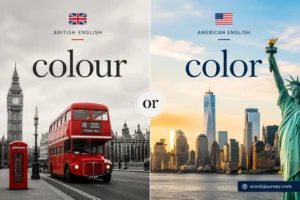
Favourite or Favorite shows how difference, spelling, and version of English depend on American English and British English usage. The correct spelling depends on regional usage and British English standards.
Both words mean something loved or liked more than others, and the choice of spellings doesn’t change the meaning of the word. It simply reflects language variations, regional standards, and writing styles used for American audiences, UK, Canada, Australia, and New Zealand. The ou spelling is used in British English, while American English language prefers another form, helping readers and learners avoid confusion while they encounter choices in written communication shaped by history, origins, and language tapestry.
Writing, Grammar, and Language Structure
Writers, students, and readers often question usage, grammar rules, and semantics when choosing spellings. The lexicon, orthography, linguistic aspects, and sentence structure affect textual clarity, style, and expression. This builds consistency in language learning, semantic analysis, and textual content creation.
Modern writing conventions show how culture, localization, and regional standards influence language patterns. Paying attention to reader interpretation, orthographic rules, spelling rules, and lexemes improves comprehension for a global audience. Practicing tips ensures correct expression in text and strengthens overall communication style.
Favourite vs Favorite: The Quick Answer
If you only need the short version, here it is:
| Spelling | Used In | Correct? |
| Favourite | British English | Yes |
| Favorite | American English | Yes |
Both spellings mean exactly the same thing. They function the same way in sentences. The pronunciation also stays nearly identical.
Quick Examples
- British English: Blue is my favourite color.
- American English: Blue is my favorite color.
The only visible difference is the extra “u” in the British spelling.
What Does Favourite or Favorite Mean?
The word refers to something or someone you prefer more than others. It can work as both a noun and an adjective.
Favourite or Favorite as an Adjective
When used as an adjective, the word describes the thing you like most.
Examples
- Pizza is my favorite food.
- Her favourite movie is Inception.
- Summer remains their favorite season.
In each sentence, the word describes a preferred item or choice.
Favourite or Favorite as a Noun
As a noun, it refers directly to the preferred person or thing.
Examples
- The singer became the crowd favorite.
- That horse is the race favourite.
- She’s the teacher’s favorite.
This noun form appears often in sports, entertainment, and media coverage.
Why Do British and American Spellings Differ?
The difference between favourite and favorite traces back hundreds of years. English spelling evolved differently after the United States separated from Britain.
One key figure shaped modern American spelling more than anyone else: Noah Webster.
Webster believed American English should become simpler and more independent from British conventions. His dictionaries removed extra letters from many words.
That’s why American English uses:
- color instead of colour
- honor instead of honour
- labor instead of labour
- favorite instead of favourite
British English kept older French-influenced spellings that included “ou.”
Favourite vs Favorite Pattern in English
The same spelling pattern appears in many other words.
| British English | American English |
| Favourite | Favorite |
| Colour | Color |
| Honour | Honor |
| Labour | Labor |
| Humour | Humor |
| Neighbour | Neighbor |
Once you recognize this pattern, English spelling becomes easier to predict.
Favourite vs Favorite Pronunciation
Here’s the funny part.
Even though the spellings differ, the pronunciation barely changes.
Pronunciation
- Favourite: FAY-vuh-rit
- Favorite: FAY-vuh-rit
Most speakers pronounce both versions almost identically.
Regional accents may slightly affect the rhythm or vowel sound. Still, everyday conversation rarely reveals whether someone spells it favourite or favorite.
When Should You Use Favourite?
Use favourite when writing for audiences that follow British English conventions.
Countries That Commonly Use Favourite
| Country | Preferred Version |
| United Kingdom | Favourite |
| Australia | Favourite |
| New Zealand | Favourite |
| Ireland | Favourite |
| South Africa | Favourite |
| Canada | Often Favourite |
British spelling dominates newspapers, schools, universities, and businesses across these regions.
Examples Using Favourite
- Chocolate cake is my favourite dessert.
- London remains her favourite city.
- Their dog quickly became the family favourite.
When Should You Use Your Favorite?
Use favorite when targeting readers in the United States.
American English removed many silent or decorative letters over time. That includes the “u” in favorite.
Places Where Favorite Dominates
| Country | Preferred Version |
| United States | Favorite |
American businesses, media companies, universities, and publications almost always use “favorite.”
Examples Using Favorite
- Baseball is America’s favorite pastime.
- That’s my favorite coffee shop.
- She became the audience favorite instantly.
Favourite vs Favorite in Different English-Speaking Countries
English changes shape depending on geography. Canada especially creates confusion because Canadian English blends British and American influences.
Regional Usage Table
| Country | Common Usage |
| United States | Favorite |
| United Kingdom | Favourite |
| Canada | Favourite and Favorite |
| Australia | Favourite |
| New Zealand | Favourite |
| Ireland | Favourite |
The Canadian English Twist
Canada sits halfway between British and American spelling traditions.
That means Canadians may write:
- favourite
- color
- organize
Or:
- favorite
- colour
- organise
The key in Canadian writing is consistency. Mixing styles inside the same article looks messy.
Why Consistency Matters in Writing
Readers notice inconsistency faster than many writers expect.
Imagine seeing:
- favourite color
- favorite movie
- favourite restaurant
All inside one paragraph.
It feels clunky. Your writing loses polish immediately.
Professional editors usually follow a style guide to avoid this issue.
Favourite vs Favorite in Academic Writing
Universities care deeply about spelling consistency.
General Rule
Use the spelling style required by:
- your institution
- your professor
- your publication style guide
For example:
- American universities prefer “favorite”
- UK universities prefer “favourite”
Favourite vs Favorite in Business Writing
Brands tailor spelling to audience location all the time.
Examples
- US landing page → favorite
- UK landing page → favourite
- International brand → one consistent style
Large companies localize spelling to improve customer trust.
Streaming services, ecommerce stores, and global media brands frequently adjust regional spelling automatically.
Real-World Examples of Favourite and Favorite
You can spot the difference everywhere once you start looking.
British Publications
- BBC
- The Guardian
- Oxford English Dictionary
These usually write:
- favourite
- colour
- neighbour
American Publications
- The New York Times
- CNN
- Merriam-Webster
These prefer:
- favorite
- color
- neighbor
Common Mistakes People Make
Even fluent English speakers mix these spellings accidentally.
Here are the biggest mistakes.
Assuming One Version Is Wrong
This happens constantly online.
Someone writes:
“Favourite is misspelled.”
Not true.
Both spellings are fully correct.
Mixing British and American English
Writers often combine:
- favorite
- colour
- organise
inside the same article.
That inconsistency weakens credibility.
Ignoring Audience Location
A UK ecommerce site using American spelling may feel less trustworthy to local customers.
Small language details influence user perception more than people realize.
Favourite vs Favorite in Pop Culture
Movies, books, and streaming platforms reflect regional spelling too.
For example:
- American movie posters use “favorite”
- British editions often switch to “favourite”
Some global brands even change spelling dynamically based on user location.
That’s localization in action.
Favourite vs Favorite in Social Media
Social media creates an interesting mix because audiences overlap globally.
You’ll often see:
- American influencers using “favorite”
- UK creators using “favourite”
International creators sometimes choose whichever version suits their target audience best.
Which Spelling Should Bloggers Use?
The answer depends entirely on your audience.
Use Favourite If:
- your audience is mainly British
- you target UK SEO
- your website uses British English
Use Favorite If:
- your audience is American
- your traffic comes mostly from the US
- your brand voice follows American English
Best Practice for International Websites
International websites usually pick one style and stick with it.
Smart Strategy
Choose:
- British English everywhere
or - American English everywhere
Don’t bounce between both versions.
Easy Trick to Remember the Difference
Here’s a simple memory hack.
British English Loves “OU”
- colour
- humour
- favourite
American English Removes the “U”
- color
- humor
- favorite
Once you learn this pattern, dozens of spelling differences suddenly make sense.
Favourite vs Favorite in Grammar Tools
Modern writing tools automatically detect regional spelling.
Read More: “Apologise” or “Apologize” Which Spelling Is Correct?
Popular Grammar Platforms
- Grammarly
- Microsoft Word
- Google Docs
These platforms let users choose:
- American English
- British English
- Canadian English
- Australian English
That setting determines whether favorite or favourite appears as correct.
Is Favorite More Modern Than Favourite?
Not exactly.
Some people assume American spelling evolved later. Technically, both forms developed from older English influences.
The difference mainly reflects spelling reform rather than modernity.
British English preserved traditional forms while American English simplified many words.
Are Favourite and Favorite Interchangeable?
Technically yes.
Practically no.
You can use either spelling anywhere because readers understand both. Yet choosing the wrong regional version may feel unnatural to local audiences.
That subtle friction matters in:
- marketing
- publishing
- journalism
- branding
Favorite vs Favourite in Digital Marketing
Professional marketers rarely ignore language localization.
Even tiny spelling shifts affect:
- conversion rates
- ad performance
- user trust
- email engagement
For example:
- UK ad copy performs better with “favourite”
- US campaigns convert better with “favorite”
Language creates familiarity. Familiarity builds trust.
Quick Comparison Chart
| Feature | Favourite | Favorite |
| English Type | British | American |
| Meaning | Same | Same |
| Pronunciation | Same | Same |
| Correct Spelling | Yes | Yes |
| Used in UK | Yes | Rare |
| Used in US | Rare | Yes |
| SEO Advantage | UK traffic | US traffic |
Examples in Everyday Sentences
British English Examples
- Tea is her favourite drink.
- What’s your favourite TV show?
- That café became a local favourite.
American English Examples
- Pizza is my favorite snack.
- He’s the fans’ favorite player.
- Fall is her favorite season.
Mini Case Study: Why Regional Spelling Matters
A travel blog targeting British readers switched several pages from American English to British English spelling.
Changes included:
- favorite → favourite
- vacation → holiday
- apartment → flat
Within months:
- engagement improved
- bounce rates dropped
- local keyword rankings increased
Why?
Readers connected more naturally with familiar language patterns.
Tiny details can create major perception shifts online.
Quote About English Spelling Evolution
“England and America are two countries separated by the same language.”
This famous quote often gets linked to George Bernard Shaw, though attribution remains debated.
Still, the message perfectly explains favorite vs favourite.
Can You Use Both Spellings in the Same Article?
Usually no.
The exception appears in comparison articles like this one where both versions need discussion.
Otherwise:
- pick one spelling system
- stay consistent
- follow audience expectations
Consistency always looks more professional.
Favourite vs Favorite in Style Guides
Professional publications follow official editorial rules.
American Style Guides
- AP Stylebook
- Chicago Manual of Style
These use:
- favorite
- color
- honor
British Style Guides
- Oxford Style Manual
- Cambridge style conventions
These prefer:
- favourite
- colour
- honour
Why English Has So Many Spelling Variations
English borrowed vocabulary from:
- French
- Latin
- Germanic languages
- Greek
That mixture created many inconsistent spelling patterns.
American English later simplified several forms for practicality and national identity.
Final Verdict on Favourite vs Favorite
Here’s the truth in one sentence:
Favourite and favorite are both correct spellings with identical meanings.
The only difference is regional English usage.
Choose:
- favourite for British English
- favorite for American English
Then stay consistent throughout your writing.
That simple approach keeps your content polished, professional, and easier for readers to trust.
FAQs on Favourite or Favorite
1. What is the difference between favourite and favorite?
The only difference is spelling. favourite is British English while favorite is American English. The meaning stays the same.
2. Is favourite or favorite correct?
Both are correct. It depends on the version of English you are using.
3. Does the meaning change with spelling?
No. The meaning does not change at all. Both words mean something liked more than others.
4. Where is “favourite” used?
It is used in British English, Canada, Australia, and New Zealand.
5. Where is “favorite” used?
It is mainly used in American English.
6. Why do both spellings exist?
They exist because English developed differently in regions over time.
7. Which spelling should I use in writing?
Use favorite for American audiences and favourite for British audiences.
8. Does spelling affect understanding?
No. Readers understand both spellings easily.
9. Why do learners get confused?
Because both forms look different but mean the same thing.
10. Can I mix both spellings in one text?
It is not recommended. Stick to one style for consistency.
Conclusion
The difference between favourite and favorite is only about spelling, not meaning. Both words come from English, but American English prefers one form while British English standards prefer the other. This shows how regional usage, language variations, and writing conventions shape everyday communication. Understanding this small difference helps writers, students, and readers improve clarity, avoid confusion, and maintain proper textual consistency. No matter which spelling you choose, the word stays the same in meaning, and both are fully correct in their own regions.

Johnson Alex is a language-focused writer and the voice behind WordsJourney. He creates practical, easy-to-understand content that helps readers improve their vocabulary and express ideas with clarity and confidence.