Have you ever confused two words that look similar but mean completely different things? Many writers do. The debate around “Marquee vs. Marquis” often appears in English usage, especially in formal writing, branding, and professional contexts.
Understanding this distinction improves grammar accuracy, strengthens business communication, and ensures consistency across scheduling, meetings, calendars, and even online booking platforms. This guide will clarify the difference in a clear and practical way.
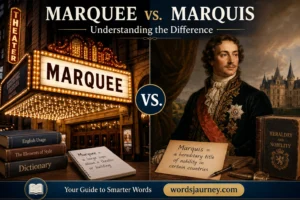
In modern communication, precision matters more than ever. Whether you work in project management, broadcasting, marketing, or event planning, word choice impacts credibility. The term marquee commonly relates to signage, tents, or headline displays in advertising and digital media. Meanwhile, marquis refers to a noble title in historical contexts.
These differences affect tone, context, and audience perception. We will explore definitions, examples, and correct usage to support confident writing.
You will learn how to apply each term correctly in real-world scenarios. By the end, you will understand how Marquee vs. Marquis influences clarity, professionalism, and semantic consistency. Our goal is to support better writing decisions while aligning with modern content standards and search intent principles.
Marquee vs. Marquis Overview
Let’s start with a quick comparison. This gives you immediate clarity before we go deeper.
Side-by-Side Comparison Table
| Feature | Marquee | Marquis |
| Part of Speech | Noun, sometimes adjective | Noun |
| Main Meaning | Display sign, headline feature, event tent | Noble title in European aristocracy |
| Common Context | Marketing, events, theater, sports | History, royalty, formal titles |
| Modern Usage | Very common | Rare in everyday English |
| Pronunciation (US English) | /mar-KEE/ | /mar-KEE/ |
| Origin | French | French |
The confusion happens because both words sound almost identical in American English. However, their meanings are completely unrelated.
What Does Marquee Mean?
The word marquee has multiple modern meanings. Most of them relate to visibility, prominence, or display.
Primary Definitions of Marquee
- A large tent used for events.
- A prominent sign above a theater.
- A headline feature or top billing.
- A marketing term for premium visibility.
Each meaning connects to the idea of importance or display.
Marquee as a Physical Structure
Originally, a marquee referred to a large tent. Event organizers used it for weddings, parties, and outdoor gatherings. These structures provided shelter and space for guests.
Today, event marquess remains common in outdoor celebrations. In many countries, especially in Europe and South Asia, large event tents still carry this name.
Marquee in Theaters and Entertainment
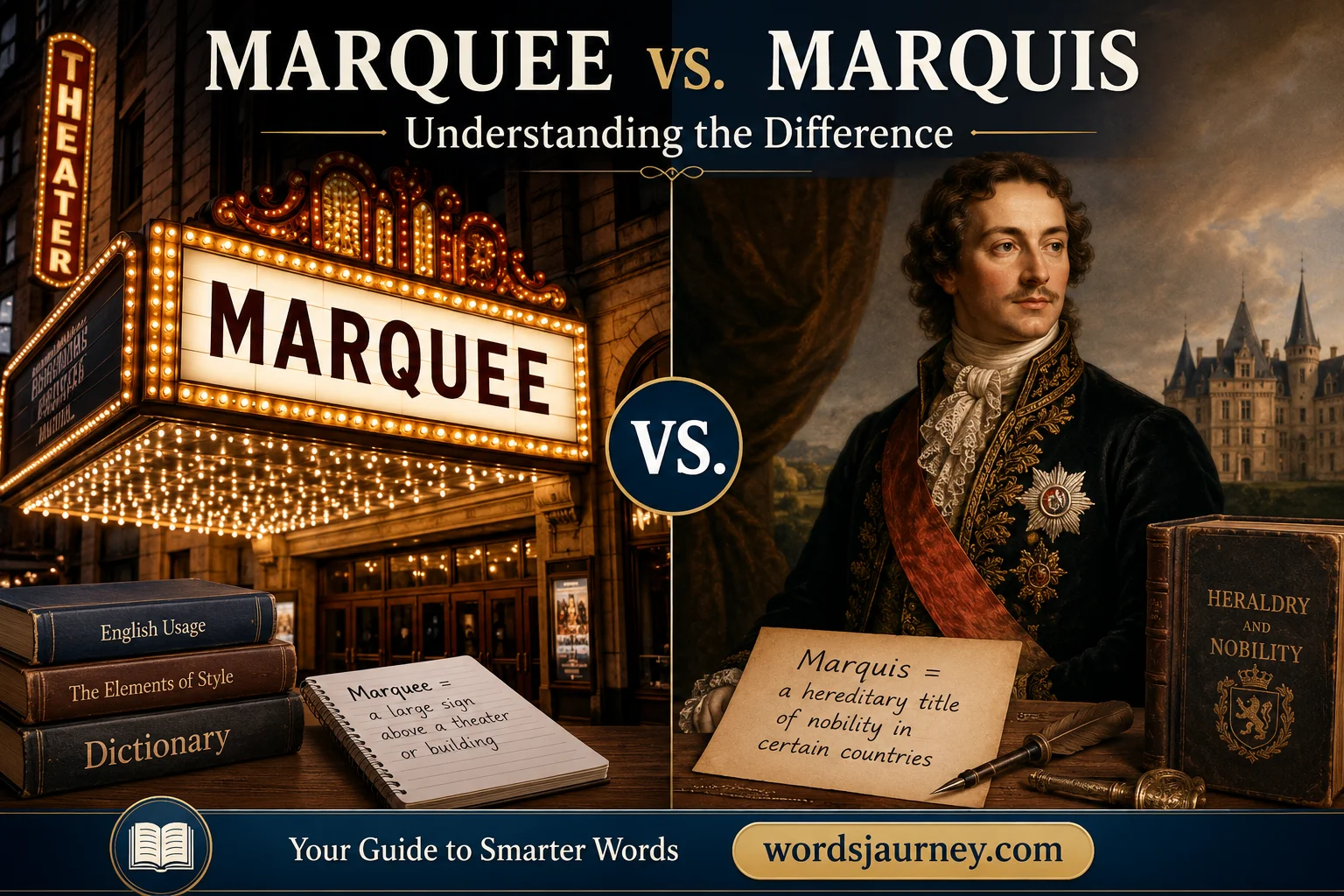
One of the most recognized uses appears in theaters. A marquee sign sits above the entrance. It displays movie titles, showtimes, and performer names.
For example:
- Movie title in bright lights.
- Broadway show announcements.
- Concert promotions.
The marquee works as a marketing tool. It grabs attention before people even enter the venue.
Marquee in Business and Marketing
In business language, marquee means the most important or prominent element.
Common phrases include:
- Marquee client
- Marquee product
- Marquee event
- Marquee feature
- Marquee name
When someone says a company signed a marquee client, they mean a highly valuable or prestigious customer.
This usage shows importance rather than physical structure.
Marquee in Sports
In sports journalism, a marquee player refers to a star athlete. These players attract attention, fans, and revenue.
For example:
- A top draft pick in professional leagues.
- A globally recognized athlete.
- A player who boosts ticket sales.
The term signals star power.
Marquee in Web Design
In early web development, the HTML <marquee> tag created scrolling text. While modern standards discourage its use, the term still appears in discussions about legacy code.
This digital connection expanded the word’s meaning into online communication.
Key Characteristics of Marquee
- Suggests prominence.
- Indicates importance.
- Relates to display or visibility.
- Used in modern contexts.
- Common in media and marketing.
If you see the word in daily English, it almost always refers to attention or highlight.
What Does Marquis Mean?
Now let’s examine the marquis.
This word belongs to history and aristocracy. It does not relate to marketing, signs, or events.
Definition of Marquis
A marquis is a noble rank in European systems. It historically ranked below a duke and above a count or earl.
The title originated in France. It later spread to other European countries.
In French, the feminine form is marquise.
Historical Context of Marquis
During medieval times, marquises governed border territories. These regions required strong leadership because they sat near enemy lands.
The title reflected responsibility and authority.
However, modern political systems eliminated most noble powers. Today, the title exists mainly in historical records and ceremonial contexts.
Usage in Modern English
You will mostly see marquis in:
- Historical books
- Academic writing
- Genealogy research
- Literature
- Discussions of European nobility
It rarely appears in casual conversation.
Example Sentences
- The marquis ruled the frontier region.
- Historical records mention the marquis of the province.
- The title of marquis held significant prestige in medieval France.
Notice the formal tone. The word belongs to structured historical discussion.
Pronunciation of Marquee vs. Marquis
In American English, both words usually sound the same: mar-KEE.
This similarity increases confusion.
Phonetic Breakdown
- Marquee → /mɑːrˈkiː/
- Marquis → /mɑːrˈkiː/
Although spelling differs, pronunciation overlaps in most US contexts.
In some British accents, subtle differences may appear. However, in everyday speech, they sound identical.
That is why context matters more than sound.
Etymology and Word Origins
Understanding origin helps clarify meaning.
Origin of Marquee
Marquee comes from French roots related to “mark” or “border.” Over time, it evolved into describing a tent or prominent display.
The meaning shifted toward visibility and prominence.
Origin of Marquis
Marquis also comes from French. It derives from terms linked to border territories.
Historically, marquises managed frontier regions. That responsibility shaped the title’s meaning.
Although both words share French origins, they developed separately.
Why People Confuse Marquee and Marquis
Several reasons explain the mix-up.
Similar Spelling
Both words:
- Start with “mar.”
- End with “quee” or “quis.”
- Contain similar letter patterns.
Same Pronunciation
In US English, they sound identical.
Auto-Correct Errors
Typing mistakes often replace one with the other.
Lack of Context
Without context, readers may misinterpret meaning.
The solution is simple. Look at surrounding words.
Context Clues to Identify the Correct Word
Use context as your guide.
If the sentence mentions:
- Events
- Theater
- Marketing
- Sports
- Advertising
- Signage
Then marquee is likely correct.
If the sentence discusses:
- Nobility
- Royal titles
- Medieval history
- European aristocracy
Then marquis is correct.
Context eliminates confusion.
Practical Usage Guide
Let’s make this easy.
Use Marquee When:
- Writing about event tents.
- Describing theater signs.
- Talking about marketing features.
- Highlighting premium clients.
- Referring to star athletes.
- Discussing web design elements.
Use Marquis When:
- Writing historical content.
- Discussing European nobility.
- Analyzing literature.
- Researching genealogy.
- Explaining aristocratic ranks.
Common Mistakes to Avoid
Many writers confuse the two words in professional documents.
Avoid these errors:
- Calling a noble title a marquee.
- Using marquis in marketing content.
- Mixing entertainment context with aristocratic titles.
- Relying only on spelling without checking meaning.
Careful proofreading prevents these mistakes.
Real-World Case Studies
Case Study 1: Marketing Campaign
A digital agency promoted a product as a “marquis feature.”
The correct term should have been a marquee feature.
Because of this error, readers questioned credibility. The company later corrected the wording.
Lesson learned: marketing contexts require “marquee.”
Case Study 2: Historical Publication
A student paper described a medieval leader as a “marquee.”
This was incorrect. The correct term was marquis.
The instructor highlighted the difference between display terminology and noble titles.
Lesson learned: history requires “marquis.”
Read More: Hastle or Hassle: The Correct Spelling and Complete Guide
Memory Trick to Remember the Difference
Here is a simple strategy:
Think of marquee as something you see.
Think of marquis as someone from history.
Another trick:
- Marquee has two “e” letters.
- Think of “event” or “entertainment.”
Marquis has “i.”
Think of “identity” or “individual title.”
These small cues help you choose correctly.
Quick Reference Summary
- Marquee = display, feature, event tent, marketing highlight.
- Marquis = noble title in European aristocracy.
- They sound the same in US English.
- Context decides meaning.
- Marquee is common today.
- Marquis is mostly historical.
Frequently Asked Questions (FAQs)
1. What is the main difference between Marquee and Marquis?
The word marquee usually refers to a large sign, headline display, or tent structure. In contrast, marquis is a historical noble title. Their meanings are completely different despite similar spelling.
2. When should I use “marquee” in writing?
Use marquee when discussing event signage, digital headlines, or promotional displays. It is also common in broadcasting, advertising, and website design contexts.
3. When is “marquis” appropriate?
Use marquis when referring to a rank of nobility in certain European historical systems. It appears mainly in historical texts, biographies, or academic writing.
4. Is one spelling more common in US or UK English?
Both words appear in US and UK English, but usage depends on context. Style guides such as APA, MLA, and Chicago focus on clarity rather than preference for these terms.
5. Does using the wrong word affect professional writing?
Yes. Incorrect usage can reduce credibility in formal writing, business communication, and academic content. Accurate grammar improves trust and consistency.
6. Can “marquee” be used in digital marketing?
Yes. In modern online booking, websites, and project management tools, “marquee” often describes highlighted features, banners, or top content sections.
7. Why do people confuse Marquee vs. Marquis?
The confusion happens because the words sound similar and share spelling patterns. However, their meanings differ in history, communication, and usage contexts.
Conclusion
Understanding Marquee vs. Marquis improves clarity in both everyday and professional writing. Although the words look similar, they serve very different purposes. Marquee relates to displays, signage, and promotional elements. Marquis refers to a historical noble title used in specific cultural and academic contexts.
Choosing the correct term supports grammar accuracy, strengthens business communication, and enhances consistency across scheduling, meetings, broadcasting, and digital content. Clear word selection also aligns with modern formal writing standards and professional style guides.
By mastering this distinction, you improve readability and credibility. Accurate English usage builds trust with readers and supports strong communication across industries and regions.

Aliya Ray is a passionate writer and language enthusiast at WordsJourney. She enjoys exploring words, phrases, and everyday expressions to help readers communicate more clearly and confidently. Her content focuses on alternative ways to say common phrases, simple explanations, and real-life examples that make language easy to understand.
Aliya believes the right words can make any message stronger. Through clear, friendly writing, she helps readers improve their vocabulary without feeling overwhelmed or confused.